

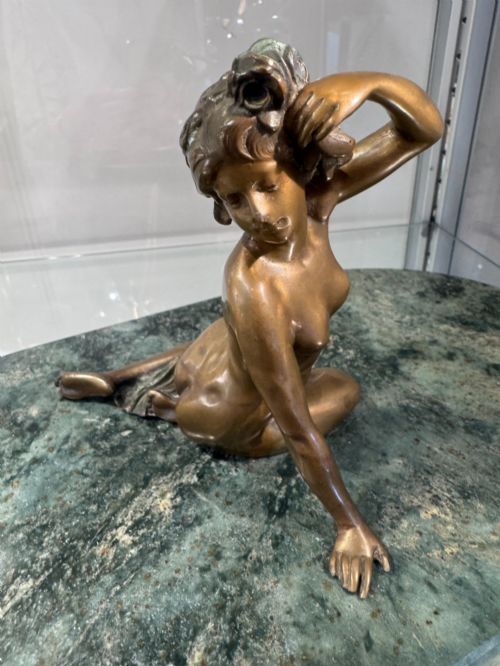


Art Nouveau Lady Figurine
An art nouveau lady figurine captures the flowing lines and natural motifs characteristic of the turn of the twentieth century, bringing elegance to any interior.
Art Nouveau Lady Figurine
An art nouveau lady figurine embodies the sinuous curves and organic drapery typical of late nineteenth and early twentieth century design. These decorative objects portray graceful women, often adorned with long hair or classical costume, reflecting the aesthetic ideals of the Belle Epoque.
The selections available here span diverse object types, including freestanding sculptures and monumental porcelain figures. Origins stretch from French foundries to Bohemian potteries, capturing female forms in moments of quiet repose or active poise.
Dated examples on this page reach from the late nineteenth century through the Edwardian era into the 1920s. Buyers frequently encounter seated women, maidens holding jugs, or figures intertwined with natural elements.
Materials and construction
Foundries and studios utilised cast bronze, cold painted bronze, and spelter for metallic sculptures, frequently applying patination or gilding to accentuate sculptural depth. These metal works often incorporate marble plinths to provide a stable and contrasting base.
Ceramic and porcelain pieces rely on high-fired clay bodies finished with enamel or delicate hand-painted details. Makers such as Royal Dux and Ernst Wahliss shaped these materials into large figures with flowing garments and nuanced facial expressions.
Art Nouveau Lady Figurine Retail Price Guide 2026
Typical asking prices for art nouveau lady figurine among the pieces listed under this phrase on Sellingantiques today, from the lower quarter to the upper quarter. They describe what is for sale here now, not the wider market.
Listings feature items dated across the late 19th century, Edwardian era, and the 1920s, employing bronze, porcelain, marble, and spelter.
Evaluating the standard
Surface finish significantly influences overall merit, with expertly applied patinas, cold painting, or enamel glazes preserving subtle tonal shifts. Consistency in the glaze or metalwork indicates the care taken during production in the original studio.
Georges Van Der Straeten·Royal Dux·Sylvain Kinsburger·Ernst Wahliss·Jennings Brothers·Maurice Bouval·Moreau
The Art Nouveau Lady Figurine Glossary
- Art Nouveau
- A decorative style characterised by fluid, organic lines, plant motifs, and stylised female forms popular from the late nineteenth century until the First World War.
- Spelter
- An alloy of zinc and lead used as a cost-effective alternative to bronze in nineteenth-century manufacturing, often given a bronze-like finish.
- Patinated Bronze
- Metal sculpture treated with chemical solutions to produce a controlled surface colour, ranging from deep brown to greenish tones.
- Cold Painted Bronze
- A method where non-fired oil paint is applied directly onto a bronze casting after the metal has been heated or prepared.
- Belle Epoque
- A period of French history spanning the late nineteenth century to the outbreak of the First World War, noted for optimism and artistic innovation.
Art Nouveau Lady Figurine: Frequently Asked Questions
How do I identify a genuine period piece?
Examine the casting quality, surface wear, and material composition to check for consistency with late nineteenth and early twentieth-century manufacturing techniques. Maker signatures or foundry stamps often appear on the base or reverse of metal and ceramic works.
Compare the style of the drapery and hair against documented examples from the same era to confirm authenticity.
What materials were commonly used for these figures?
Sculptors utilised bronze, spelter, and cold painted bronze, frequently mounting metal figures upon marble bases. Porcelain and ceramic bodies also appear widely, decorated with enamel and gold leaf.
Each material dictates the weight, texture, and visual character of the individual figurine.
Where were these decorative figures originally made?
Production centres spread across France, Austria, and America, with prominent foundries and potteries creating distinct regional styles. French makers often focused on metal casting, while Bohemian potteries specialised in monumental porcelain.
Local artistic traditions heavily influenced the choice of subject matter and glaze techniques.
How should I care for a bronze or porcelain figurine?
Dust metal and ceramic surfaces gently with a soft, dry cloth to prevent the accumulation of grit. Avoid harsh cleaning agents or abrasive materials that might strip patinas, cold paint, or enamel finishes.
Keep pieces away from direct sunlight and excessive moisture to preserve the original surface integrity.