


Art Nouveau Jardiniere
An art nouveau jardiniere brings organic botanical curves and flowing metalwork straight into the domestic interior.
What an art nouveau jardiniere is
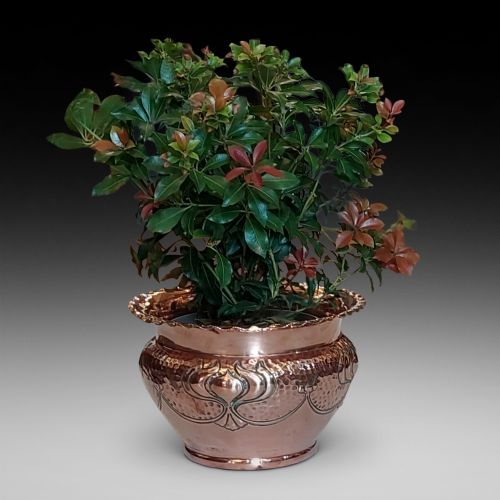
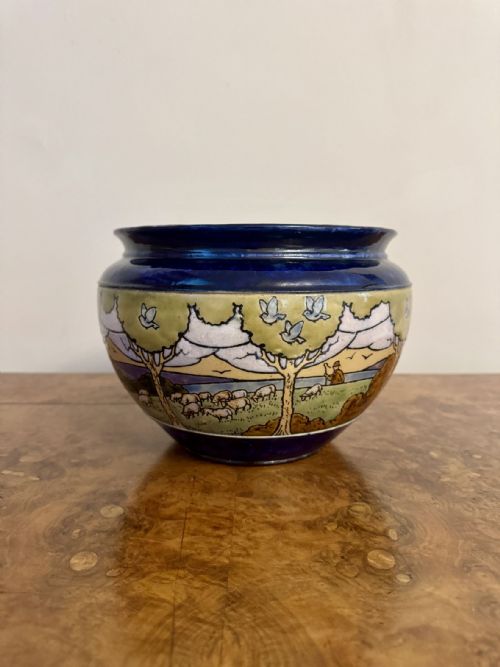
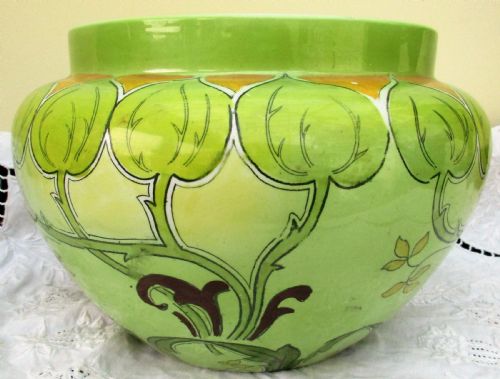
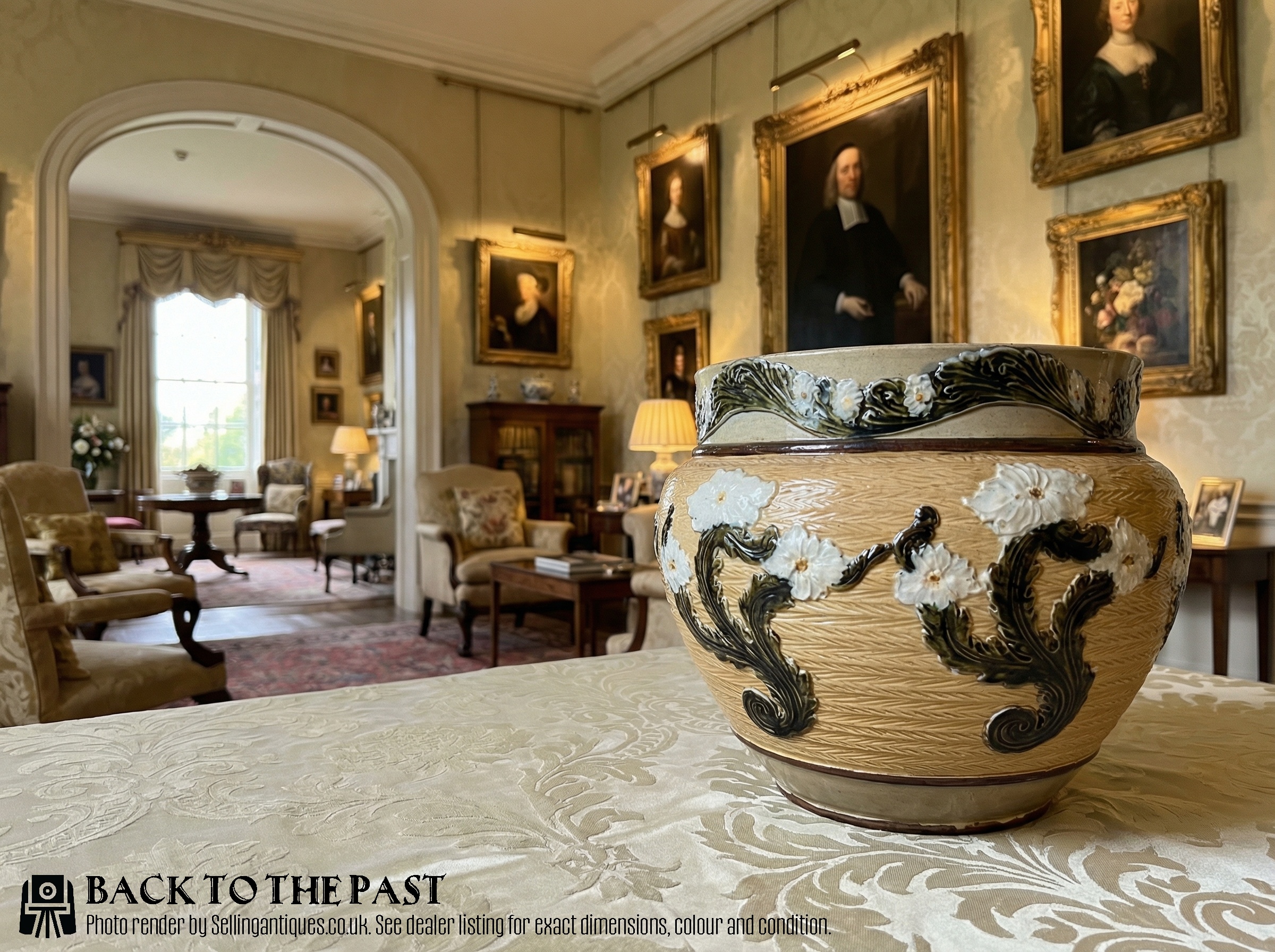
An art nouveau jardiniere is a decorative plant holder or indoor flower pot designed during the late nineteenth and early twentieth centuries. These vessels display the characteristic whiplash lines, stylised floral motifs and plant forms associated with the movement. Most examples you encounter take the form of metal or ceramic bowls intended to house potted plants or display cut flowers.
The selections recorded here span periods from the Victorian and Edwardian eras through to the nineteen twenties, encompassing both standalone vessels and pieces accompanied by matching pedestals or stands. Materials range from hammered metals to glazed ceramics, reflecting the diverse manufacturing approaches of British and continental workshops. You will find copper and brass planters alongside earthenware, stoneware and majolica creations.
Vessels appear in various configurations, including three-handled planters, footed bowls, and complex centrepieces designed for table display. Some items incorporate wooden elements such as mahogany stands, blending botanical metalwork with structural cabinetmaking. The form bridges decorative art and utility, serving as a focal point for interior plant display.
What varies in quality
The distinction between ordinary and exceptional pieces rests upon the crispness of the modelling and the depth of the hand-working. In metalwork, visible hammer marks and substantial weight indicate careful execution by skilled artisans rather than mass production. In ceramics, the clarity of the glaze application and the precision of moulded relief details separate standard production items from masterworks.
Design integration also defines the upper tier of these objects, where the vessel and its matching stand or pedestal share a unified artistic vision. Pieces bearing identifiable factory marks or designer attributions demonstrate documented provenance that elevates their standing among collectors. The balance of proportions between the bowl and its base governs the visual harmony of the finished ensemble.
Retail Price Guide 2026
Typical UK retail prices for art nouveau jardiniere, calculated from the Sellingantiques database of over a million retail prices indexed since 2003. This retail price guide relies exclusively on Sellingantiques data; no external sources or auction records are used, so the figures do not describe the wider market.
Turn-of-the-century households expected their indoor ferns to look just as dramatic as their drawing room furniture.
Minton·Doulton Lambeth·Royal Doulton·Royal Worcester·Albert Meyer·WMF
The Art Nouveau Jardiniere Glossary
- Jardiniere
- An ornamental pot or stand for holding plants or flowers. These vessels form the central category of objects found in this selection.
- Majolica
- A type of earthenware decorated with opaque coloured tin glazes over a fired body. This technique produces vibrant pictorial surfaces often seen on floral planters.
- Planishing
- The process of smoothing and shaping sheet metal by light hammering with a polished hammer. This technique hardens the metal and leaves a distinctive decorative texture.
- Stoneware
- A robust, vitrified pottery fired at high temperatures until impervious to liquids. Royal Doulton utilised this durable material for many of their decorative planters.
- Cache pot
- A decorative flowerpot used to conceal a plain inner plant pot with drainage holes. These items protect interior surfaces from moisture.
Frequently Asked Questions
What is the difference between a jardiniere and a cache pot?
A jardiniere is traditionally a large decorative vessel designed to hold a plant directly or house multiple pots within its perimeter. They often feature accompanying pedestals or stands for floor display.
Cache pots generally refer to smaller decorative outer containers meant to hide plain flower pots. Both types share overlapping forms within the decorative arts of this period.
Can I plant directly into an antique jardiniere?
Planting directly into antique metal or ceramic vessels exposes the interior to moisture and soil acidity, which can cause corrosion or glaze crazing over time. Using a separate plastic inner pot helps preserve the interior condition of the piece.
Drainage holes are often absent in antique jardiniere vessels, making inner pots essential for proper plant maintenance. This approach protects both the botanical specimen and the collectible container.
How do I identify an Edwardian metal planter?
Edwardian metal planters frequently utilise brass or copper construction with organic Art Nouveau motifs executed in relief or hammered surfaces. The styling reflects lighter proportions compared to heavy Victorian counterparts.
Examination of construction seams and base markings often provides clues regarding the manufacturing period and origin. Makers from this era frequently combined metal bodies with wooden stands or ceramic liners.