




Art Nouveau Dish
An art nouveau dish brings flowing organic lines and botanical motifs into daily domestic display.
Art Nouveau Dish
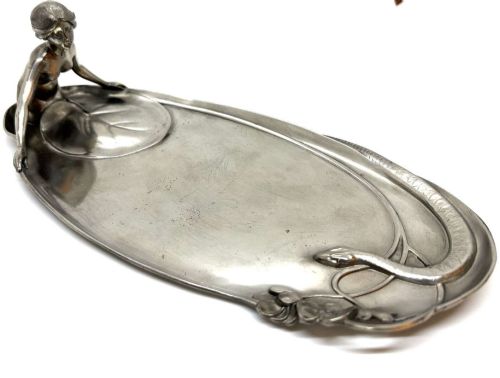
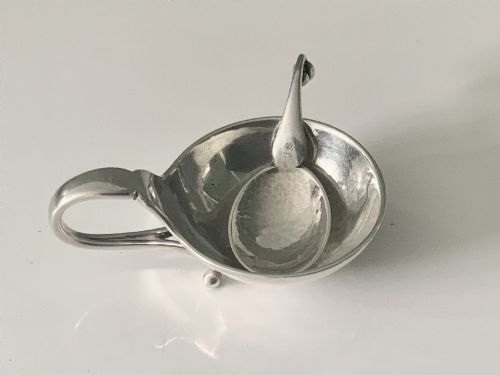
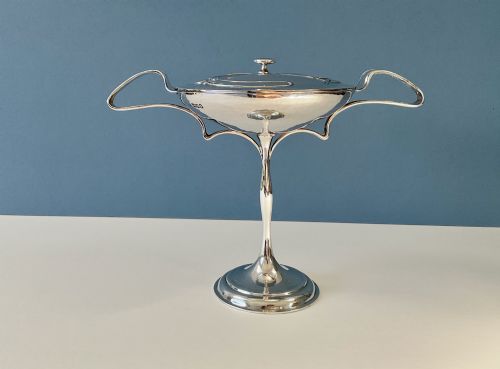
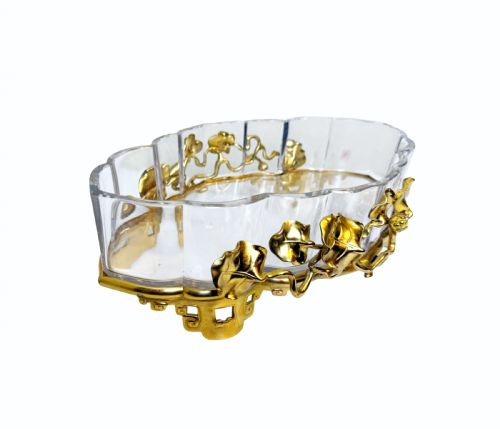
An art nouveau dish encompasses shallow decorative bowls, card trays, bon-bon dishes, and centrepieces designed during the late nineteenth and early twentieth centuries. These vessels often integrate stylized plant forms, feminine profiles, and insect motifs into their structural design.
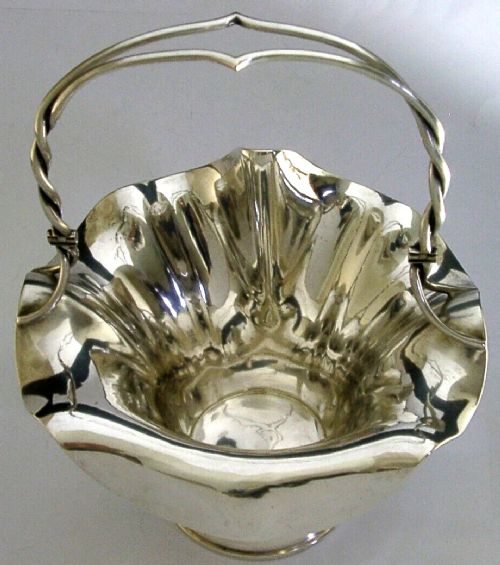
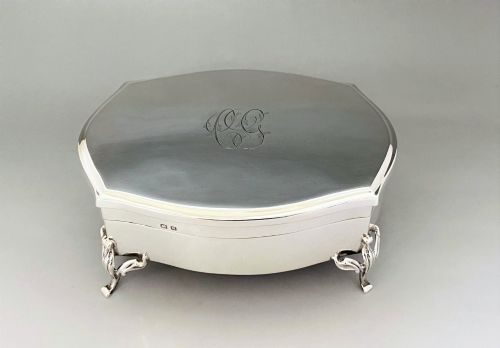
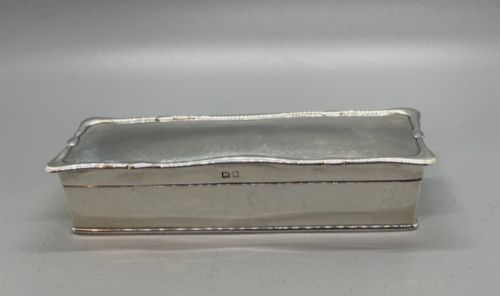
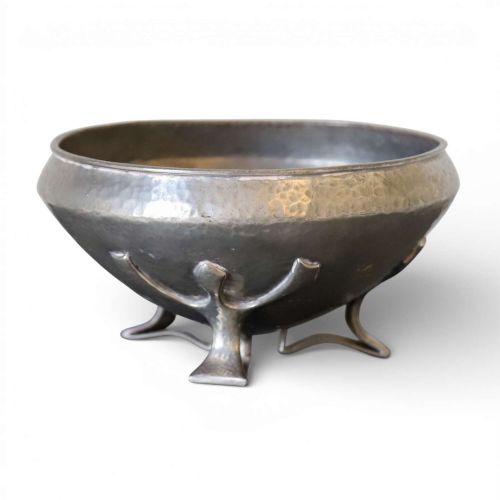
The selections span small sterling silver pin trays made in British assay offices alongside continental pewter vessels and iridescent glass bowls. Buyers encounter both utilitarian serving items and purely decorative cabinet pieces created during the height of the movement.
How they were made
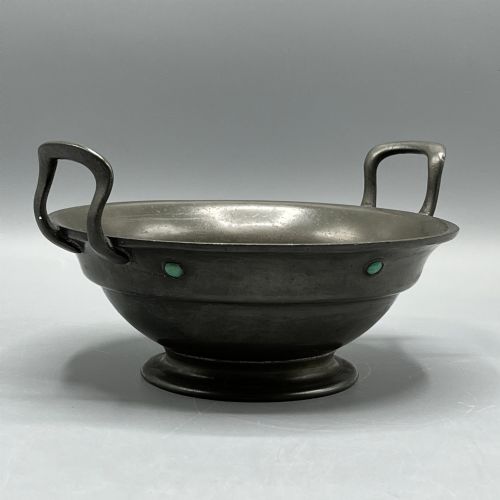
Metalworkers utilised sterling silver and silver-plated Britannia metal, often shaping pewter alloys through casting and hammering techniques to achieve fluid contours. Pewter and silver components frequently incorporated applied cabochons, brass inlay, or enamel work.
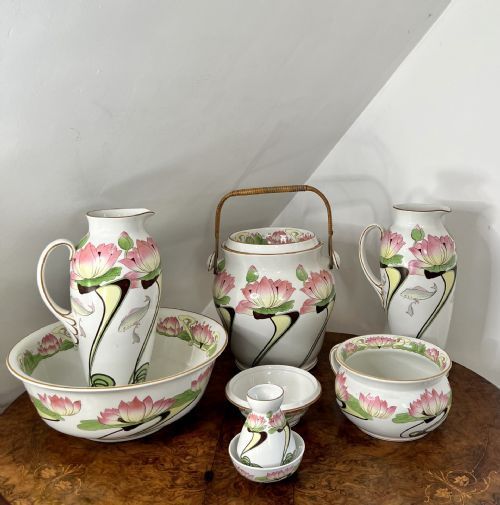
Glassmakers employed blown crystal, combining iridescent surface treatments with acid etching and gold enamel detailing. Ceramic pieces combined majolica pottery with lustrous glazes to produce deep reflective finishes.
Periods represented span from late Victorian production through Edwardian silversmithing into early twentieth-century secessionist design.
What varies in quality
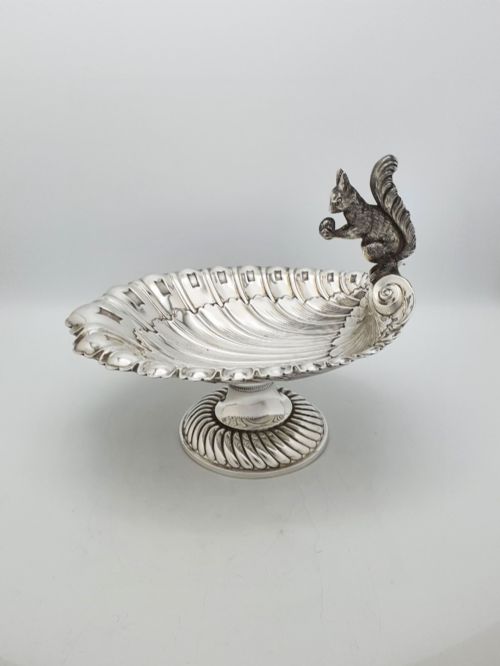
Quality rests upon the crispness of the chased or cast botanical relief and the weight of the metal utilised in the body. Thicker gauge silver and heavy pewter retain their structural integrity and detailed contours far better than lighter pressings.
Artistic collaboration dictates distinction, where items designed by named modellers or produced by prominent metalwork studios display superior proportion and finishing. The integration of contrasting glass inserts or mother-of-pearl cabochons elevates standard production into high craftsmanship.
WMF·Liberty & Co·Georg Jensen·Rene Lalique·Wedgwood·Orivit·Loetz·Royal Dux
The Art Nouveau Dish Glossary
- Bon-bon dish
- A small, decorative open vessel intended for holding sweets or small confectioneries. These items often feature pierced metalwork or swinging handles.
- Cabochon
- A polished, unfaceted gemstone or coloured glass insert set flush into metalwork. They frequently accent the handles or rims of pewter and silver pieces.
- Tudric
- The trade name used by Liberty & Co. for their range of high-quality pewter homeware. Many pieces were designed by studio artists like Oliver Baker.
- Lustre glaze
- A ceramic surface treatment containing metallic oxides that produce an iridescent, rainbow-like sheen when fired. This technique creates deeply reflective, shimmering colours.
- Tazza
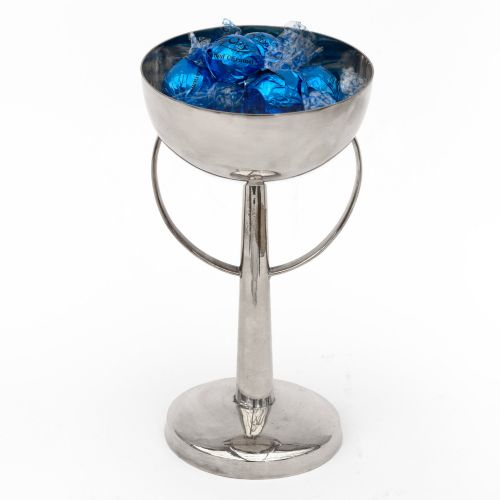
- A shallow ornamental bowl or plate mounted upon a central stem and foot. They served as elevated centrepieces on dining tables.
Art Nouveau Dish: Frequently Asked Questions
How were these dishes used originally?
Households utilised these vessels for serving small sweets, bon-bons, and nuts during formal dining, or placed them on hall tables to receive calling cards.
Smaller silver and pewter examples functioned as dressing table trinket trays for pins, jewellery, and small personal accessories.
How do I care for antique silver and pewter?
Sterling silver and silver-plated items require periodic gentle cleaning with a specialised soft cloth to maintain their lustre without removing the underlying plating.
Pewter needs only warm soapy water and a thorough drying, avoiding aggressive chemical polishes that strip the characteristic soft grey patina.
Can I use these bowls for food today?
Silver and glass items remain suitable for serving dry foods, nuts, and wrapped sweets during modern gatherings.
Older ceramic and lead-bearing metal vessels are best reserved for dry decorative display rather than serving acidic foods.
How do I identify the period of a piece?
British silver items carry hallmarks indicating the assay office and date letter, allowing precise dating down to the exact year of manufacture.
Continental pewter and glass pieces rely on maker stamps, registry numbers, and characteristic stylistic motifs popular between eighteen-ninety and nineteen-twenty.