


Art Nouveau Desk Chair
An art nouveau desk chair brings flowing, organic lines to a workspace, offering a distinctive seat built during periods of transition in design.
Art Nouveau Desk Chair
An art nouveau desk chair combines the flowing curves characteristic of the movement with the practical seating needs of a study or office. The pieces seen span from the late Victorian and Edwardian eras into the early twentieth century, capturing a period of rapid stylistic evolution.
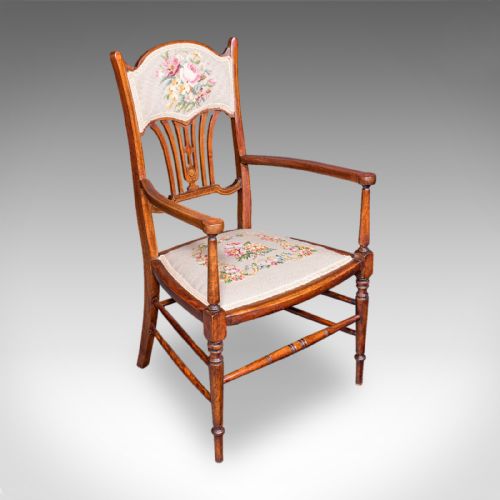
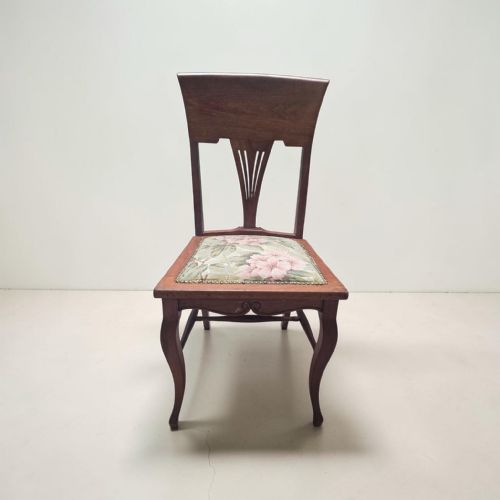
The designs draw on English and American cabinet-making traditions, ranging from heavy revolving oak models to graceful inlaid mahogany armchairs. Each variation serves a different interior, whether fitted with original leather for daily desk work or upholstered in fabric for a lighter setting.
How they were made
Cabinet-makers utilised solid timbers such as mahogany, oak, beech, and birch to construct the frames, often employing steam-bent techniques for curved components. Wood inlay added contrasting botanical motifs, while brass fittings reinforced swivel mechanisms on revolving office models.
Upholstery methods varied from supple leather panels secured with brass studs to woven tapestry and textile coverings. Frames combined pegged joinery with turned supports, balancing structural rigidity with the sinuous aesthetic of the period.
Listings feature woods spanning mahogany, oak, beech, birch, and cherry, paired with leather, fabric, and brass.
What varies in quality
The distinction between standard production and superior craftsmanship lies in the execution of the carved and inlaid details. Finer examples display precise botanical marquetry and carefully shaped structural members rather than simple applied ornamentation.
Mechanisms on revolving office chairs indicate grade, with robust iron spindles and smooth-turning swivel bases distinguishing higher-tier commercial seating. The integrity of the original timber frame and the survival of authentic leather or textile upholstery dictate the standing of the piece.
Thonet·Louis Majorelle·Johnson Chair Co.·J.S. Ford, Johnson and Co
The Art Nouveau Desk Chair Glossary
- Bentwood
- Wood formed into curved shapes through the application of steam and pressure. This technique allowed makers to create the continuous sweeping lines characteristic of early twentieth-century seating.
- Marquetry
- Decorative patterns formed by fitting small pieces of veneer into a prepared wood surface. This method created the intricate floral and botanical motifs seen on inlaid salon chairs.
- Revolving chair
- A seat mounted on a central spindle allowing the upper portion to turn. These models often incorporated height adjustment and sturdy wood bases suited to office use.
- Elbow chair
- A seating form with low arms designed to support the user's elbows while writing. These pieces bridge the gap between armchairs and side chairs in domestic interiors.
- Beech
- A dense, pale hardwood utilised for framing and bentwood construction. Its strong grain properties permitted the creation of slender structural supports.
Art Nouveau Desk Chair: Frequently Asked Questions
Are these chairs comfortable for daily work?
Revolving office versions with leather upholstery provide supportive seating for extended periods at a desk.
Lighter salon and elbow chairs suit shorter periods of writing rather than all-day typing tasks.
How do I date an art nouveau desk chair?
Dating relies on combining timber choice, hardware details, and stylistic markers recorded across the Victorian and Edwardian eras. Revolving mechanisms often feature patents or construction methods specific to the early twentieth century.
Inlaid mahogany salon pieces typically align with late nineteenth-century cabinet-making trends.
Did these chairs originate in offices or homes?
The heavy oak revolving models served commercial offices, studies, and administrative desks. Lighter beech and mahogany armchairs belonged in domestic morning rooms, bedrooms, and drawing-room writing corners.
Both environments utilised the stylistic vocabulary of the movement.
How do I care for the leather upholstery?
Original leather benefits from gentle cleaning with specialised conditioners to preserve suppleness. Avoiding direct sunlight prevents the hide from drying and cracking over time.
Maintaining moderate room humidity protects both the leather and the underlying wooden frame.