
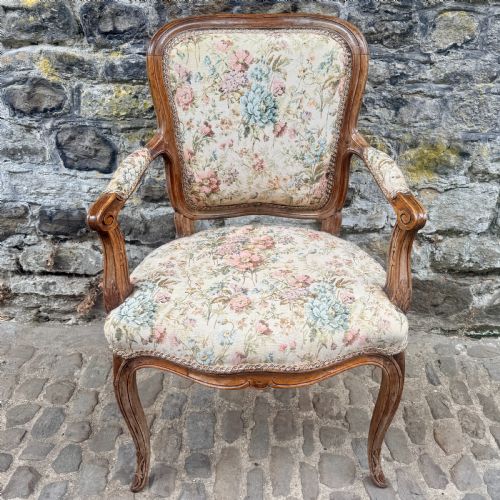
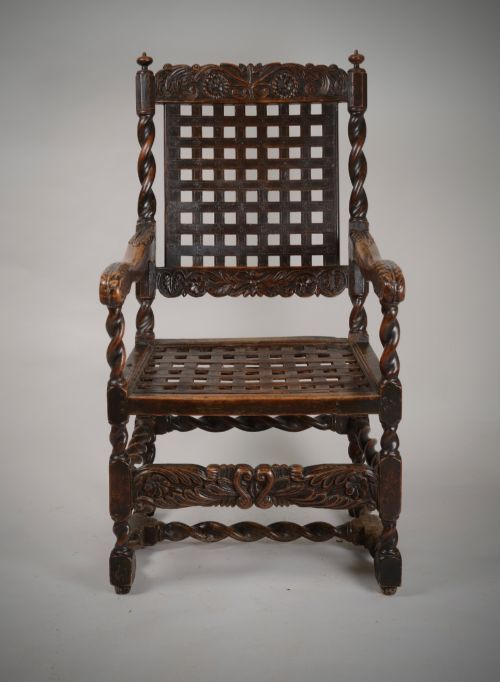
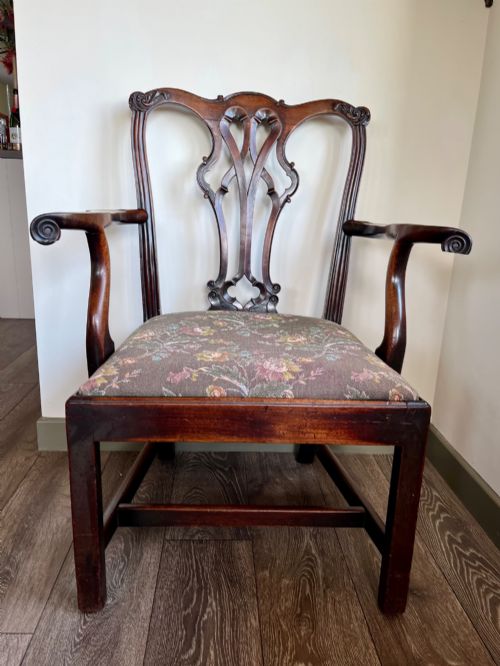
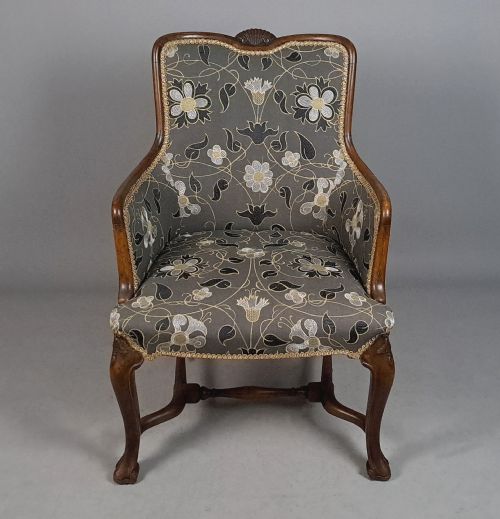
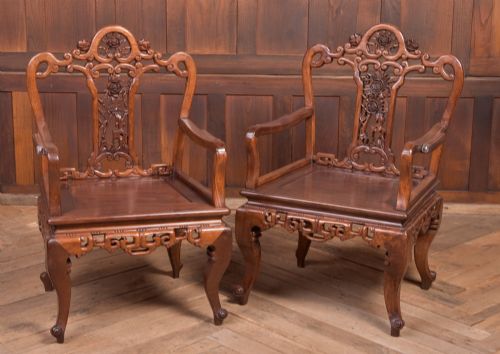
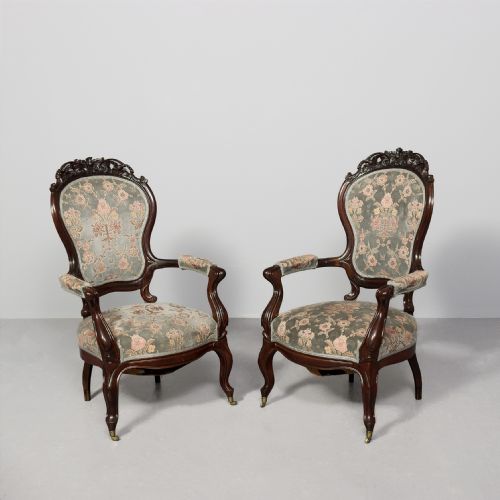


Floral Carved Wood Armchair
A floral carved wood armchair brings tactile warmth and period form to a room, combining sculpted timber frames with decorative upholstery.
Floral Carved Wood Armchair
A floral carved wood armchair is a seating piece defined by botanical wood carving upon its structural frame, appearing across various centuries and stylistic revivals. When examining this selection, buyers encounter formats ranging from eighteenth-century Georgian designs to Victorian walnut frames and French provincial models.
The objects span multiple functional categories including library seats, open armchairs, and salon chairs, often paired with upholstered elements. The most frequently met examples date from the nineteenth century, showcasing walnut, mahogany, or rosewood frames adorned with floral motifs.
Origins stretch from English workshops to French provincial studios and Italian ateliers, uniting diverse regional traditions under the common thread of carved wooden ornamentation and upholstered comfort.
Construction materials and techniques
Cabinetmakers utilised hardwoods such as mahogany, walnut, rosewood, and Chinese hardwood to provide durable structural integrity for the carved frames. These timbers allowed craftsmen to execute deep relief carving along the crest rails, arms, and cabriole legs.
Upholstery techniques incorporated traditional textiles, needlepoint tapestry panels, silk, fabric, and velvet secured over padded foundations. Giltwood and painted finishes were additionally applied to specific French revival and Venetian frames to alter the visual appearance of the timber.
The listings encompass walnut, mahogany, rosewood, and giltwood frames spanning the eighteenth, nineteenth, and twentieth centuries.
Evaluating the standard of craftsmanship
The standard of a floral carved wood armchair rests upon the crispness and depth of the timber carving. Superior examples exhibit hand-chiseled botanical details that integrate seamlessly into the structural lines of the frame rather than appearing shallow or mechanically cast.
Integrity of timber selection and joinery dictates longevity, with tight joints and well-seasoned hardwoods separating finer workshop productions from simpler utilitarian seating. The harmony between the original frame construction and the quality of the textile or needlework cover further determines the piece's standing.
Louis Majorelle
The Floral Carved Wood Armchair Glossary
- Cabriole leg
- A furniture leg that curves outward at the knee and tapers inward toward the foot, often finishing in a scroll or pad. This characteristic shape frequently appears on eighteenth-century and revival seating.
- Fauteuil
- An open-arm armchair with upholstered back and seat and exposed wooden armrests. These pieces originated in France and typically display carved frames.
- Needlepoint
- A type of canvas work embroidery utilised historically for upholstery panels on seats and backs. It provides a durable decorative surface featuring floral or pastoral scenes.
- Giltwood
- Timber that has been coated with a thin layer of gold leaf or gold paint. This finish was favoured in opulent salon settings during various revival periods.
- Carver armchair
- A dining or desk chair fitted with armrests, traditionally matching a set of side chairs. It serves as a principal seat at a table or writing surface.
Floral Carved Wood Armchair: Frequently Asked Questions
What is a floral carved wood armchair?
A floral carved wood armchair is a seat featuring wooden frames embellished with botanical carvings and upholstered components.
These pieces encompass various historical eras including the Georgian, Victorian, and Edwardian periods.
How do I date an antique armchair?
Dating relies upon examining the timber species, joinery methods, tool marks, and stylistic revival cues present in the frame.
Periods are further identified by comparing the upholstery style and decorative motifs against recorded historical examples.
Where were these armchairs made?
The listings show origins spanning English, French, Italian, and Chinese workshops and cabinetmaking traditions.
Regional preferences dictate whether the frame utilised mahogany, walnut, rosewood, or painted finishes.
How should I care for wooden frames?
Wooden frames benefit from stable indoor humidity levels and protection from direct sunlight to prevent timber splitting.
Regular dusting with a soft dry cloth preserves the polished surface and the carved botanical details.