


Art Nouveau Decanter
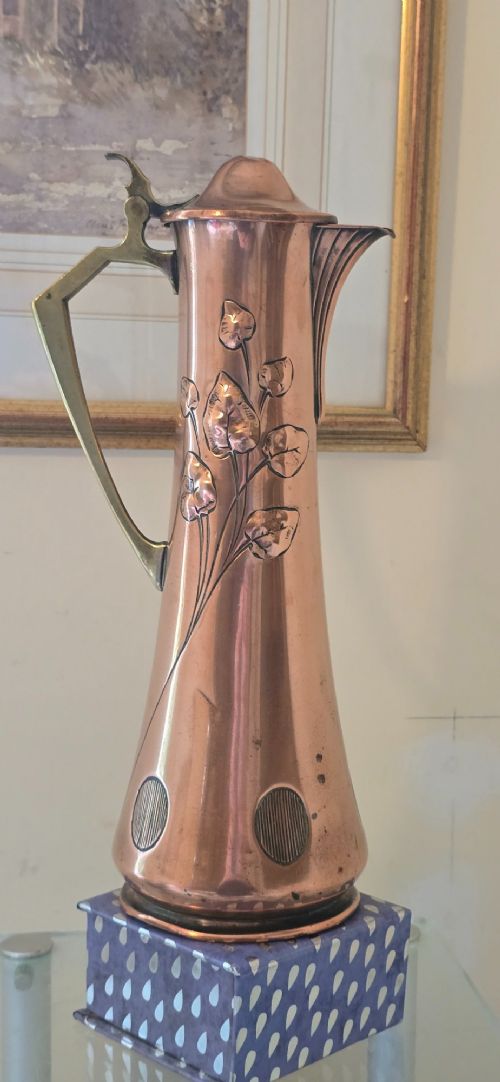
These art nouveau decanter pieces combine organic glass forms with flowing metal mounts to serve wine and spirits in style.

Art Nouveau Decanter
When you search for an art nouveau decanter, you encounter vessels designed for serving wine, liqueurs, and spirits during the late nineteenth and early twentieth centuries. The pieces on this page span the Victorian and Edwardian eras through to nineteen ten, incorporating styles from Arts and Crafts to Art Nouveau proper.
The most common forms you meet are glass bottles with silver or silvered pewter mounts, alongside ewers, claret jugs, and matching liqueur sets. Alongside standard decanters, related items such as scent bottles, perfume bottles, and pitchers appear frequently across the listings.
Origin points vary widely, covering English, French, German, Austrian, and American workshops. These objects served functional roles on dining tables and dressing tables alike, often retaining matching stoppers or accompanying glasses.
Materials and construction methods
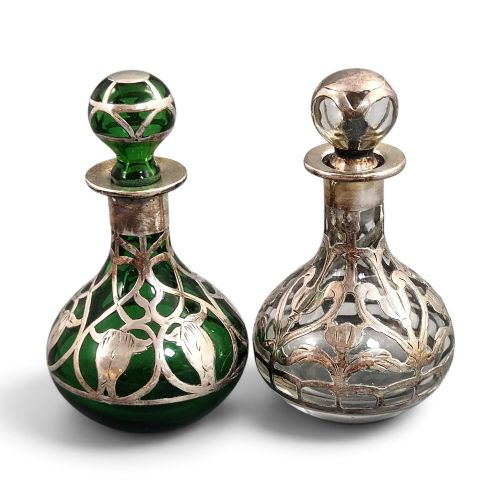
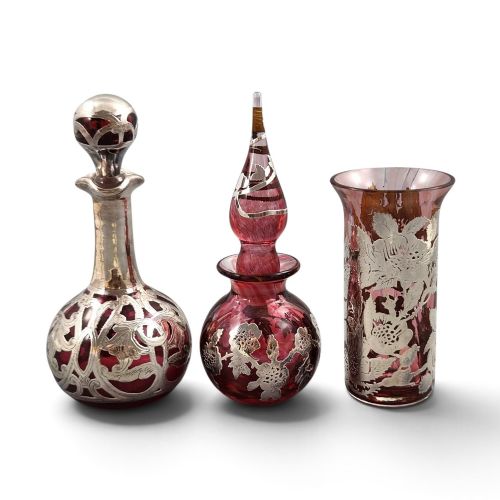
Makers shaped the vessels using clear, green, or ruby glass, sometimes employing enamel decoration, applied trailing, or acid cutting. Metalwork components utilise sterling silver, silver plate, brass, copper, and silvered pewter.
Metal mounts and overlays were cast or wrought into floral, faun, or figural motifs, wrapping closely around the glass bodies. Pewter elements frequently feature distinctive patination and relief work, while glass bodies showcase hand-blown techniques and intricate stoppers.
Object types range from standard wine carafes and claret jugs to vanity sets, perfume bottles, and specialised liqueur decanter suites.
Assessing quality in design and execution
Quality rests upon the harmony between the glass body and its metal mount, where integration of organic motifs dictates visual success. Finer examples display crisp casting in the pewter or silver work and meticulous hand-finishing on the glass.
Makership elevates certain pieces, particularly those bearing documented designs by recognised artists or produced by prominent metalwork factories. The presence of matching stoppers, glasses, or trays alters the completeness and desirability of a set.
WMF·Gorham·Archibald Knox for Liberty Co·Salviati·Daum·Asprey
The Art Nouveau Decanter Glossary
- Claret jug
- A specialised pouring vessel designed specifically for serving red wine at the table. These pieces typically feature a hinged silver mount and handle.
- Kluk kluk
- A multi-necked or pinched glass decanter style, sometimes called a glug glug decanter. The unique body shape produces a gurgling sound when pouring.
- Silvered pewter
- A base metal alloy treated with a silver finish to resemble solid precious metal. This material allowed makers to achieve complex relief designs affordably.
- Overlay
- A technique where a pierced metal sheath, usually silver, encases the glass body. It creates high contrast between the glass and the metallic decoration.
- Ewer
- A large jug with a wide spout and a looped handle, traditionally used for holding water or wine. In this period, they served decorative and functional dining roles.
Art Nouveau Decanter: Frequently Asked Questions
How do I clean an old decanter safely?
Fill the vessel with warm water and specialised cleaning beads rather than harsh detergents that might harm antique glass.
Avoid submerging silver-mounted pieces entirely to protect cements and glues holding the metal collars in place.
Are these stoppers original to the pieces?
Many items retain their matched original stoppers, which is noted when specific numbers or grinding marks align.
Replacement stoppers occur frequently in this category due to breakage over long periods of domestic use.
How do I date a silver mounted piece?
Hallmarks stamped on the metal mounts provide precise assay office marks and date letters for English and continental pieces.
Stylistic cues such as whiplash lines and naturalistic floral motifs further narrow the manufacturing window to around nineteen hundred.
Can I use these decanters for daily dining?
Most of these vessels function adequately for serving wine and spirits if the interior glass is thoroughly rinsed and inspected.
Pieces with delicate enamel work or fragile silver overlay require careful handling during use and washing.