
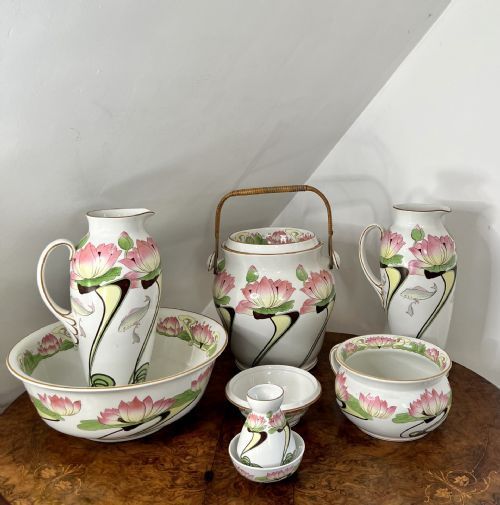


Art Nouveau Ceramic Dish
An art nouveau ceramic dish brings fluid botanical lines and iridescent glazes into your home.
Art Nouveau Ceramic Dish
An art nouveau ceramic dish encompasses decorative bowls, plates, chargers, and small vide poche forms produced around the turn of the twentieth century. These pieces display the characteristic organic curves and natural motifs associated with the movement, crossing into Edwardian and later periods up to the nineteen thirties. Buyers searching for an art nouveau ceramic dish will encounter works spanning standard earthenware to bone china.
The selections on this page largely feature British and continental European factories working in the distinct aesthetic styles of Art Nouveau, Arts and Crafts, and early Art Deco. Centrepieces and figural vessels sit alongside smaller bowls, illustrating how domestic wares of the era blurred the line between ornament and utility. Most items date from the late nineteenth century through the nineteen twenties.
Makers utilised specialised glazing techniques to capture shimmering effects, incorporating lustre glaze, gold leaf, and flambé finishes across porcelain and earthenware bodies. The resulting objects range from simple plates bearing natural motifs to complex figural centrepieces depicting maidens and water birds. This variety ensures that every dish reflects the experimental manufacturing methods of its period.
Materials and production techniques
Potters built these vessels using ceramic, earthenware, bone china, and porcelain bodies, shaping them into plates, bowls, and figural centrepieces. Factories then applied various glazes, including specialised lustre glazes and rich flambé coatings, to achieve glossy, iridescent surfaces that catch the light. Some items received delicate applications of gold leaf to accentuate moulded floral and animal details.
Designers utilised hand-painted patterns alongside transfer printing to render intricate subjects such as dragonflies, butterflies, and pomegranate branches. Kiln firing techniques varied widely, allowing potteries to control the chemical reactions within metallic lustre glazes for shifting colour hues. This combination of standard moulding and chemical glazing defined the output of leading workshops.
The listings span wares from the late nineteenth century through the nineteen thirties, encompassing porcelain, earthenware, and bone china bodies.
Distinctions in quality and execution
Quality rests upon the complexity of the glaze application and the precision of the hand-painted details. Lustre finishes that exhibit deep, shimmering colour shifts demonstrate superior chemical control during the firing process compared to flat, uniform surfaces.
Sculptural definition separates standard domestic items from high-end centrepieces and figurines. Finely modelled figures and crisp floral relief work show the skill of the original designer and the sharpness of the ceramic mould.
Daisy Makeig-Jones Wedgwood·Royal Dux·William Moorcroft·Eichwald·Royal Doulton
The Art Nouveau Ceramic Dish Glossary
- Lustre glaze
- A type of ceramic glaze containing metallic salts that produce an iridescent sheen upon firing. This finish creates a shifting, rainbow-like surface effect.
- Earthenware
- Porous pottery fired at a relatively low temperature and subsequently glazed to ensure it holds water. It forms the base body for many decorative plates and bowls.
- Vide poche
- A small shallow dish designed for emptying pockets of small items like coins or keys. These are frequently found in figural art nouveau ceramic forms.
- Bone china
- A type of porcelain composed of bone ash, feldspar material, and kaolin, known for its high strength and milky translucency. It allows for thinner vessel walls.
- Charger
- A large decorative plate used as a base piece or displayed on a wall or stand. These often display the most elaborate painted patterns in a series.
Art Nouveau Ceramic Dish: Frequently Asked Questions
How do I date an art nouveau ceramic dish?
Dating relies on maker marks, registration numbers, and stylistic cues present on the base of the ceramic body. Examining the specific type of glaze and colour palette also helps narrow the production decade.
Potteries often changed their backstamps in response to new ownership or patent updates. Cross-referencing these stamped marks with known active years provides a reliable manufacture date.
Were these dishes used daily or displayed?
Most decorative dishes, centrepieces, and figural bowls served primarily as ornamental display pieces in Edwardian and later homes. Their delicate lustre glazes and painted surfaces made them susceptible to wear from daily use.
Larger chargers and bowls occasionally held fruit or flowers on dining tables. However, their artistic value meant owners usually placed them on sideboards and mantelpieces.
What is fairyland lustre?
Fairyland lustre is a distinctive line of decorative porcelain wares featuring fantastical motifs like dragons, floating figures, and mystic landscapes. These pieces involve complex multi-firing processes to build rich, layered colour effects.
Developed by specific designers at major potteries during the nineteen tens, these items remain highly sought after by collectors. The intricate hand-painted scenes require exceptional skill to execute.
How should I clean my antique ceramic dish?
Dust the surface gently with a soft, dry cloth to remove everyday particles without disturbing the glaze. Avoid harsh commercial cleaning agents or abrasive scrubbers entirely.
Submerging antique earthenware or porcelain in water can damage porous bodies or vulnerable gold leaf highlights. Spot cleaning with a slightly damp cloth is safer when necessary.
Why do some bowls feature figural elements?
Art nouveau design philosophy embraced the integration of natural sculptural forms into functional household objects. Figures of bather maidens or animals grew organically out of the ceramic body of the bowl.
This approach transformed simple vessels into miniature works of art. Sculptors aimed to evoke movement and narrative themes within the domestic interior.