
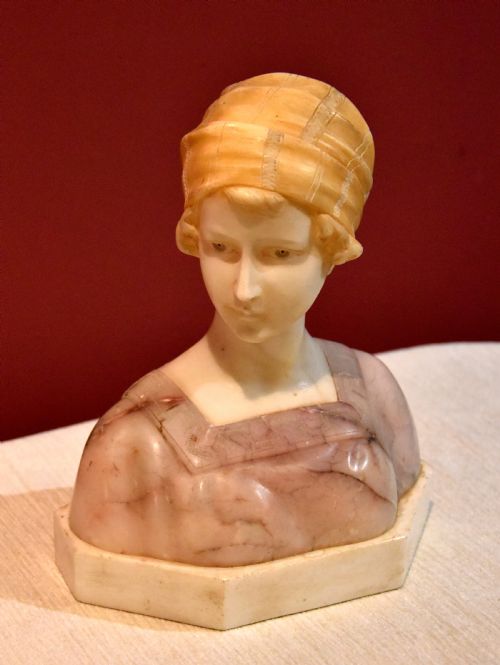
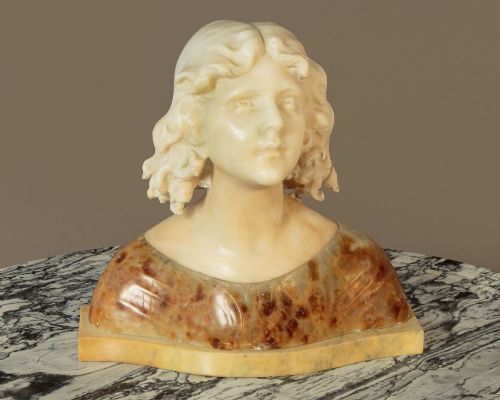


Art Nouveau Alabaster
Art nouveau alabaster pieces capture flowing feminine forms and organic curves, bringing turn-of-the-century elegance to any interior.
Art Nouveau Alabaster
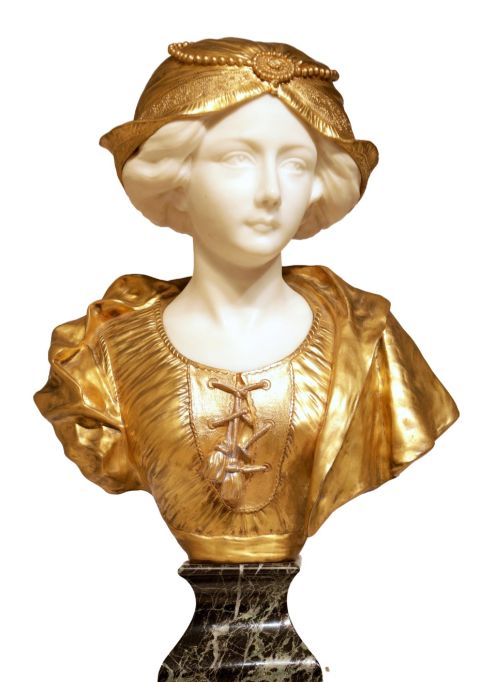
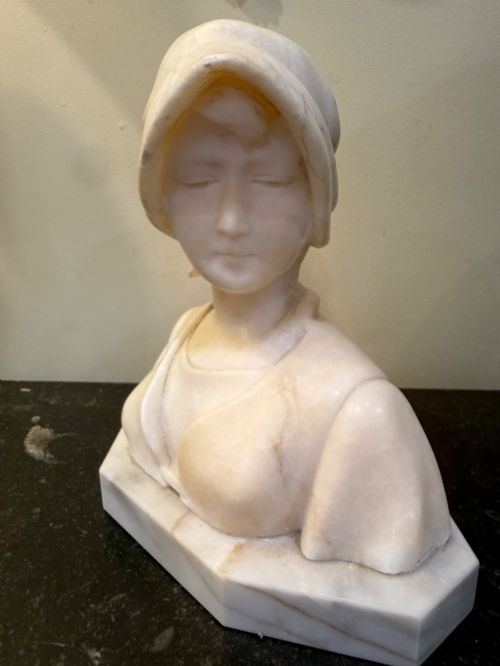
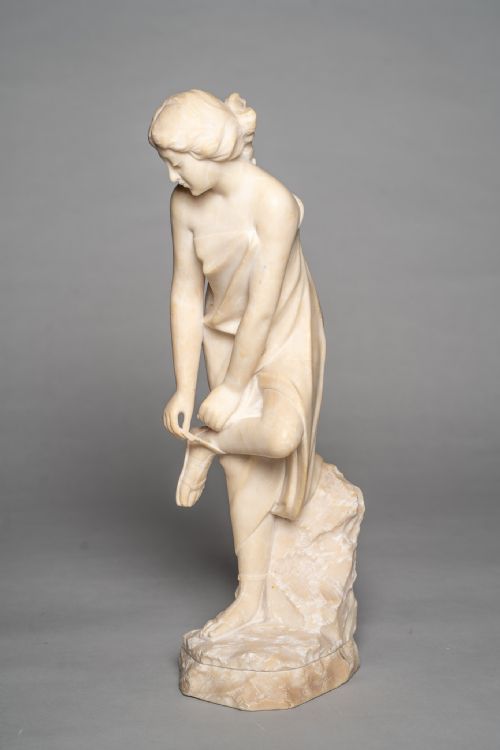
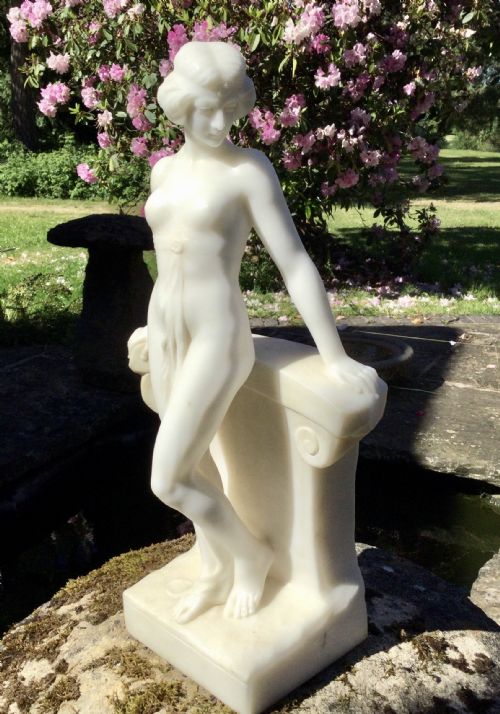
Art nouveau alabaster works mostly comprise sculptural busts and full figures of young women, alongside table lamps and chandeliers. These pieces date principally from the late nineteenth century and the early decades of the twentieth century, aligning with the height of the movement.
The objects frequently blend soft stone with contrasting media, capturing the characteristic fluid lines and naturalistic drapery of the period. Buyers will encounter both intimate cabinet sculptures and larger decorative busts originating from French and Italian workshops.
How they were made
Craftsmen carved these pieces from fine-grained alabaster and marble, often combining the stone with cast metals such as bronze, gilt bronze, brass, or ormolu. Artisans utilised skilled hand-chiselling and polishing techniques to achieve subtle tonal variations and smooth skin textures on figurative subjects.
Many sculptures incorporate mixed media elements, pairing carved stone with glass components or metal mounts to emphasise the decorative motifs typical of the era. Makers signed their work directly into the material, ranging from detailed portrait busts to illuminated table lamps.
Art Nouveau Alabaster Retail Price Guide 2026
Typical asking prices for art nouveau alabaster among the pieces listed under this phrase on Sellingantiques today, from the lower quarter to the upper quarter. They describe what is for sale here now, not the wider market.
Several ladies hold unexpected companions, from musical lyres and wheatsheaves to bubbling fountains and swimming pools.
What varies in quality
Quality in these sculptures rests upon the crispness of the carving, particularly in the rendering of facial expressions, hair, and draped fabric. Superior examples display delicate hand-finishing that brings out the translucent qualities of the stone without losing anatomical proportion.
The integration of mixed materials also dictates overall standard, where high-grade pieces feature finely cast bronze or ormolu mounts that complement rather than overpower the central stone carving. The presence of a clear artist signature often distinguishes workshop pieces of higher ambition.
Affortunato Gory·A.Gamay·Auguste Henri Carli·Fritz Kochendorfer·George Van Der Straeten·Pugi·G.V. Vaerenbergh·Gugielmo Pugi·R.LUSILI·A.Cipriani
The Art Nouveau Alabaster Glossary
- Alabaster
- A soft, fine-grained stone prized for its translucence and smooth texture. It allows sculptors to achieve gentle gradients and lifelike flesh tones.
- Ormolu
- Gilded bronze mounted onto decorative objects and sculptures. This technique adds metallic warmth and rich contrast to carved stone figures.
- Spelter
- A zinc alloy frequently utilised as a substitute for bronze in decorative figures. It accepts patination well and mimics heavier metals.
- Belle Epoque
- A period of artistic and cultural refinement spanning the late nineteenth century to the First World War. Much of the sculptural work aligns with this aesthetic.
- Neoclassical Revival
- An artistic movement drawing inspiration from classical antiquity. It often influences the formal posture and drapery seen in turn-of-the-century busts.
Art Nouveau Alabaster: Frequently Asked Questions
How should I clean art nouveau alabaster?
Alabaster is a soft and water-soluble stone, meaning moisture can permanently damage the polished surface. Dust the sculpture gently with a dry, soft microfibre cloth.
Avoid using any water, chemical sprays, or abrasive cleaners on the stone or its metal mounts. Professional conservation advice should be sought for deep cleaning.
Where were these pieces made?
The majority of these sculptures originate from workshops in France and Italy, where skilled artisans carved the local stone. Major cities and regional centres supported active carving communities.
French pieces frequently incorporate gilt bronze or ormolu mounts, while Italian works tend to focus on pure carved alabaster and marble combinations.
How do I date these sculptures?
Dating relies heavily on stylistic markers, artist signatures, and recorded active periods of the sculptors. Most pieces date from the late nineteenth century through to the nineteen-twenties.
Costume details, hairstyles, and the specific curvature of the art nouveau design help narrow down the production era to around nineteen hundred.
Are these sculptures signed?
Many pieces feature the signature or stamp of the sculptor directly incised into the base or side of the stone. Signatures link the work to known European makers of the period.
Unsigned pieces also appear frequently, representing workshop production where the quality of the carving remains the primary indicator of origin.