
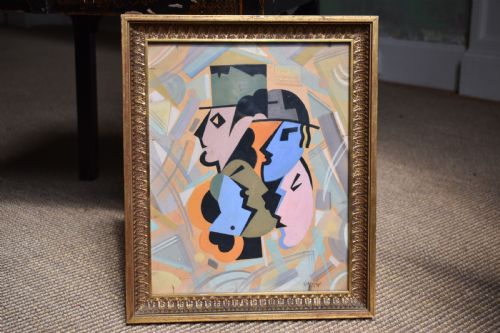


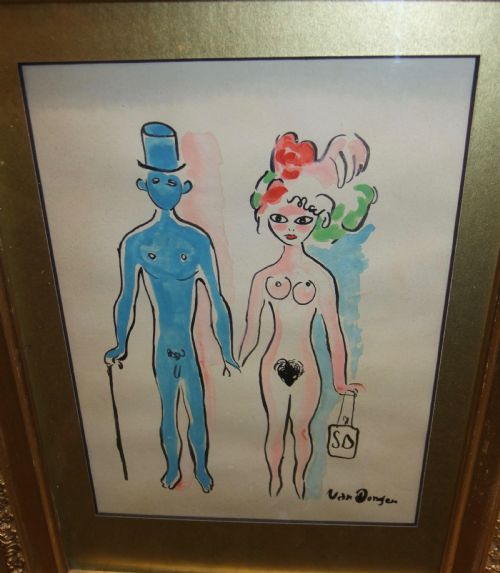

Art Deco Watercolour Painting
An art deco watercolour painting brings immediate twentieth-century character to a wall, offering bold lines and vibrant pigments on paper.
Art Deco Watercolour Painting
When you search for art deco watercolour painting, you encounter works spanning the decades from nineteen twenty through to nineteen fifty, capturing portraits, landscapes, and commercial designs. The selection encompasses framed artwork, portrait miniatures, and wall art created with water-based pigments on paper.
Portraits of women dominate the available forms, including signed miniatures of flapper ladies and theatrical figures alongside expressive nudes. You also find landscapes and design studies for pottery and advertising created during the interwar period.
Materials and methods
These pieces utilise watercolour on paper, frequently combined with ink to define sharp outlines and structural details. Artists applied fluid pigments to create subtle washes and distinct tonal contrasts characteristic of the period.
Presentation relies on period frames incorporating wood, glass, and brass elements to protect the delicate paper supports. Portrait miniatures often feature intricate hand-painted execution within compact dimensions.
Several artists preferred painting flapper ladies after tea time.
Defining quality
Distinction in these works rests upon the confidence of the brushwork and the clarity of the composition, separating hasty sketches from accomplished studio pieces. Expressive handling of the medium and strong stylistic commitment elevate certain works above standard decorative items.
The precision of portraiture and the preservation of the paper support influence the overall integrity of the piece. Works retaining clear signatures and precise dating offer stronger documentary value.
Susie Lassam RMS RA·Usabal y Hernandez·Kees van Dongen·Leo Klin
The Art Deco Watercolour Painting Glossary
- Watercolour
- A painting method in which the paints are made of pigments suspended in a water-based solution. This technique allows for transparent washes of colour on paper surfaces.
- Portrait Miniature
- A small-scale painted portrait, highly detailed and traditionally housed in a protective frame. These works demand exceptional precision from the artist due to their diminutive size.
- Fauvism
- A style of painting characterised by strong colours and fierce brushwork rather than realistic values. This movement influenced the expressive use of pigment seen in certain modernist works.
- Paper
- The primary flat support material used for watercolour application. Quality and thickness vary across different artistic traditions and decades.
Art Deco Watercolour Painting: Frequently Asked Questions
How do I frame an art deco watercolour painting?
Protect the delicate paper surface by using conservation-grade mount board that prevents the watercolour from touching the glass directly. Select framing materials such as wood or brass that complement the period aesthetic of the artwork without overshadowing the pigment.
Keep the framed piece away from direct sunlight to prevent the watercolour pigments and paper from fading over time. Ensure the backing sealed on the frame is acid-free to maintain the longevity of the paper support.
What subjects appear in these watercolours?
Portraits of women, theatrical scenes, and stylised nudes dominate the subjects, reflecting the modernist interests of the interwar decades. You also discover landscape views and commercial design studies intended for pottery or advertising.
These diverse subjects capture both high artistic experimentation and applied commercial art from the nineteen twenties and nineteen thirties. Each genre employs the fluid properties of watercolour to achieve distinct graphic qualities.
How do I date an art deco watercolour painting?
Examine the signature, inscriptions, and any visible dates recorded directly on the paper by the artist. Stylistic elements such as clothing, hair styling, and typography often provide strong clues to the exact decade of creation.
Consider the framing and materials associated with the piece, as original mountings frequently date from the period of production. Comparing the handling of the watercolour to documented works by known makers helps narrow down the timeline.
Were these paintings used commercially?
Several watercolours function as original designs for commercial applications, including wallpaper patterns, pottery dishes, and department store advertisements. Artists produced these finished painted studies to guide industrial production and print reproduction.
These commercial artworks bridge the gap between fine art and functional design characteristic of the twentieth century. Their survival offers insight into the commercial art processes of firms such as Harrods and various potteries.