



Art Deco Illustration Artwork
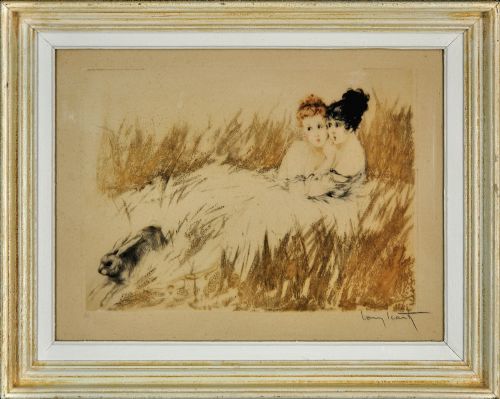
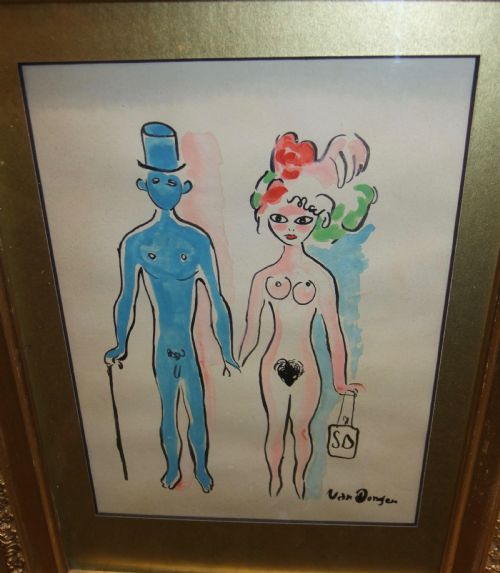
These art deco illustration artwork pieces capture the graphic elegance and stylistic confidence of the interwar years through works on paper and framed paintings.
Art Deco Illustration Artwork
When you search for art deco illustration artwork, you are looking at original works on paper, framed drawings, paintings, prints and etchings produced across the early decades of the twentieth century. These pieces record the distinct visual vocabulary of the period, spanning from the decadence of Belle Epoque sensibilities through to the sharp linearity of the interwar years.
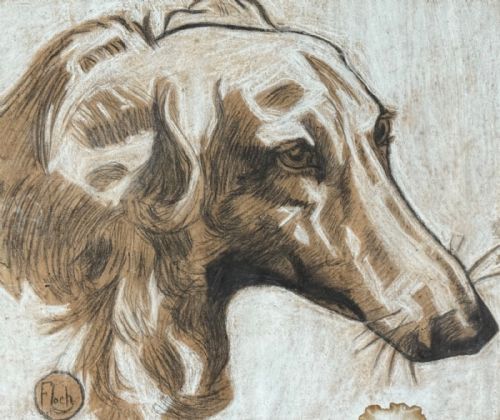
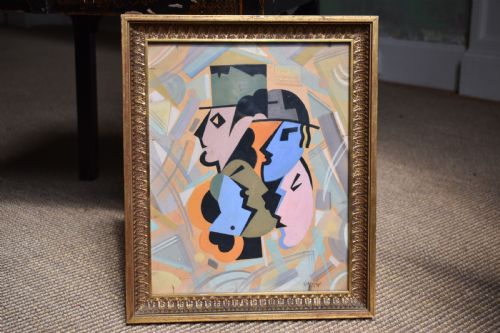
The selections available here lean heavily into works on paper, watercolours, gouaches and hand-coloured etchings originating from the nineteen-twenties and nineteen-thirties. You will encounter theatrical scenes, fashion designs, poster artwork and portraits that reflect both commercial commissions and studio pieces.
While the core of the selection sits firmly in the nineteen-twenties and nineteen-thirties, stylistic echoes stretch from nineteenth century foundations into mid-century modernism. These items function primarily as wall art and framed artwork, offering immediate visual impact through period-specific draftsmanship.
Materials and techniques
The works rely upon traditional graphic media, predominantly utilising watercolour, gouache, ink and pencil applied to various grades of paper. Artists of the period frequently combined these water-based pigments with chalk or gilt highlights to achieve graphic contrast and surface luminosity.
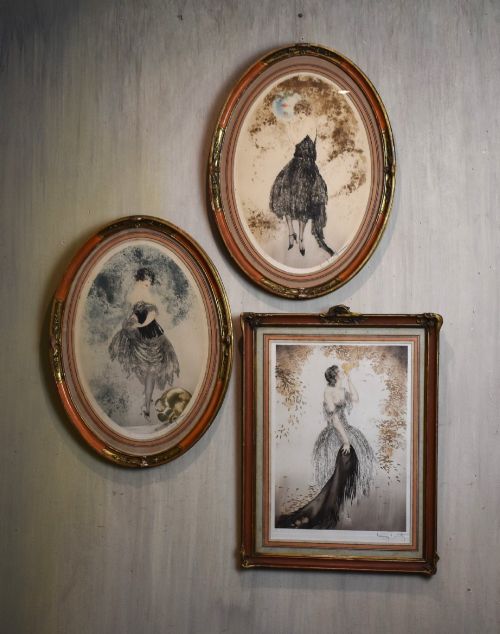
Printmaking techniques such as etching, lithography and engraving form a substantial part of the material record, often paired with hand-colouring to individualise multi-plate or printed editions. Support materials range from standard buff and white papers to card stocks used for poster designs and commercial advertisements.
Listings feature works spanning from the nineteenth century through the nineteen-fifties, with a heavy concentration centred around nineteen-thirty.
Factors of quality
Quality in these works rests upon the surety of the line and the clarity of composition, where a confident hand distinguishes a finished studio piece from a casual sketch. The relationship between the medium and the paper surface determines the longevity and visual crispness of the final image.
Provenance and direct attribution to documented practitioners elevate specific pieces above anonymous commercial ephemera. The preservation of the original sheet, free from heavy fading or acidic staining, dictates the integrity of the surviving artwork.
Louis Icart·Lucien Gibert·Georges Goursat·Jean Hardy·Albert Guillaume·Kees van Dongen·Henry Bird·Leo Klin
The Art Deco Illustration Artwork Glossary
- Gouache
- An opaque water-based pigment that dries to a matte finish, frequently utilised in poster design and graphic illustration for its dense, flat areas of colour.
- Etching
- A printmaking method where lines are bitten into a metal plate with acid before being inked and pressed onto paper, allowing for fine linear detail.
- Lithography
- A planographic printing process based on the repulsion of oil and water, commonly employed for commercial posters and illustrated plates.
- Belle Epoque
- A period of French history spanning the late nineteenth century into the outbreak of the First World War, characterised by optimism and theatrical illustration.
- Modernist
- An artistic movement rejecting traditional academic conventions in favour of simplified forms, abstraction and experimental perspectives.
Art Deco Illustration Artwork: Frequently Asked Questions
How do I frame antique works on paper?
These works require conservation-grade mounting materials to prevent acid migration from standard backing boards into the original paper. Spacers should be used to keep the glass from touching the surface of watercolours, gouaches or drawings.
Ultraviolet-filtering glass protects fugitive pigments like watercolours and coloured inks from fading under direct daylight. Traditional narrow wooden frames suit the aesthetic of the period without overwhelming the delicate scale of the illustration.
What is the difference between an etching and a lithograph?
An etching is created by incising lines into a metal plate and printing the recessed grooves, resulting in a characteristic plate mark indented into the paper. This technique yields crisp, raised lines that hold ink with distinct tactile depth.
Lithography relies on a flat stone or metal plate treated to accept ink only in drawn areas, producing smooth gradients and painterly textures without plate marks. Etched prints from this era were frequently hand-coloured afterwards with watercolour washes.
How do I distinguish commercial designs from fine art?
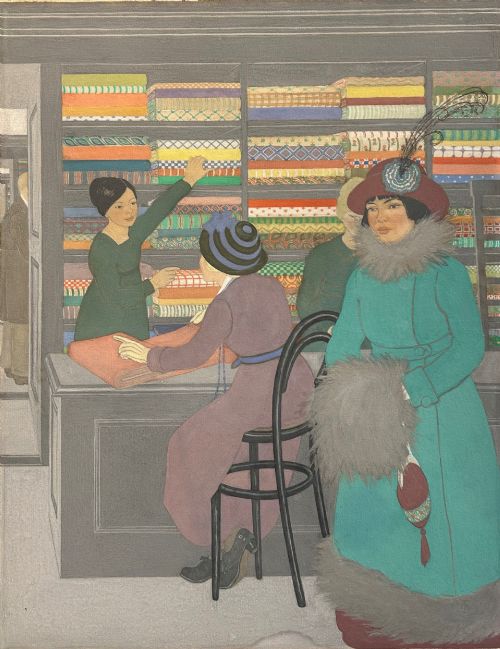
Commercial designs often bear specific publisher text, crop marks, advertising text or evidence of having been prepared for reproduction such as Harrods advertisements or poster layouts. These pieces served a functional purpose in print media rather than hanging solely as independent gallery works.
Fine art drawings and paintings generally focus on portraiture, nudes or narrative scenes without commercial lettering. Both categories share the same stylistic traits of the period, though commercial works frequently display bolder graphic clarity.
How should I display art deco drawings at home?
Drawings and watercolours on paper are sensitive to ambient light levels and should be positioned away from direct, strong sunlight to preserve the fugitive pigments. Wall placement in rooms with stable humidity levels prevents the paper supports from cockling or developing foxing spots.
Pairing these framed works with period furniture or neutral walls allows the graphic linework and vibrant gouache highlights to command visual attention.