
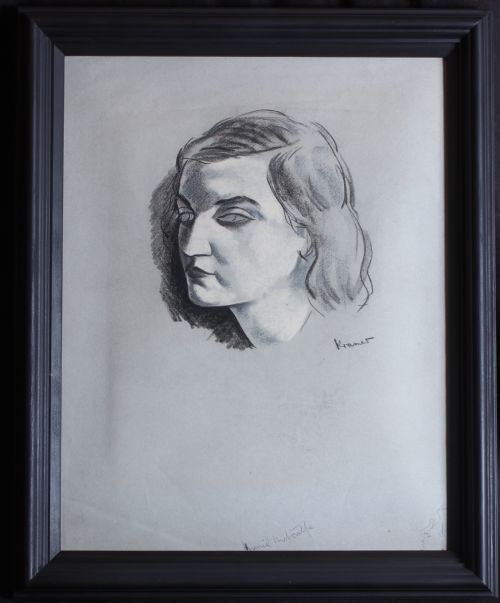
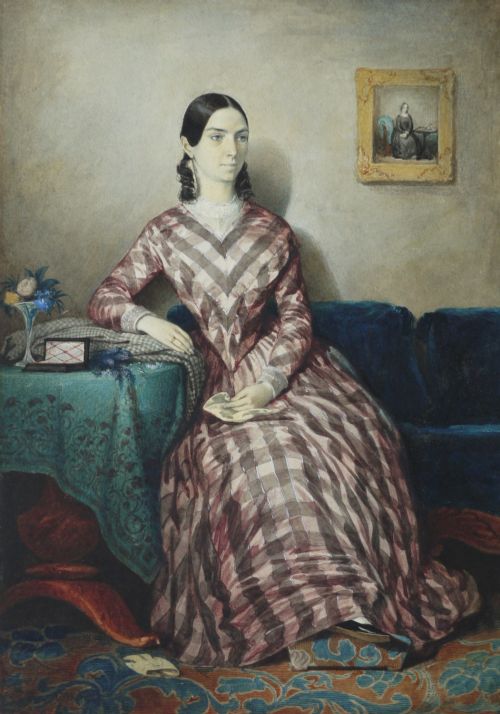
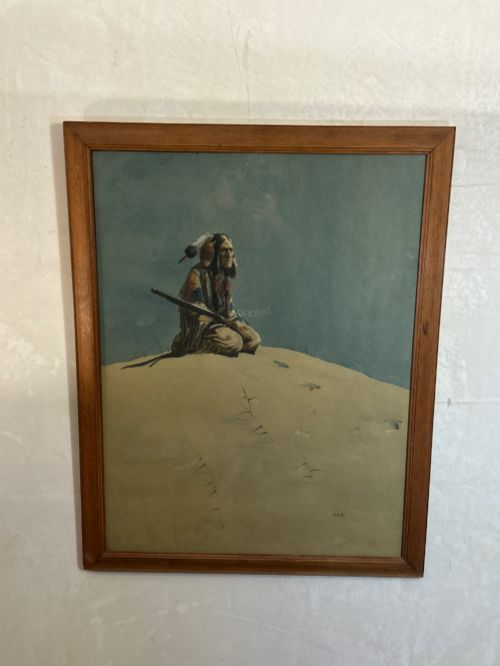
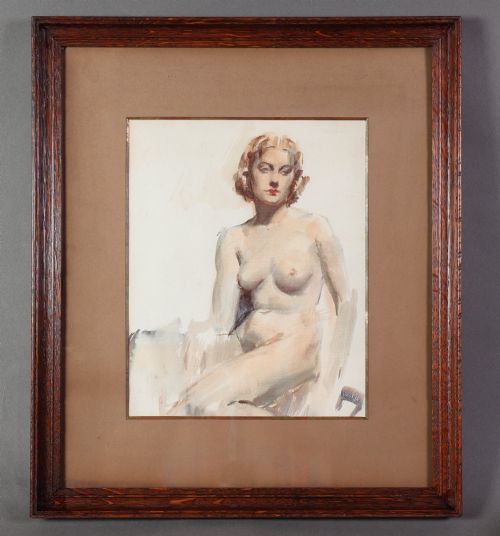
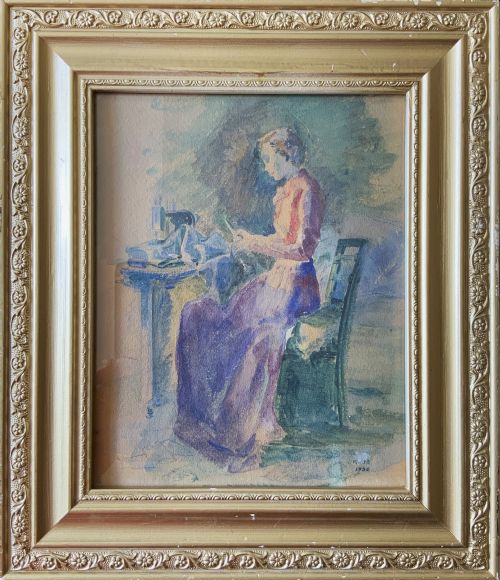
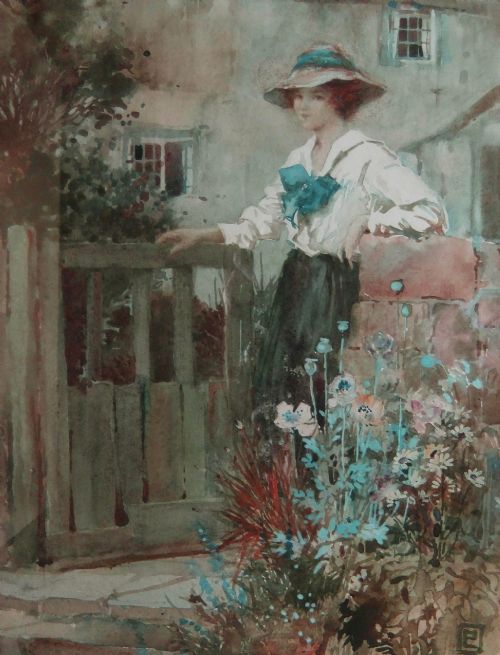
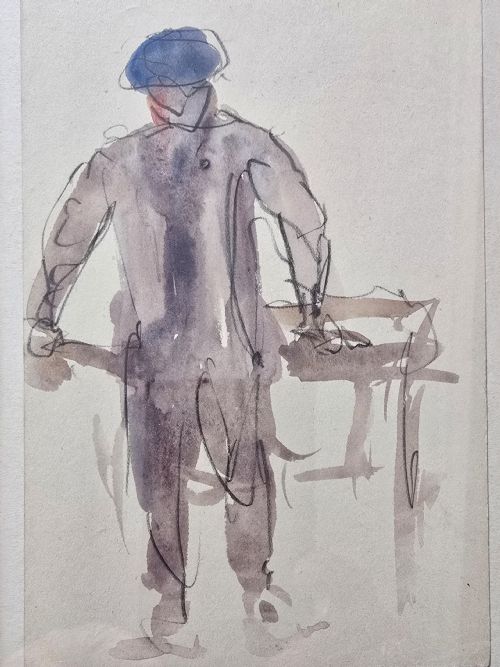

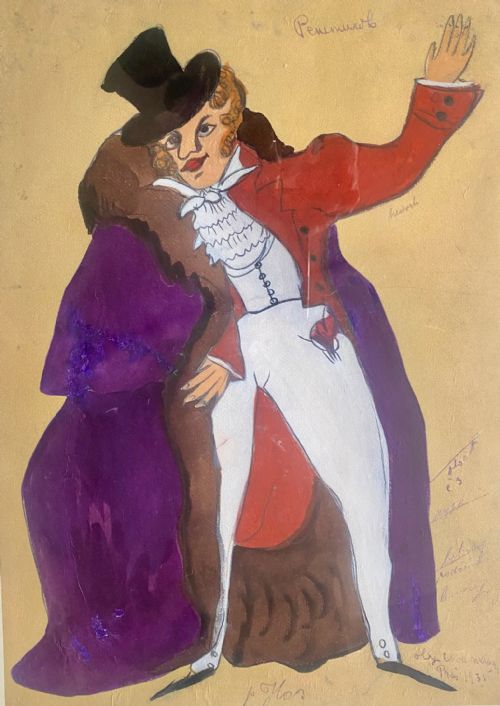


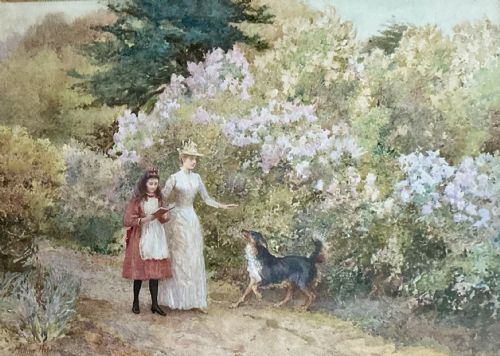


Original Figurative Watercolour
An original figurative watercolour brings human presence and fluid brushwork directly to your wall.
Original Figurative Watercolour
When you search for original figurative watercolour, you encounter portraits, scenes of daily life, and theatrical studies executed by hand on paper.
The selections span from Victorian academic works to mid-century impressionism, capturing people in domestic, pastoral, and coastal settings.
Most pieces you meet here originate from the nineteenth and twentieth centuries, created by British and European artists working in transparent and opaque water-based pigments.
Materials and Technique
Artists apply watercolour pigment and occasionally gouache, ink, or gold leaf onto paper supports using fine brushes to achieve delicate washes and sharp linear details.
Framing under glass protects the absorbent paper and the water-soluble pigments from atmospheric moisture and surface damage over the decades.
Artists frequently turned their brushes toward everyday domestic drama, capturing subjects caught while peeling potatoes, knitting outside, or nursing a pet squirrel.
Distinctions in Quality
Quality rests upon the sureness of the draughtsmanship and the artist's command over pigment dilution, where confident brushwork separates accomplished portraits from rigid studies.
The preservation of the paper support and the vibrancy of the original colours determine the visual impact and historical integrity of the piece.
John Hassall·Percy Lancaster·Michael Healy·James Hayllar·Olga Choumansky·Philip Richard Morris·Henry E Hobson·Arthur Hopkins·Rowland Henry Hill·Raoul Millais·Sir William Russell Flint·Robert Richard Scanlan·Thomas James Lloyd·Usabal y Hernandez·Emil John Hess·George Kilburne·Leonardo Morello·David Woodlock·William Lee Hankey·Linnie Watt·Frederick Thomas Baynes·Ebenezer Wake Cook·Irene Lagut·Kees van Dongen·Yves Brayer
The Original Figurative Watercolour Glossary
- Watercolour
- A painting method in which the paints are made of pigments suspended in a water-based solution. The paper shows through the translucent washes.
- Gouache
- An opaque water-based paint that includes a white pigment filler, producing a heavier and more solid colour application than standard watercolour.
- Victorian
- Pertaining to the reign of Queen Victoria, marked in these works by detailed figurative realism and narrative domestic scenes.
- Impressionism
- A style focused on light and spontaneous brushstrokes rather than rigid academic finish, seen across various twentieth-century works here.
- Pre-Raphaelite Movement
- A nineteenth-century artistic group known for detailed observation and intense colour, reflected in select romantic pastoral scenes.
Original Figurative Watercolour: Frequently Asked Questions
How should I frame a watercolour?
Watercolours require framing behind glass with a mount that keeps the paper from touching the glazing directly.
Keep them away from direct sunlight to prevent the pigments from fading over time.
How do I identify the period?
Look to the clothing styles, framing materials, and signatures, which often align with nineteenth-century academic realism or twentieth-century impressionist movements.
Paper types and handwritten inscriptions on the reverse also offer clues to the date of creation.
What is the difference between watercolour and gouache?
Watercolour relies on transparent washes where the white of the paper illuminates the pigment.
Gouache contains added chalk or white pigment, creating an opaque, matte finish that allows for highlights painted over darker tones.
Are these works unique?
Every piece listed under this phrase is a hand-painted original work executed directly onto paper.
Artists painted each portrait or figurative scene once, making each surviving sheet a singular historical object.