


Original Theatrical Artwork
Original theatrical artwork captures the drama and colour of the stage through paintings, drawings and pastels spanning multiple centuries.
Original Theatrical Artwork
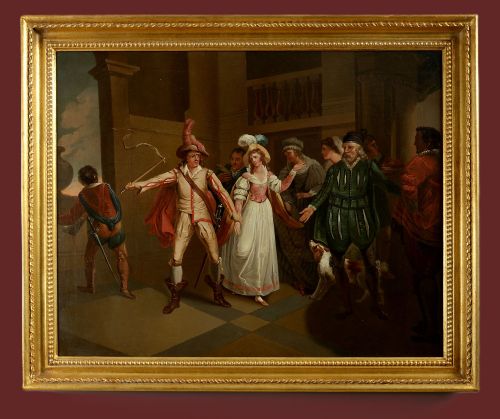
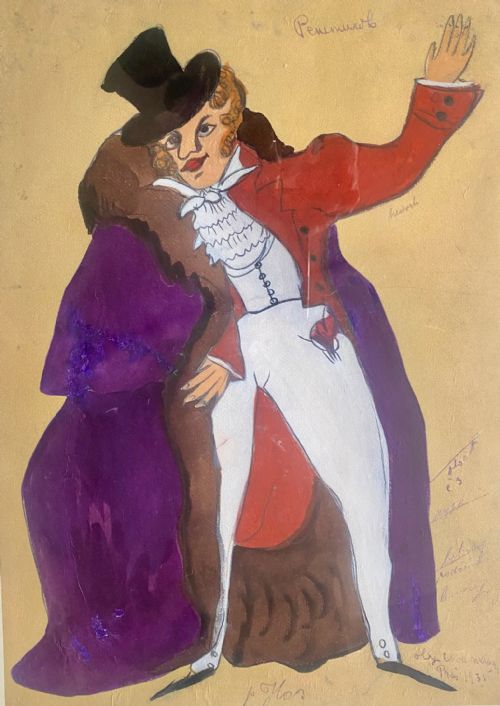
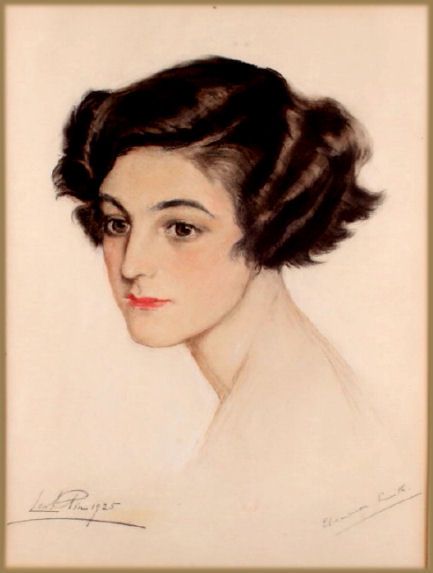
Original theatrical artwork brings together paintings, drawings and pastels that record performers, stage figures and productions across several centuries. The pieces on this page range from eighteenth-century oil canvases to twentieth-century avant-garde gouaches and mid-century pastel portraits.
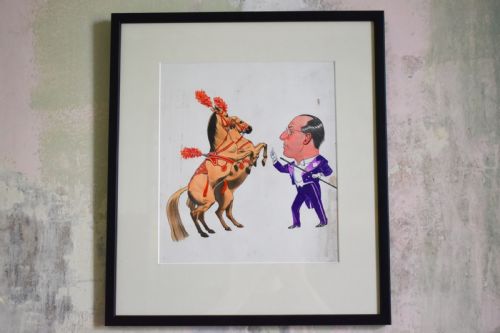
Buyers encounter diverse subjects, including circus performers, ballet dancers, classical drama characters and portraits of notable actors. These works reflect stylistic shifts from Georgian portraiture through Art Deco illustration to mid-century modernism and surrealism.
The materials vary widely, capturing the immediacy of ink and graphite sketches alongside the finished weight of oil on canvas and watercolour. Each piece records a distinct theatrical moment, whether through rapid preparatory studies or detailed finished paintings.
Materials and technique
Artists working on paper utilised watercolour, gouache, ink, graphite and pastel to capture fleeting stage action with speed and precision. These water-based and dry media allowed creators to record costume details and dramatic lighting in studio settings or during live performances.
Works on canvas rely on oil paint, building rich textures and deep colour layers suitable for formal portraits and complex stage scenes. Wood frequently provides the structural support for frames, enclosing the paper and canvas components behind glass or open mounts.
The listings on this page span multiple periods, stretching from the 18th century through the Victorian era to the mid-20th century.
Distinguishing quality
Quality rests upon the sureness of the draftsmanship and the artist's ability to convey movement, character and theatrical atmosphere. Stronger works demonstrate confident line work and purposeful brushstrokes that capture the energy of the performer rather than mere likeness.
The historical significance of the sitter, production or artist elevates certain pieces, particularly those documenting specific named actors or documented stage performances. Condition also plays a part, with well-preserved works retaining their original pigment vibrancy across paper and canvas.
Dame Laura Knight·Henry Bird·Lucy Kemp-Welch·Leo Klin·Andre Delfau
The Original Theatrical Artwork Glossary
- Gouache
- An opaque water-based paint that dries to a matte finish, often combined with watercolour in theatrical illustrations for added brilliance. This medium allows for sharp highlights and solid blocks of flat colour.
- Pastel
- A dry medium consisting of powdered pigment and a binder, frequently utilised for portraits because of its soft texture. It creates velvety tones that capture the theatrical lighting on a performer's face.
- Avant-Garde
- A stylistic approach that rejects traditional academic rules in favour of experimental forms, seen here in twentieth-century surrealist interpretations. These works push theatrical depiction into abstract or dreamlike territory.
- Provenance
- The documented history of ownership surrounding an artwork, which helps verify authenticity and previous exhibitions. A clear record adds context to portraits of stage personalities.
Original Theatrical Artwork: Frequently Asked Questions
What subjects appear in theatrical artwork?
The subjects range from circus performers and ballet dancers to named actors and characters from classical plays. Artists recorded both candid backstage moments and finished stage performances.
Portraits capture specific theatrical personalities alongside imaginative surrealist interpretations of performers and dancers.
How do I care for works on paper?
Works on paper require protection from direct sunlight to prevent fading in watercolours, gouaches and pastels. Framing behind glass with acid-free mounts safeguards the delicate pigments.
Keep these pieces in stable environmental conditions away from excessive moisture and fluctuating temperatures.
How can I tell different art styles apart?
Eighteenth and nineteenth-century pieces often follow classical portrait traditions with formal compositions and naturalistic lighting. Twentieth-century works introduce Art Deco linearity and surrealist abstraction.
Early twentieth-century illustration focuses on expressive linework, whereas mid-century examples lean towards bolder colour palettes.
Were these pieces made during live performances?
Some works consist of rapid sketches drawn directly from life during rehearsals or live shows to capture motion. Other examples are finished studio portraits painted from preliminary drawings or memory.
Pencil studies and quick watercolours usually indicate direct observation of the stage.