





Interwar Landscape Painting
Interwar landscape painting captures the changing rural and industrial vistas of the nineteen-twenties and nineteen-thirties with distinctive modernist energy.
Interwar Landscape Painting
An interwar landscape painting brings together the artistic experiments of the nineteen-twenties and nineteen-thirties, spanning rural countryside scenes, coastal views and industrial settings. Buyers searching for interwar landscape painting encounter works that bridge traditional subjects with modernist, Post-Impressionist and Art Deco sensibilities.
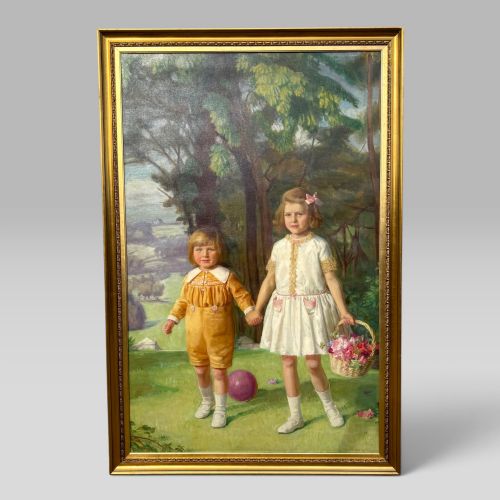
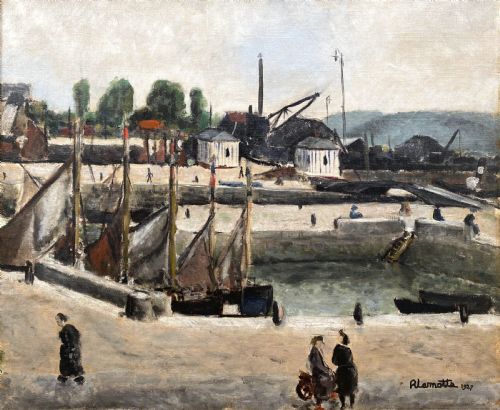
The selections on this page primarily comprise watercolours on paper and oil paintings on canvas or board, originating from British and French studios. These works reflect the diverse visual vocabulary of the period, from quiet Staffordshire lanes and Yorkshire winter views to sunlit French paths and Roman ruins in Provence.
Materials and techniques
Artists of this era applied oil paint and watercolour across canvas, wood, paper and glass supports, capturing light and atmosphere with varied brushwork. Oil on canvas works provide textured, layered depths while watercolours rely on the luminosity of the underlying paper.
Framed works utilise traditional wooden surrounds, preserving the integrity of pieces produced during the nineteen-twenties and nineteen-thirties.
Interwar Landscape Painting Retail Price Guide 2026
Typical asking prices for interwar landscape painting among the pieces listed under this phrase on Sellingantiques today, from the lower quarter to the upper quarter. They describe what is for sale here now, not the wider market.
Listings feature works from nineteen-twenty to nineteen-thirty-eight, spanning British and French artistic movements including Modernism and Art Deco.
Judging quality in interwar art
Quality rests upon the artist's handling of composition, colour harmony and brushwork vitality, separating routine decorative watercolours from accomplished modernist canvases. Stronger examples display a confident command of light and spatial depth within the landscape.
Condition matters greatly, particularly the stability of oil paint on canvas or board and the preservation of paper against foxing in watercolours.
Raymond Moritz·Samuel Timmins·Edith E Caswall·Fred Lawson·Jane Utley·Pierre Peltier
The Interwar Landscape Painting Glossary
- Post-Impressionism
- An artistic movement extending impressionist techniques while rejecting its limitations, favouring bolder colours and expressive forms. Many interwar paintings adopt these stylistic traits.
- Watercolour
- A painting method in which the paints are made of pigments suspended in a water-based solution, typically applied to paper. It allows for translucent washes of colour.
- Modernism
- A global movement in society and culture that sought a new alignment with the industrial and urbanized world, heavily influencing interwar visual arts.
- Oil on canvas
- Pigments bound in a drying oil medium applied to a stretched canvas support. This technique permits rich texture and gradual blending of tones.
Interwar Landscape Painting: Frequently Asked Questions
What defines interwar landscape painting?
These paintings capture views produced between the First and Second World Wars, combining traditional rural subjects with modern artistic movements like Post-Impressionism and Art Deco.
The works reflect a period of transition in European art, showing both British and French stylistic approaches to nature and industry.
How should I display these paintings?
Interwar landscape painting suits both period and contemporary interiors, particularly when paired with simple wooden frames that complement the canvas or paper.
Keep works away from direct sunlight to protect watercolours and oils from fading over time.
Are these works signed by the artists?
Many pieces from this era bear the original artist signature or attribution, often accompanied by dates from the nineteen-twenties and nineteen-thirties.
Documentation on the reverse of boards or canvases sometimes provides additional context regarding the location depicted.
What mediums were commonly used?
Artists worked primarily in oil paint on canvas or board, and watercolour on paper, utilising the distinct properties of each medium to capture light and texture.
Support materials range from traditional stretched canvas to wooden panels and heavy art paper.