


Art Deco Walnut Headboard
An art deco walnut headboard brings geometric warmth and distinct grain patterns to a bedroom.
Art Deco Walnut Headboard
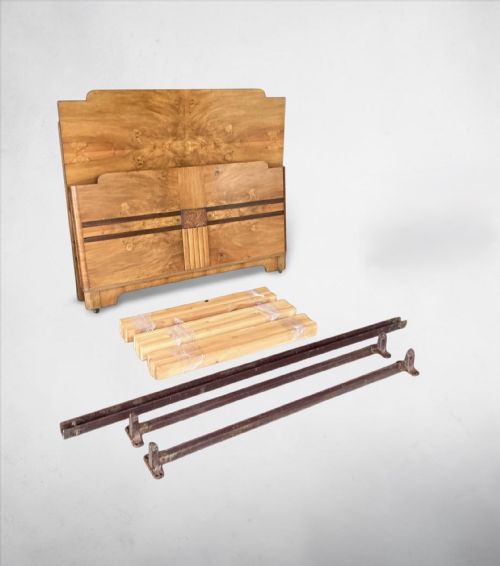
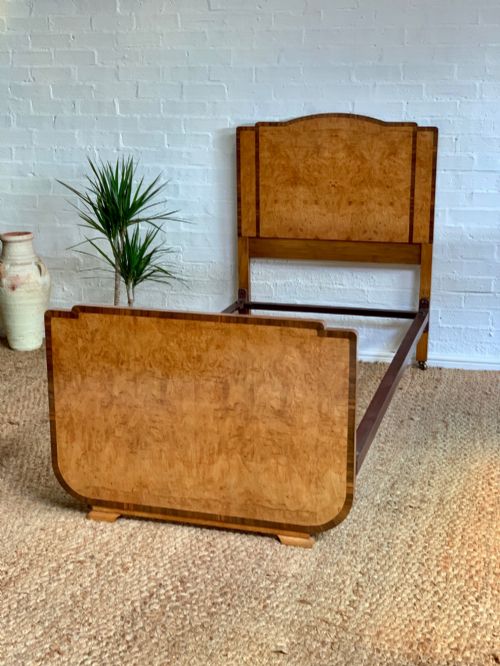
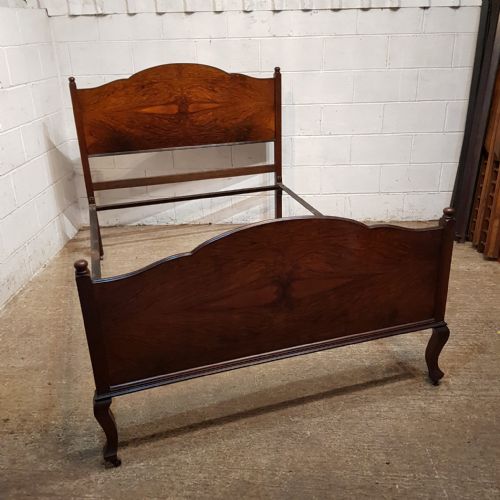
An art deco walnut headboard sits as the visual centrepiece of a bedroom scheme, anchoring the bed frame with period character. These pieces emerge predominantly from the 1930s, alongside examples from the 1920s and 1900s.
The selections span standalone headboards and full bed frames, with several incorporating attached bedside tables or cabinets into the design. Single, double, king size, and larger proportions appear across French and English workshops.
Buyers encounter distinctive silhouettes, including fan shapes, sun bursts, and cloud shapes. These forms reflect the decorative vocabulary of the interwar period.
Materials and construction
Cabinet makers utilised walnut, burr walnut, and figured walnut timber, frequently applied as veneers over a stable core to showcase dramatic grain patterns. Satinwood appears alongside walnut in lighter blonde interpretations.
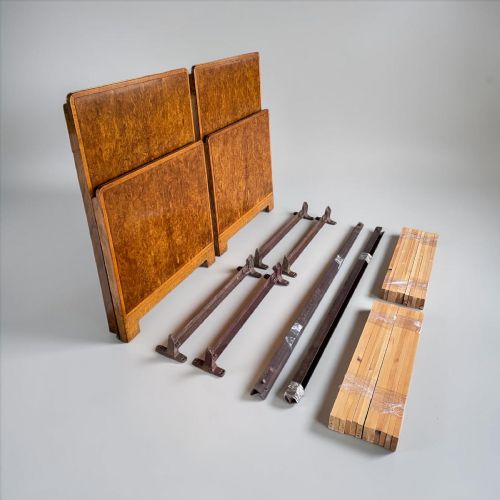
Construction techniques combine traditional cabinet making with veneer matching, creating symmetrical patterns across wide panels. Iron elements and marble tops occasionally support the primary timber structures on integrated bedside units.
Listings feature walnut, burr walnut, satinwood, and iron, spanning the 1900s, 1920s, and 1930s.
Evaluating quality in art deco walnut headboards
The distinction between standard pieces and superior examples rests upon the selection and matching of the timber veneer. Heavily figured burr walnut and symmetrical grain arrangements demand greater skill from the maker and elevate the visual impact.
Integration of functional elements, such as attached bedside tables and cabinets, dictates complexity in design. Pieces maintaining balanced proportions across curved or fan-shaped silhouettes demonstrate higher craftsmanship.
Waring & Gillow England
The Art Deco Walnut Headboard Glossary
- Burr walnut
- A prized timber harvested from growth growths on walnut trees, yielding intricate, swirling grain patterns. It adds rich texture to headboard panels.
- Veneer
- A thin slice of superior wood bonded to a secondary timber base. This technique allows makers to display striking grain formations without heavy solid construction.
- Satinwood
- A durable, light yellow timber utilised for contrast and inlay work. It appears alongside walnut in blonde furniture variations.
- Bedstead
- A framework supporting a mattress and bed base. Many examples incorporate integrated headboards and bedside cabinetry.
- Odeon
- A streamlined architectural style influencing interwar design. It inspires curved, monumental forms in bedroom furniture.
Art Deco Walnut Headboard: Frequently Asked Questions
What sizes are available for these headboards?
The selections encompass single, double, king size, and six-foot proportions.
Widths vary to accommodate different bedroom layouts, from narrow single formats to expansive double configurations.
Do these headboards include bedside tables?
Certain designs feature attached bedside tables, cabinets, or ensuite marble top nightstands integrated directly into the structure.
Other pieces exist as standalone headboards designed to mount against a wall or attach to a standard bed frame.
Which periods do these items date from?
The majority of pieces originate from the 1930s, capturing the height of the decorative movement.
Earlier examples from the 1920s and 1900s also appear, showing early stylistic precursors.
How do I identify burr walnut?
Burr walnut displays dense, swirling circular patterns created by knot growths in the timber.
Cabinet makers arrange these distinctive figures symmetrically across the face of the headboard.