



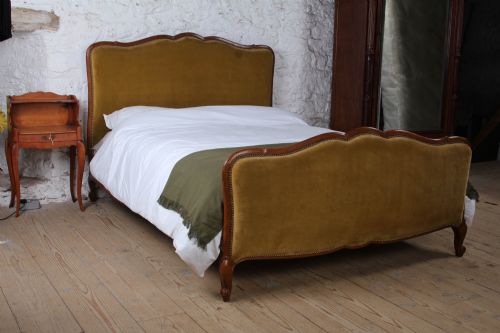
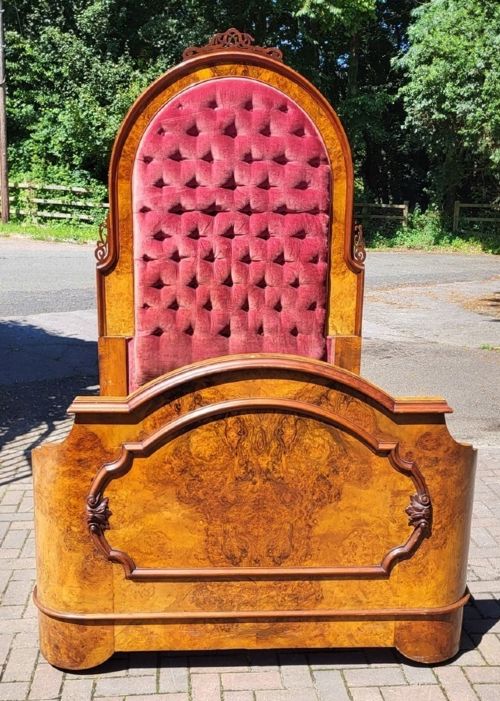


Walnut Double Bed Frame
A walnut double bed frame brings warmth and distinct grain pattern to a bedroom, combining functional size with period character.
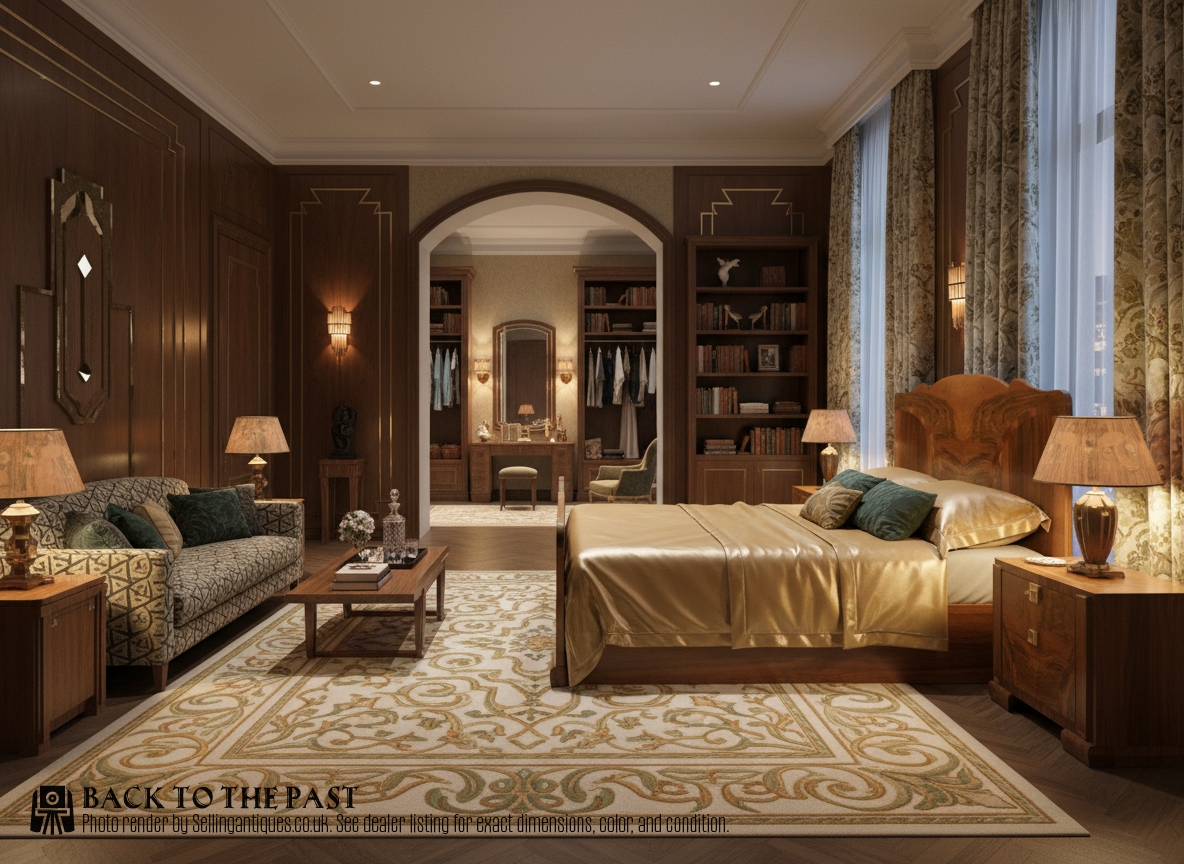
Walnut Double Bed Frame
A walnut double bed frame encompasses a range of historical periods spanning from the nineteenth century through the Edwardian era and into the Art Deco period of the 1930s. Buyers searching for a walnut double bed frame will encounter both British and continental European designs, with many pieces originating from France.
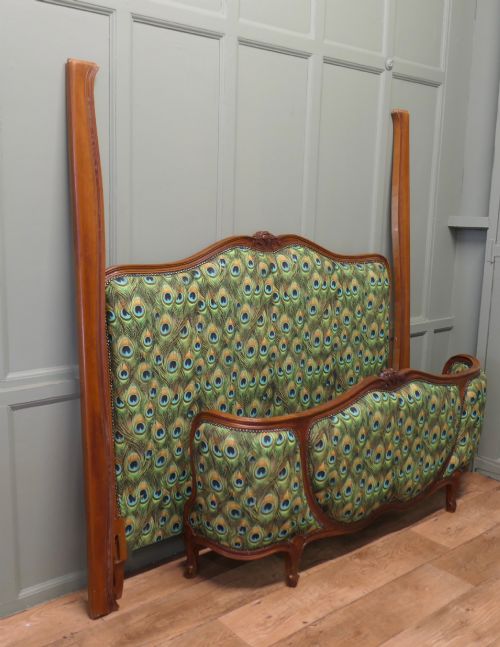
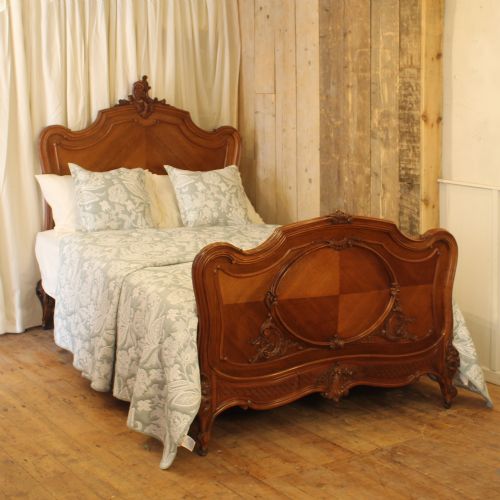
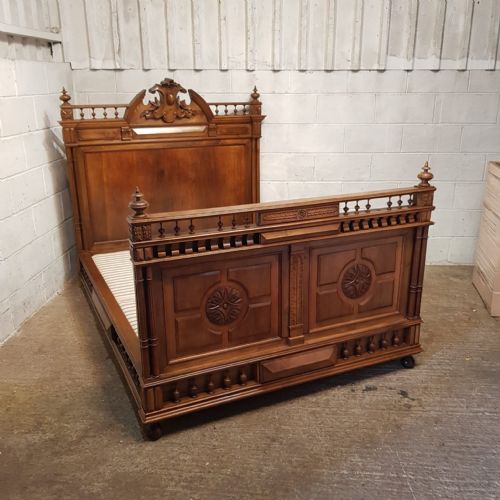
The forms vary from simple wooden frames to high-backed upholstered bedsteads and carved architectural designs. The most common manifestations on this page combine standard double dimensions with decorative woodwork, burr walnut veneers or regional revival styles.
How they were made
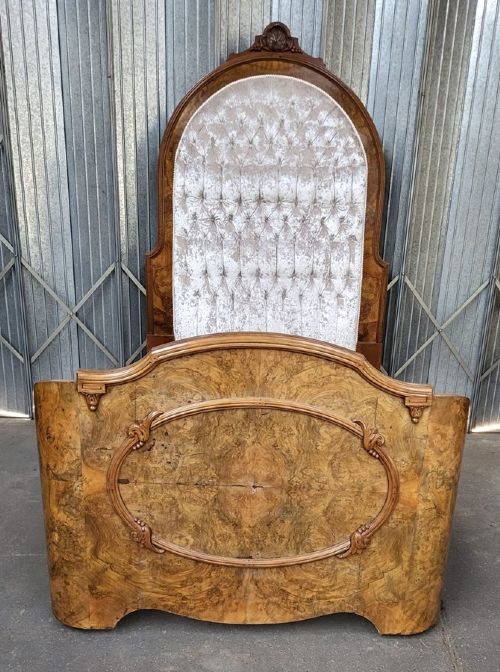
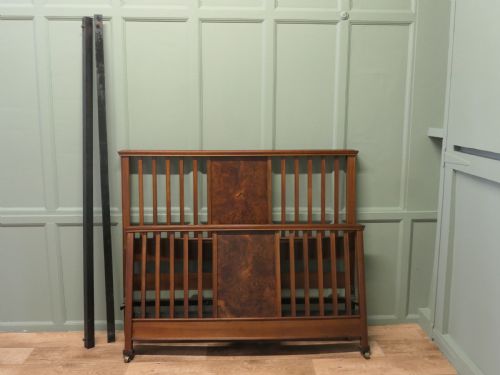
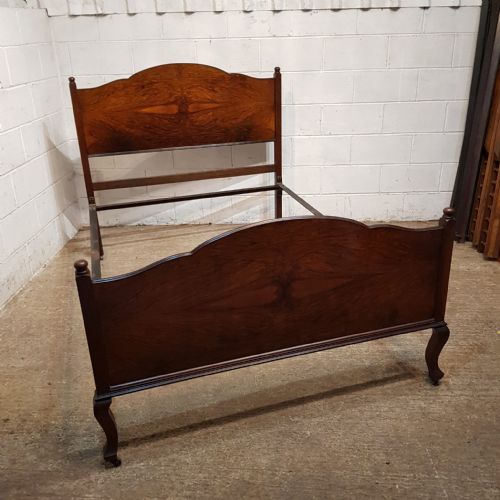
Cabinet makers utilised solid timber alongside specialised veneers to create visual depth on headboards and footboards. Burr walnut and figured walnut veneers were applied over secondary timbers to showcase complex grain patterns, particularly during the Art Deco period.
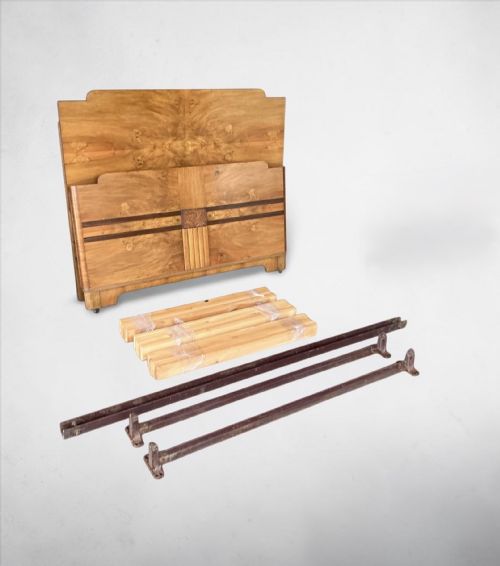
Structural elements frequently incorporated iron or brass fixings to secure the side rails to the head and footboards. Carved ornamentation, parcel gilt highlights and marquetry detailing were hand-applied by period artisans to enhance specific revival styles.
Walnut Double Bed Frame Retail Price Guide 2026
Typical asking prices for walnut double bed frame among the pieces listed under this phrase on Sellingantiques today, from the lower quarter to the upper quarter. They describe what is for sale here now, not the wider market.
Materials documented across the pieces include solid walnut, burr walnut veneer, brass, iron and parcel gilt.
What varies in quality
The visual success of a piece depends largely on the selection and matching of the veneer. Highly figured burr walnut or symmetrically laid grain creates a striking focal point, whereas plain timber yields a more restrained appearance.
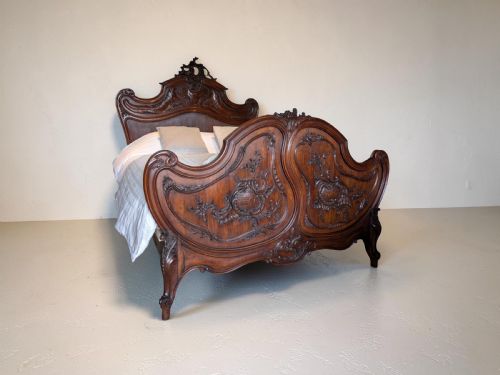
The ambition of the carving and the cohesion of the stylistic period dictate the character of the bedstead. Pieces that execute French Rococo, Louis styles or Art Deco geometries with confident proportion stand apart from simpler vernacular examples.
The Walnut Double Bed Frame Glossary
- Burr walnut
- A prized veneer taken from the growth excrescence on a walnut tree, yielding swirling, knotty patterns. It is frequently centred on Art Deco and Edwardian headboards.
- Bedstead
- A framework of a bed designed to support a mattress and base. Many period listings use this term interchangeably with bed frame.
- Marquetry
- The art of applying pieces of veneer to a structure to form decorative patterns. This technique appears on revival pieces to add surface ornamentation.
- Art Deco
- A design style prevalent in the 1930s characterised by streamlined curves, symmetrical fan shapes and bold grain utilisation. Pieces from this era often feature heavily figured walnut.
- Upholstered
- Fitted with padding, springs and fabric covering, typically seen on high button-back or shaped headboards. This provides softer textural contrast to the surrounding wood.
Walnut Double Bed Frame: Frequently Asked Questions
Will a standard modern mattress fit these frames?
Most historical double frames were built to traditional sizing conventions such as four feet six inches wide. It is advisable to check the internal dimensions of each specific bedstead before purchasing a mattress.
Older frames may occasionally require custom or modified mattress sizing to ensure a correct fit within the wooden side rails.
How do I assemble a vintage bed frame?
Period bed frames typically utilise iron side rails that slot into metal brackets housed within the headboard and footboard posts. This wedge or bolt mechanism allows the entire structure to be dismantled for transport.
Care should be taken during assembly to ensure the frame remains square and level on the floor before adding slats and bedding.
What is the difference between solid walnut and walnut veneer?
Solid walnut utilises carved timber throughout the structural and visible components of the bed. This was common in heavier revival styles where deep three-dimensional carving was required.
Walnut veneer involves a thin layer of decorative wood bonded over a stable timber base. This technique allowed makers to display dramatic grain patterns like burr walnut without warping.
How do I care for antique walnut wood?
Maintaining walnut surfaces involves regular dusting with a soft, dry cloth and avoiding placement near direct heat sources or strong sunlight. Excessive warmth can cause veneers to lift or timber to dry out.
Periodic application of suitable beeswax or polish helps nourish the grain and preserve the finish over time.