


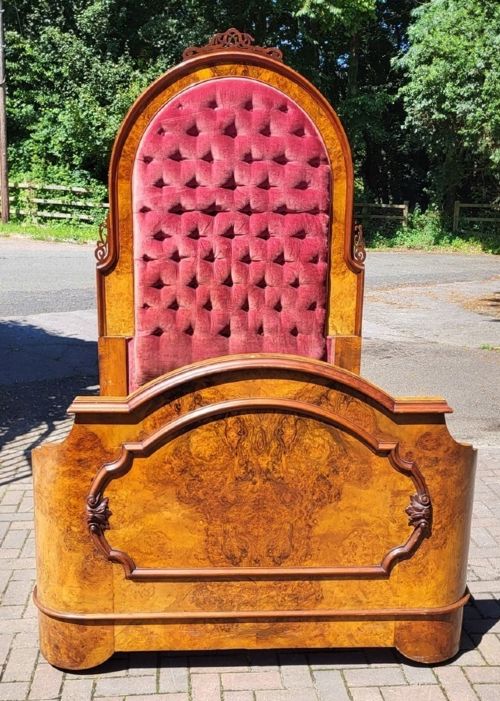


Burr Walnut Double Bed
Burr walnut double bed frames bring rich, swirling grain patterns into the bedroom through Victorian, Edwardian and Art Deco designs.
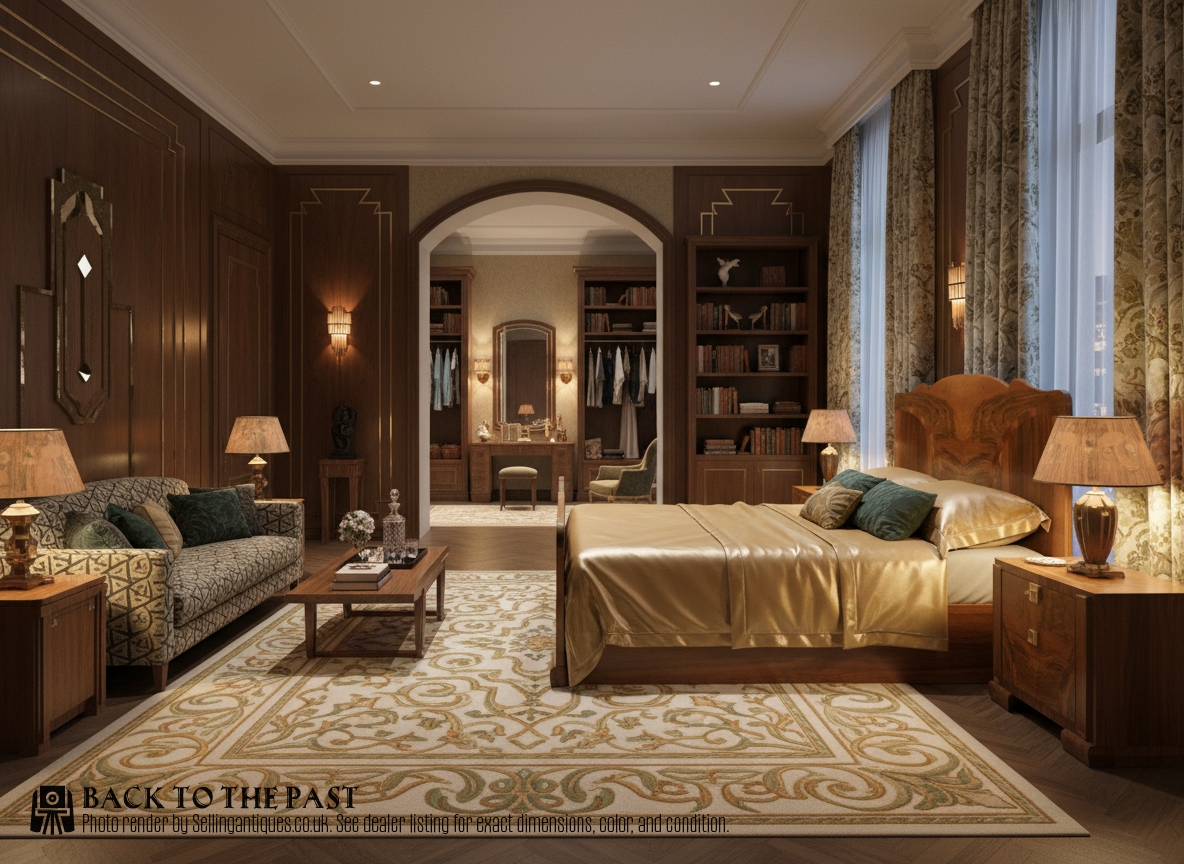
Burr Walnut Double Bed
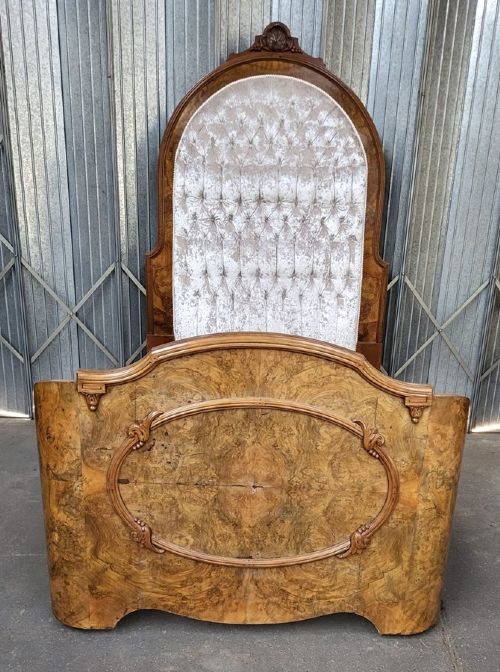
A burr walnut double bed is a substantial frame designed to accommodate standard double mattress sizes, utilising the distinctive knotted growth patterns of walnut timber. These pieces appear across several distinct eras, spanning 19th Century, Victorian, Edwardian and 1930 Art Deco periods.
Materials and construction
The distinct visual appeal relies upon thin veneer layers of burr walnut applied over solid timber foundations, highlighting the natural irregularities and swirls of the grain. Structural elements incorporate secondary woods, iron, steel and brass components to reinforce the frames.
Cabinetmakers matched veneer sections symmetrically across the expanse of headboards and footboards to create balanced geometric or flowing patterns. French polishing finishes the surfaces, sealing the wood and deepening the warm brown tones characteristic of walnut.
Burr Walnut Double Bed Retail Price Guide 2026
Typical asking prices for burr walnut double bed among the pieces listed under this phrase on Sellingantiques today, from the lower quarter to the upper quarter. They describe what is for sale here now, not the wider market.
Some French double beds arrived with matching bedside cabinets, ensuring your alarm clock and midnight book found a properly coordinated resting place.
Distinctions in quality
Quality rests heavily upon the complexity and symmetry of the burr walnut figuring across the main panels, where tightly packed knots denote superior selection. Finely executed carving, applied mouldings and substantial proportions separate ambitious workshop production from simpler commercial output.
The condition of the veneered surfaces and the stability of the underlying timber framework dictate the long-term integrity of each bedstead. Original fittings and well-preserved surface finishes indicate careful maintenance through successive generations.
Roberts and Co of Willenhall·Maple and Co
The Burr Walnut Double Bed Glossary
- Burr walnut
- A veneer sliced from the woody growths or burls found on walnut trees, yielding intricate, swirling patterns full of small knots. This decorative wood serves as the primary visual surface on quality bed frames.
- Bedstead
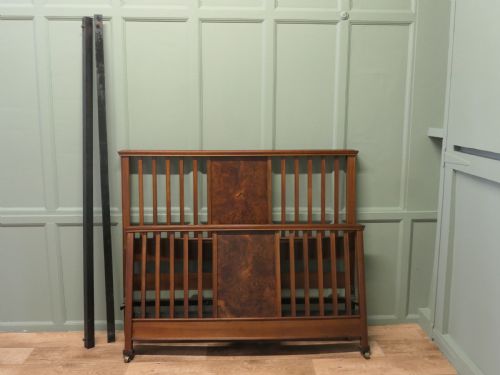
- A framework of wood or metal supporting a bed, comprising head and foot ends joined by side rails. These structures hold the mattress platform.
- Art Deco
- A design style emerging in the early twentieth century, characterised by sleek geometric shapes, streamlined forms and stylized motifs. Beds from this period often display bold curved headboards veneered in figured walnut.
- Half tester
- A bed featuring a canopy extending partway over the head of the bed, supported by the headboard itself. Victorian examples often incorporate upholstered panels beneath the canopy structure.
- Veneer
- A thin layer of superior wood adhered to a base timber core to provide an ornamental exterior surface. This technique allows cabinetmakers to display striking grain patterns economically.
Burr Walnut Double Bed: Frequently Asked Questions
What mattress size fits these antique beds?
Most historic double frames accommodate standard double mattresses, though older French and continental examples can vary slightly from modern dimensions. It is sensible to check the internal width and length between the side rails prior to purchasing a mattress.
Custom mattress makers can also supply bespoke sizes if the frame dimensions deviate from standard modern manufacturing tolerances.
How do I care for burr walnut wood?
Burr walnut requires stable indoor humidity and protection from direct sunlight to prevent veneer lifting and timber drying out. Regular dusting with a soft, dry cloth maintains the polished surface without the need for heavy chemical polishes.
Applying a traditional beeswax sparingly helps nourish the French polished finish and preserves the warm lustre of the walnut grain.
Are these beds easy to dismantle and assemble?
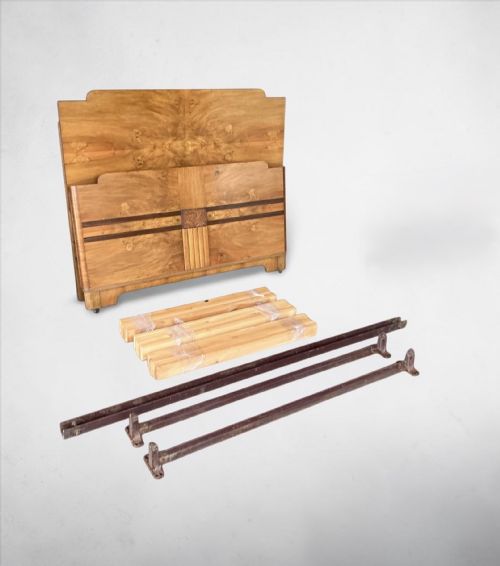
Many period bedsteads utilise metal bolt connections or wooden bed bolts that secure the side rails directly to the headboard and footboard posts. This modular construction allows the frame to be taken down into manageable pieces for transport and relocation.
Care should be taken during assembly to tighten fixings evenly without over-stressing the antique timber joints.
How do I distinguish Edwardian styles from Art Deco?
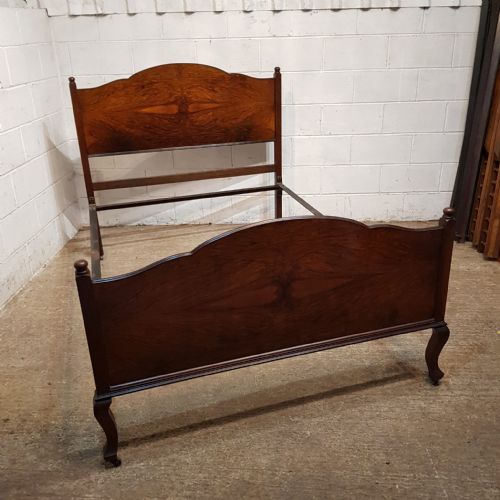
Edwardian burr walnut beds frequently draw on earlier historical revivals like Queen Anne, featuring softer lines, shaped crests and cabriole influences. They often present a lighter, more traditional aesthetic.
Art Deco frames embrace the 1930s ethos through bold symmetrical veneers, curved waterfall silhouettes and stepped geometric outlines without historical ornamentation.