
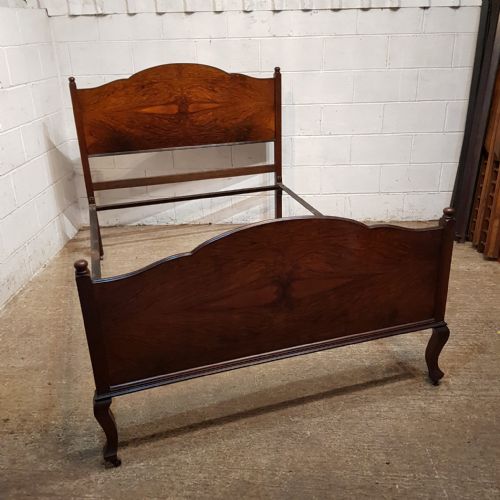


Art Deco Walnut Bedstead
An art deco walnut bedstead brings the rich grain and sweeping geometry of the interwar bedroom straight into a modern interior.
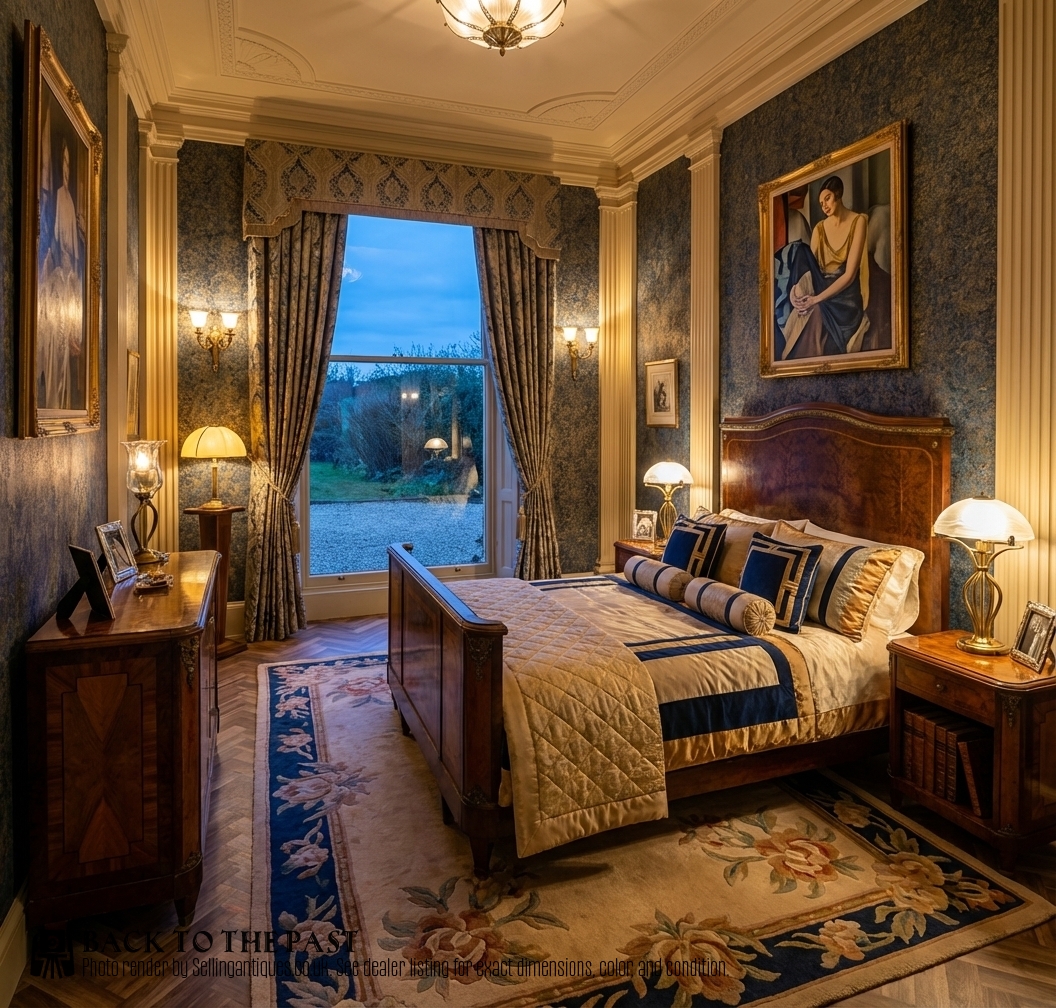
Art Deco Walnut Bedstead
An art deco walnut bedstead is a substantial sleeping frame defined by the geometric lines, curved silhouettes and rich brown tones characteristic of early twentieth-century design. These pieces arrive most frequently as double beds dated to the nineteen thirties, alongside single frames, pairs and occasional king-size variants.
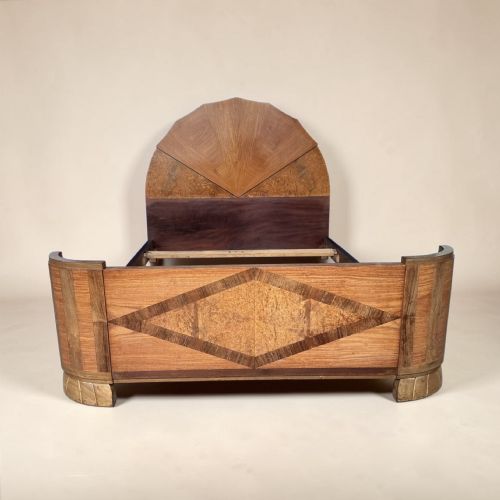
The architectural shapes span from simple fan-inspired headboards to curvaceous figured wooden constructions and French imports complete with matching nightstands. Buyers encounter various scales, including standard doubles and paired single frames that reflect the period's domestic arrangements.
Materials and construction
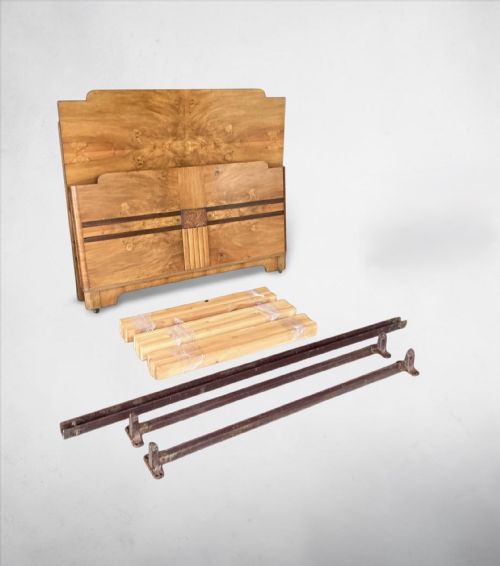
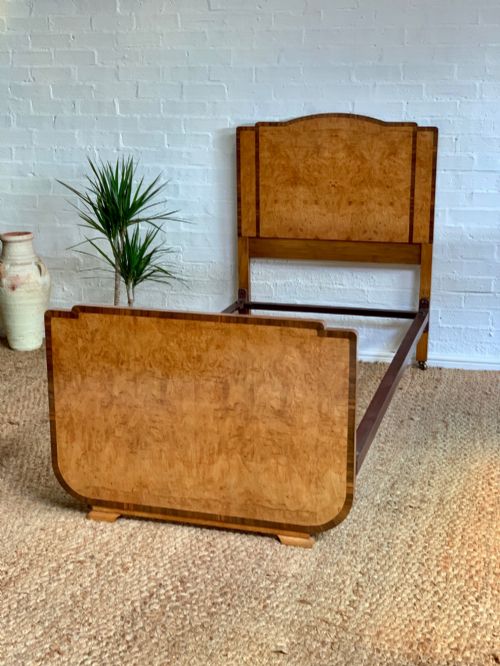
Craftsmen built these frames using timber, iron and wood, applying fine veneers of walnut, burr walnut and burl walnut across larger surfaces to showcase dramatic natural grain patterns. Occasional highlights in blonde satinwood contrast against the deeper brown field of the primary wood.
Joinery methods of the period combine solid timber structural supports with carefully laid veneer panels, often shaped into sweeping curves or fan motifs that define the aesthetic of the era.
Listings span multiple decades from nineteen hundred through to nineteen thirty, combining French and English origins across timber, iron and various walnut veneers.
Assessing quality
The visual strength of an art deco walnut bedstead depends heavily on the choice and arrangement of the veneer, with heavily figured burr and burl surfaces creating a more striking presence than plain timber. The rhythm of the grain matching across symmetrical panels distinguishes a considered piece from a standard factory run.
Moulded curves and structural carving demonstrate the joiner's skill, particularly where headboards adopt fan shapes or French-inspired stylistic touches. The integration of auxiliary pieces, such as marble-topped nightstands, also elevates the coherence of the grouping.
Waring & Gillow England
The Art Deco Walnut Bedstead Glossary
- Burr walnut
- A prized veneer taken from the growth growths of a walnut tree, yielding swirling, knotty patterns across the wood. This figuring is highly sought after for its decorative impact on large headboard surfaces.
- Bedstead
- A framework of a bed supporting the mattress and springs, distinct from the bedding itself. In this category, it refers to the complete headboard, footboard and side rails.
- Figured walnut
- Timber exhibiting distinctive, wavy or mottled grain formations created by natural growth variations. These patterns catch the light and add depth to flat furniture panels.
Art Deco Walnut Bedstead: Frequently Asked Questions
What mattress size fits an art deco walnut bedstead?
Many older French and English bedframes do not conform to modern standard metric dimensions. Buyers often require custom-made mattresses to ensure a correct fit within the antique wooden side rails.
Checking internal length and width measurements before purchase prevents fitting issues with standard modern bedding sizes.
How do I care for walnut veneer furniture?
Walnut veneer requires protection from direct sunlight and excessive heat to prevent the thin wooden surface from drying out or lifting. Regular dusting with a soft, dry cloth maintains the finish without moisture damage.
Periodic application of suitable beeswax helps nourish the wood and preserves the natural depth of the grain figure.
Are these beds easy to assemble?
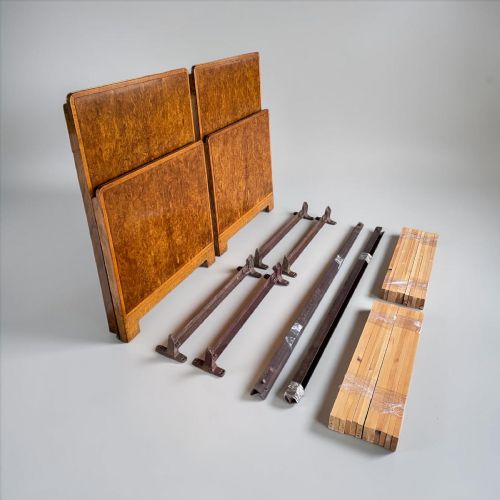
Most period bedframes utilise traditional bolt-in or drop-in side rail connections rather than modern interlocking metal brackets. Two people are typically required to align the heavy headboards, footboards and rails safely during setup.
Care must be taken not to overtighten bolts against older wooden threads and veneered surfaces.
How do I distinguish nineteen thirties pieces from nineteen twenties designs?
Nineteen thirties pieces frequently lean into bolder curved silhouettes, waterfall edges and pronounced burr walnut veneers. Earlier nineteen twenties examples often retain transitional styling influenced by heavier classical proportions.
Examining construction details and documentation helps clarify the exact decade of manufacture.