
Art Deco Walnut Bedroom
Burr walnut bedroom pieces bring distinct architectural lines and rich timber grain to domestic interiors.
Art Deco Walnut Bedroom
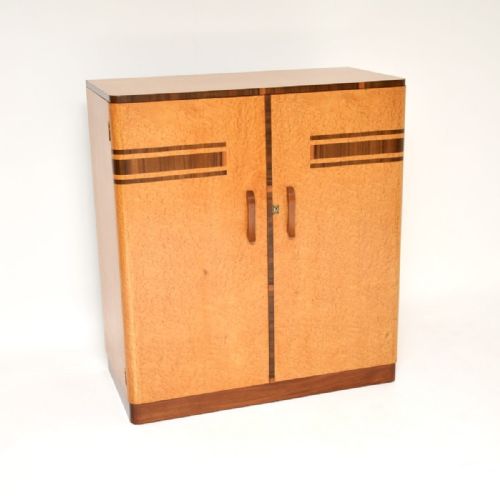
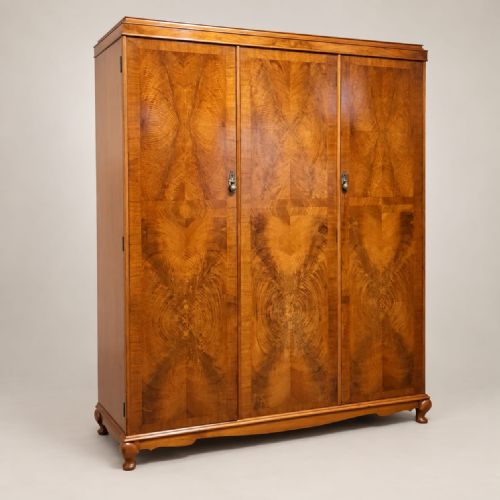
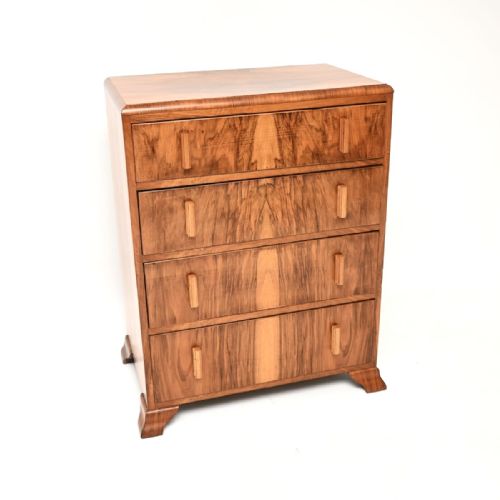
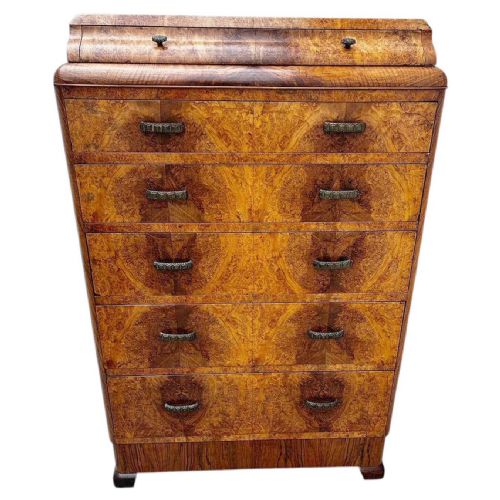
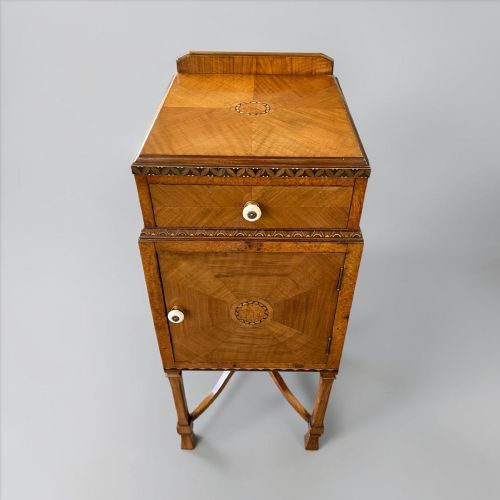
When searching for an art deco walnut bedroom, collectors encounter fitted wardrobes, chests of drawers, and dressing tables produced during the early decades of the twentieth century. These furnishings typically stem from the nineteen-twenties and nineteen-thirties, manifesting the streamlined geometry and geometric forms characteristic of the period. Pieces range from individual bedside cabinets to complete matching bedroom suites.
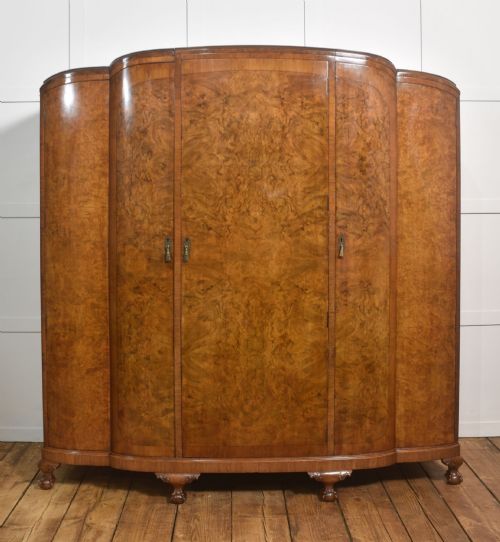
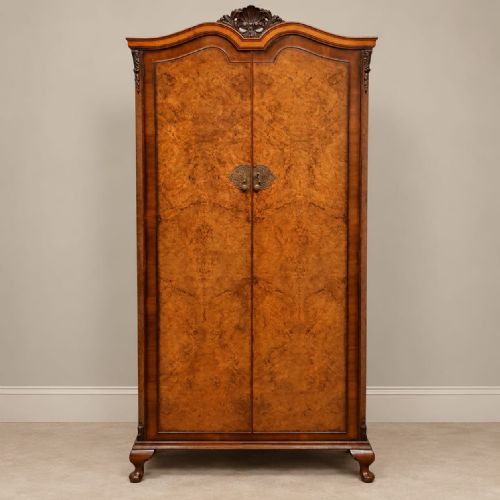
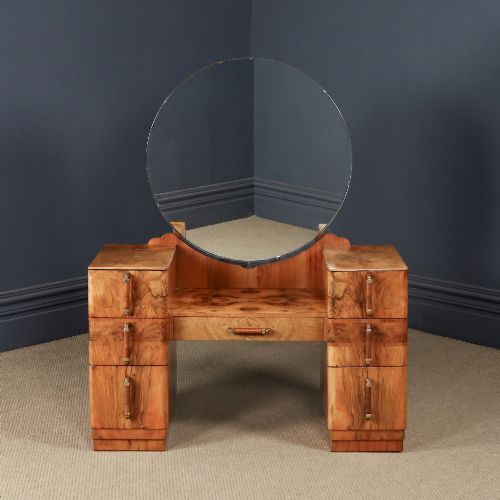
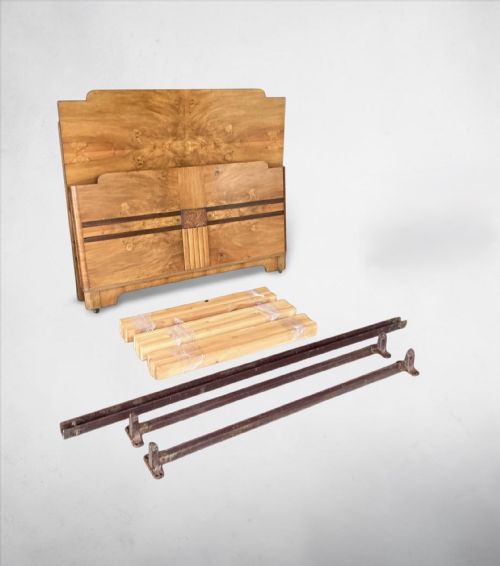
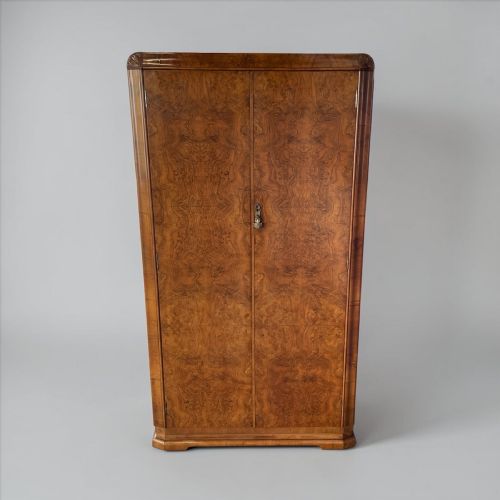
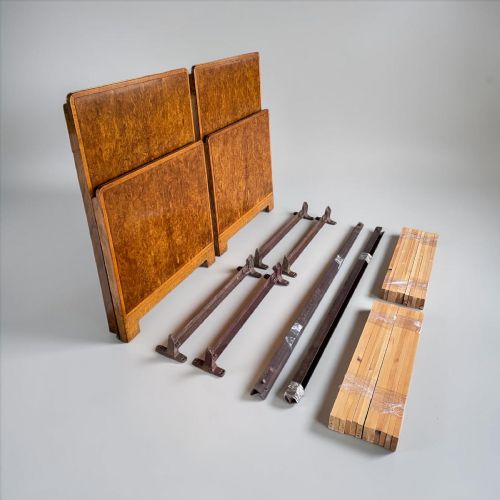
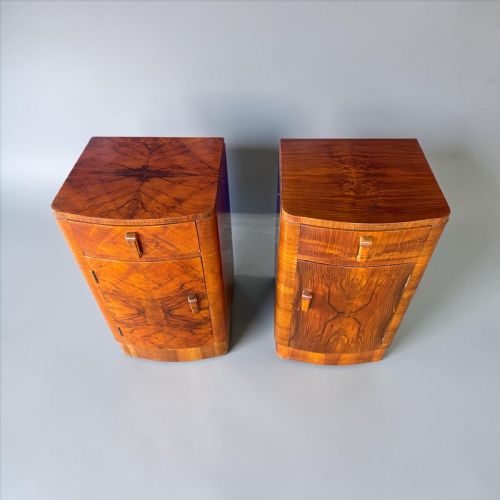
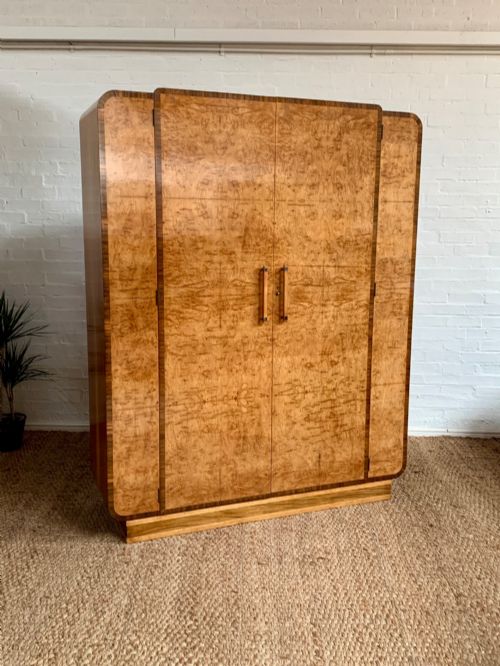
The most common formats met on this page include double and single beds, pedestal dressing tables with mirrors, and bow-fronted wardrobes. French and English workshops dominate the origin of these items, frequently employing matching pairs of bedside tables to balance the layout. Compactum wardrobes and tallboys also appear regularly, offering specialised compartments for garments.
Materials and construction methods
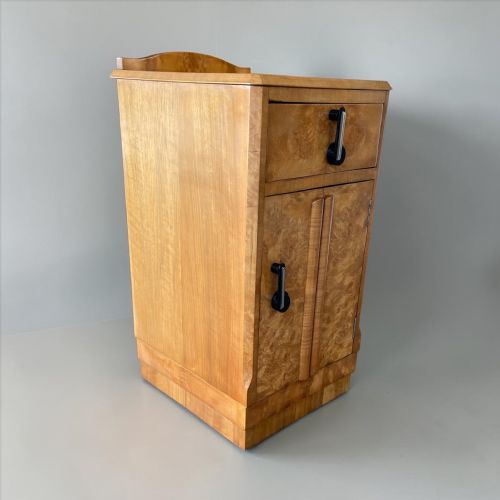
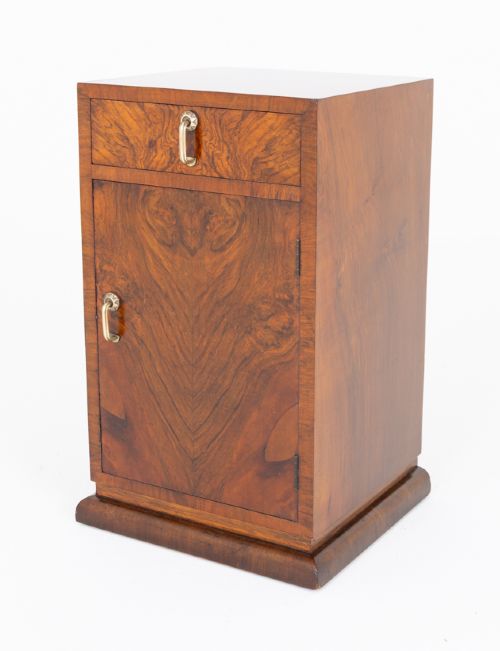
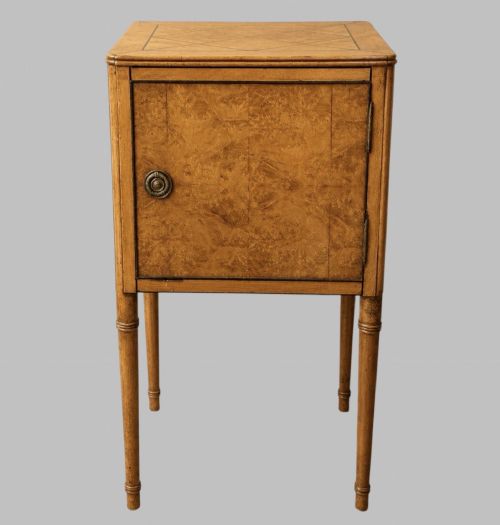
Cabinet makers constructed these furnishings using solid softwood carcases overlaid with figured walnut and burr walnut veneer to create symmetrical grain patterns across large surfaces. The decorative outer layers were carefully arranged to produce striking visual movement on wardrobe doors and drawer fronts. Secondary timbers such as satinwood, mahogany, and maple occasionally supplement the primary walnut structure.
Hardware details rely on contrasting materials like brass handles, metal trim, and moulded bakelite accents to punctuate the polished wood surfaces. French polishing and high-gloss lacquer finishes protected the timber while highlighting the natural swirls and knots of the burr veneers. Construction techniques combined traditional joinery with innovative veneering methods to achieve curved bow fronts and waterfall edges.
Listings span the decades from nineteen-ten through nineteen-forty, showcasing the evolution from early geometric experiments to streamlined mid-century forms.
Assessing quality in period furniture
Quality rests upon the selection and bookmatching of the veneer, where superior examples display symmetrical, highly figured grain patterns that wrap continuously around curved corners. The depth of the polished finish and the integration of secondary woods like satinwood or macassar ebony distinguish standard production items from exceptional commissions. Matching suites demonstrate greater cohesion in timber selection across multiple interconnected pieces.
Construction integrity shows in the weight and stability of large pieces such as triple wardrobes and tallboys, alongside the smooth operation of fitted drawers and original hardware. The presence of documented maker signatures or retail stamps elevates the standing of an item within the historical record. Minor variations in the density of the burr figure dictate the visual impact of individual beds and dressing tables.
Walter Carter Harrods·Frank Taylor & Co.·Harry & Lou Epstein·M. P. Davis Furniture of London
The Art Deco Walnut Bedroom Glossary
- Burr walnut
- A specialised timber cut from the abnormal growth of a walnut tree, yielding complex, swirling grain patterns. This material was prized by cabinet makers for creating decorative centrepieces on wardrobe doors and drawer fronts.
- Compactum
- A multi-functional wardrobe designed to house various types of clothing within a single unit. These tall cabinets typically combine hanging space, shelves, and internal drawers.
- Tallboy
- A tall chest of drawers that maximises vertical storage while occupying a compact floor footprint. They frequently feature six or more graduated drawers beneath a cornice top.
- Pedestal dressing table
- A vanity unit featuring banks of drawers on either side supporting a central kneehole and an attached mirror. These items served as focal points in period dressing rooms.
- Bookmatching
- A veneering technique where adjacent slices of timber are opened like a page to mirror each other. This method creates symmetrical patterns across large flat surfaces.
Art Deco Walnut Bedroom: Frequently Asked Questions
What pieces belong in a complete suite?
A standard bedroom suite comprises a large wardrobe, a dressing table with a matching stool, a chest of drawers, and one or two bedside cabinets. Beds in double or single sizes accompany these core storage items to form a unified room arrangement.
Larger configurations may include tallboys or compactum wardrobes alongside specialised vanity furniture. These matched sets ensure uniform timber selection and consistent design motifs across every item.
How do I care for walnut veneer?
Walnut veneer requires protection from direct sunlight and excessive heat fluctuations to prevent the timber from drying out or warping. Regular dusting with a soft, dry cloth maintains the polished surface without introducing moisture.
Periodic application of suitable furniture wax preserves the lustre of the French polished finish. Avoid using synthetic sprays or abrasive cleaners that can damage the delicate historical coatings.
Where were these pieces manufactured?
Production was concentrated primarily in English and French workshops during the interwar years. Major retail houses and specialised cabinet makers distributed these furnishings from urban centres.
Regional stylistic differences emerge between English geometric designs and French interpretations, which often incorporated exotic contrasting veneers like macassar ebony.
How do I distinguish art deco from revival styles?
Period pieces from the nineteen-thirties display authentic modernist geometry, streamlined contours, and structural integration of hardware. Revival styles produced later often blend these clean silhouettes with traditional proportions or decorative motifs from earlier centuries.
Examining the internal construction, secondary timbers, and original finishing techniques helps confirm the period of manufacture. Hardware styles and veneering methods also provide clear indicators of original interwar production.