





Art Deco Wall Clock
An art deco wall clock brings geometric punch and period warmth to a room, combining practical timekeeping with striking visual geometry.
Art Deco Wall Clock
An art deco wall clock combines geometric forms with functional timekeeping, emerging primarily from the interwar period and extending into the mid-twentieth century. When you search for this phrase, you encounter timepieces designed to command attention on a domestic or institutional wall.
Alongside standard domestic timepieces, the selection includes chiming movement variants and large public space clocks from makers across Europe. These objects range from restrained geometric shapes to ornate mirrored surfaces reflecting the optimism of the period.
Materials and construction
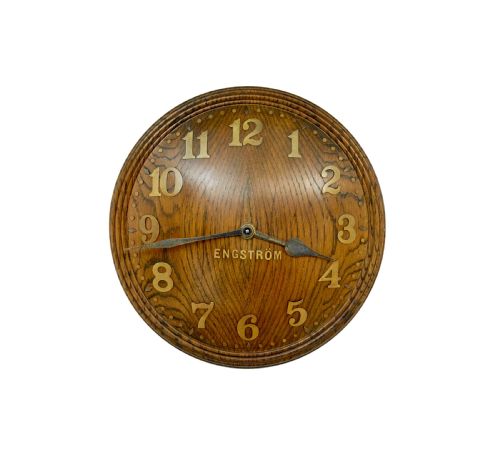
Makers utilised rich hardwoods such as walnut and golden oak, often veneered over sturdy carcases to create smooth curved facades and stepped geometric profiles. Metal elements in brass, copper and chrome provide stark linear contrast to the warm timber tones.
Art Deco Wall Clock Retail Price Guide 2026
Typical asking prices for art deco wall clock among the pieces listed under this phrase on Sellingantiques today, from the lower quarter to the upper quarter. They describe what is for sale here now, not the wider market.
Several clocks feature mirrors large enough to check your hair while waiting for the kettle to boil.
What separates the best from the rest
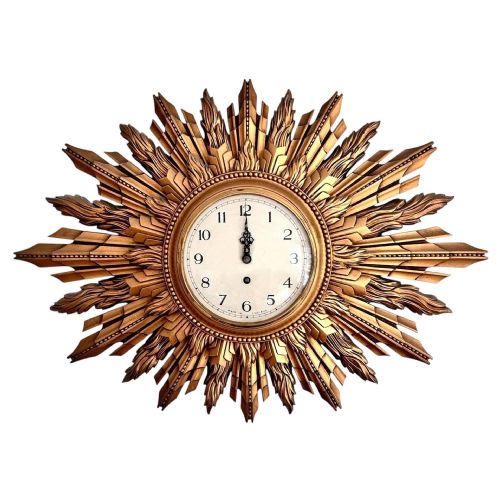
The distinction between ordinary and exceptional pieces lies in the ambition of the case design and the fidelity of the movement. Star-burst configurations, complex veneering like macassar, and multi-tone dials elevate an everyday utility clock into a sculptural statement.
Maker attribution and regional craftsmanship also separate the tiers. Signed movements from established European workshops carry greater architectural presence and mechanical integrity than unbranded mass-produced alternatives.
Smiths·Zenith·Vedette·Girod·Gustav Becker·Odo·Bayard·Japy Freres·Camerer Cuss And Co
The Art Deco Wall Clock Glossary
- Carillon
- A set of bells tuned to play a melody on the hour. These systems often deliver Westminster chimes in larger walnut cases.
- Bezel
- The metal ring that holds the glass face in front of the clock dial. It usually swings open on a hinge to allow hand adjustment.
- Dial
- The face of the clock where the numerals and minute tracks are displayed. Silvered and mirrored variants are typical of the period.
- Veneer
- A thin layer of valuable wood glued over a secondary timber base. Walnut and oak veneers create the sweeping curves characteristic of the style.
- Striking
- A mechanical function that hits a gong or bell to mark the hours. This adds an auditory dimension to the visual design.
Art Deco Wall Clock: Frequently Asked Questions
How do I wind an 8 day clock?
An 8 day movement requires winding once a week using a matching key inserted into the dial holes. Turn the key gently until you feel resistance, taking care not to overwind the mainspring.
Maintaining a regular weekly schedule ensures the movement keeps accurate time and prevents unnecessary tension fluctuations on the brass gears.
Were these clocks made for homes or offices?
Many examples were built for domestic living rooms and hallways, featuring warm walnut and oak cases designed to complement interior woodwork. Other larger variants served in hospitals, factories and railway stations.
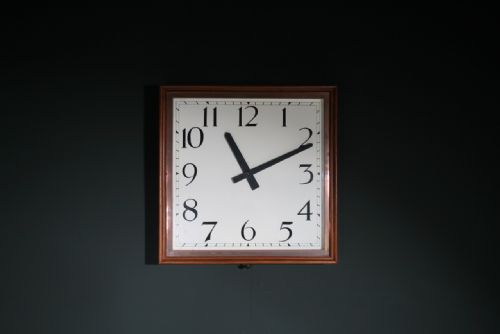
Institutional models often prioritized robust metal bezels and clear legible dials over decorative veneers, built to withstand heavy daily use.
How do I identify a French art deco clock?
French pieces frequently feature architectural walnut or oak cases paired with melodic carillon chimes and named makers like Vedette or Girod. The styling often emphasises sweeping curves and elaborate carved or mirrored elements.
English equivalents tend toward more restrained octagonal geometries, whilst German workshops produced distinctive geometric chiming clocks during the same era.