


Art Deco Tea Set
An art deco tea set brings geometric lines and modernist polish to the table, uniting practical vessels with the sharp aesthetic of the interwar period.

Art Deco Tea Set
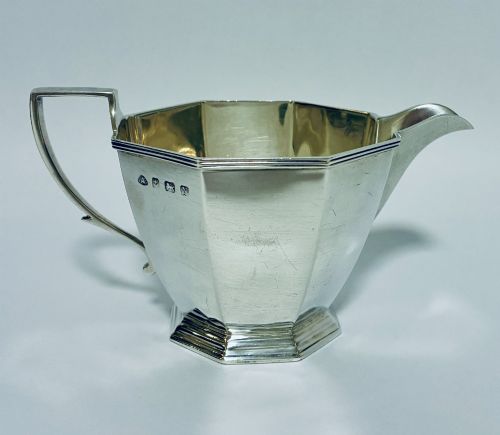
When searching for an art deco tea set, buyers encounter multi-piece matching assemblages designed for serving hot beverages, most commonly comprising a teapot, milk jug, and sugar basin formed in silver, silver plate, or fine porcelain. Many surviving examples date from the 1920s and 1930s, reflecting the era's taste for streamlined silhouettes and geometric handles.
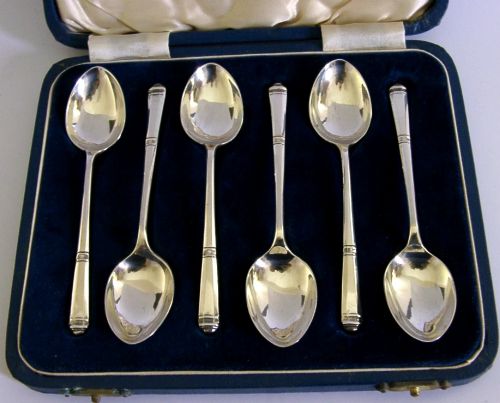
The selection ranges from substantial four-piece sterling silver services on matching trays to compact china tea-for-two services and cased sets of silver and enamelled teaspoons. Alongside metalware, ceramic versions from potteries such as Shelley, Doric China, and Longton Stafford offer patterned surfaces featuring floral and abstract motifs typical of the period.
Completions often involve supplementary items like tea strainers, cake forks, and matching trays made of chrome, pewter, or glass. Whether configured for formal gatherings or smaller daily rituals, these items represent the domestic design output of British and European makers active during the interwar decades.
How they were made
Metal sets rely on sterling silver or silver plate formed into geometric bodies, often incorporating materials like Bakelite for heat-resistant handles and knobs, or mother-of-pearl for cutlery handles. Enamel decoration appears on spoons and small vessels, adding translucent colour over engine-turned or textured silver grounds.
Ceramic examples employ porcelain and bone china shapes, decorated with hand-painted or transfer-printed enamel patterns such as star flowers and gayday designs. Glass cups and saucers utilise applied enamel work, while pewter and chrome provide alternative metallic mediums shaped into trays, pots, and jugs.
Object forms range from complete four-piece beverage services and cased teaspoon sets to individual sandwich plates and card suit spoons.
What varies in quality
Manufacturing origin and maker reputation heavily influence standing, with pieces bearing marks from established silversmiths or notable ceramic potteries commanding attention. The complexity of the design, such as engine-turned patterns, basse-taille enamel work, or complete matching sets including original trays and cases, elevates the status of an assemblage.
Condition of delicate components like enamel surfaces, Bakelite mounts, and fragile porcelain handles determines the integrity of surviving services. Complete sets retaining their original presentation boxes or matching serving implements demonstrate higher degrees of preservation.
Armada Pewter·Clarice Cliff·Shelley·Mappin & Webb·Royal Doulton·Josiah Williams & Co·James Dixon and Sons·Paragon China·Aynsley·Harrods·William Neale & Sons Ltd·Alexander Clark & Co. Ltd·Blanckensee & Sons Ltd
The Art Deco Tea Set Glossary
- Sterling silver
- A silver alloy containing 92.5 percent pure silver and 7.5 percent other metals, usually copper, ensuring durability for holloware and cutlery.
- Bakelite
- An early form of synthetic plastic used for heat-resistant handles and decorative accents on interwar metalware.
- Basse-taille
- An enamelling technique where translucent enamel is laid over a low-relief engraved or engine-turned metal background.
- Engine-turned
- A mechanical decoration method producing precise geometric patterns of lines or waves on metal surfaces.
- Holloware
- Tableware items such as teapots, milk jugs, and sugar bowls formed as hollow vessels rather than flatware.
Art Deco Tea Set: Frequently Asked Questions
What pieces comprise a standard service?
A standard set typically includes a teapot, a milk jug, and a sugar basin, occasionally accompanied by a matching serving tray. Larger configurations expand to four pieces, adding a hot water pot.
Smaller tea-for-two sets reduce the scale for intimate use, while auxiliary services incorporate matching teaspoons, cake forks, and strainers.
Can ceramic sets be used daily?
Ceramic sets made by potteries like Shelley or Royal Doulton were created for regular domestic dining. Careful hand washing protects delicate overglaze enamel patterns and gilt rims from fading over time.
Avoiding sudden temperature changes preserves the glazed earthenware and bone china bodies from thermal shock.
How are periods identified?
Official hallmarks on silver items provide direct date letters and assay office symbols indicating the exact year of manufacture. Ceramic pieces rely on manufacturer backstamps, pattern numbers, and stylistic markers characteristic of the 1920s and 1930s.
Geometric forms, angular handles, and streamlined profiles offer immediate visual clues to the interwar era.