


Vintage Ceramic Tea Service
A vintage ceramic tea service brings tableside ritual into the present day through painted porcelain and matching sets.
Vintage Ceramic Tea Service
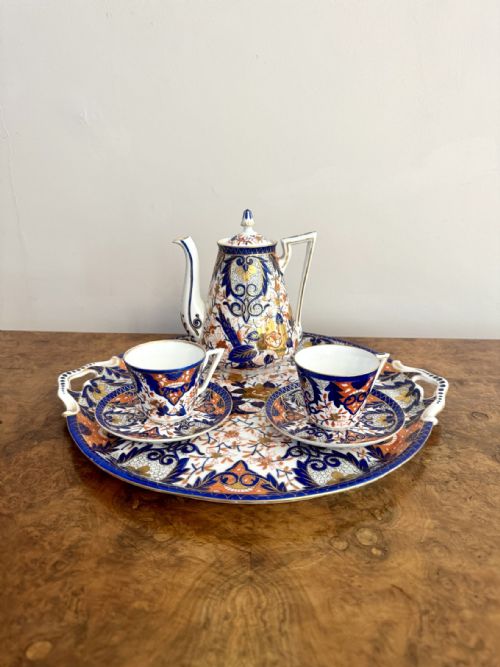
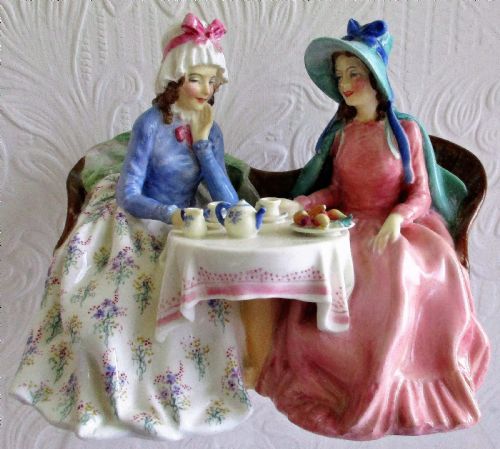
When you search for a vintage ceramic tea service, you encounter matched collections designed for pouring hot drinks in domestic settings. These sets span periods from the nineteenth century through to the mid-twentieth century, encompassing items for individuals, couples, or larger groups.
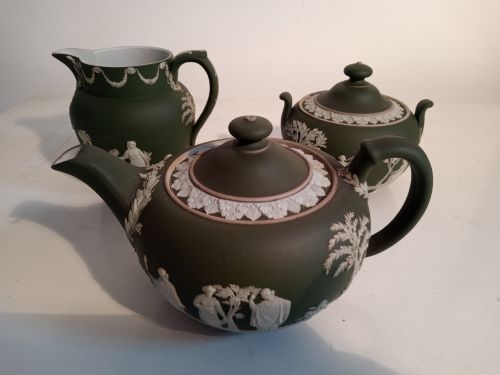
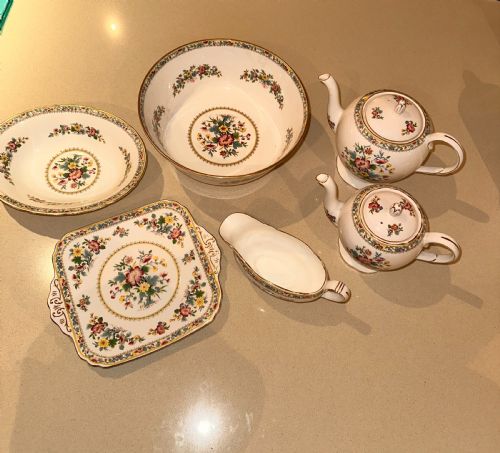
The selections on this page feature regional English and European potteries, ranging from Victorian assemblages to Art Deco designs. You find configurations that include cups, saucers, teapots, cream jugs, and sugar bowls.
Forms vary from single-person bachelor sets to expansive settings for ten people or more. Alongside traditional English patterns, the listings contain occasional continental porcelain and Japanese services.
How they were made
These services employ ceramic bodies such as porcelain, bone china, earthenware, and ironstone, shaped by regional potteries. Makers applied glazes to seal the porous clay bodies before firing them in kilns.
Decoration relied on hand-painted motifs and transfer-printed designs, often finished with gilt or gold leaf highlights. Enamel colours were added in layers and fired again to fuse the pigments to the ceramic surface.
Some sets include specialised vessels for sugar and cream, ensuring your afternoon tea party maintains strict historical accuracy down to the last drop.
What varies in quality
Quality rests in the delicacy of the ceramic body and the precision of the hand-painting. Fine porcelain allows light to pass through the walls of the cup, whereas earthenware presents a heavier, more opaque structure.
The application of gilding and enamel work separates standard wares from superior examples. Skilled artisans executed complex motifs with crisp outlines and consistent metallic lustre across every piece in the set.
Wedgwood·Royal Doulton·Spode·Coalport·Royal Davenport·Clarice Cliff·Shelley·Royal Albert Crown China·Doric China Longton Stafford·Worcester·Masons Patent Ironstone China·Royal Worcester·Wileman Foley Shelley·Copeland Spode·Sutherland·Gladstone potteries
The Vintage Ceramic Tea Service Glossary
- Bone china
- A type of soft-paste porcelain that incorporates animal bone ash into the clay body. This inclusion provides increased strength and a characteristic milky translucency.
- Gilt
- A thin layer of gold applied to the surface of ceramics for decoration. It often appears on the rims, handles, and painted motifs of tea wares.
- Sucrier
- A small basin or bowl designed specifically for holding lump or granulated sugar. It forms a standard component of a traditional tea service.
- Ironstone
- A heavy, durable earthenware patent-introduced in the nineteenth century. It resists chipping better than standard porcelain while maintaining a smooth glazed surface.
- Transfer printing
- A mechanical method of applying complex decorative patterns to ceramics using engraved copper plates and tissue paper. It allowed potteries to produce uniform designs efficiently.
Vintage Ceramic Tea Service: Frequently Asked Questions
What is the difference between tea and coffee services?
Tea services traditionally feature wide cups suited for adding milk and sugar to steeped leaves. Coffee services often present taller, narrower cups or cans designed for stronger brews.
Several listings combine both functions into unified sets spanning multiple matched vessels. The overall form of the pot usually indicates the intended beverage.
Can I use these sets for daily dining?
These ceramic services are antique and vintage objects requiring careful handling. Hand washing preserves the delicate hand-painted decoration and gold leaf highlights.
Sudden temperature changes can crack aged porcelain and earthenware bodies. Many owners reserve them for occasional use or display.
How do I date an antique tea set?
Dating relies on maker marks stamped or painted on the underside of the ceramics. Stylistic clues such as Art Deco geometric forms or Victorian neoclassical motifs also indicate the era.
Materials like bone china or ironstone provide broad chronological boundaries for when a piece was manufactured.