
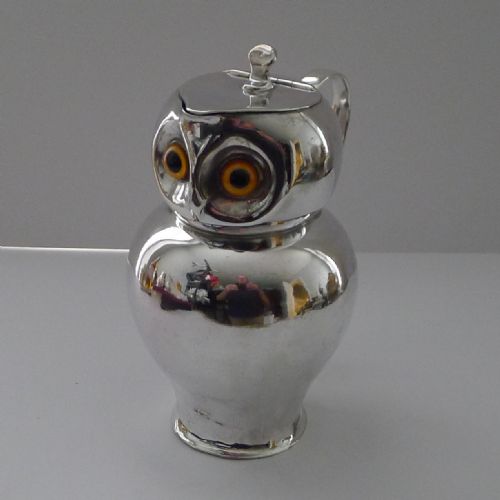


Silver Plate Creamer
These silver plate creamer pieces bring period elegance to the table, offering practical utility and traditional style.

Silver Plate Creamer
A silver plate creamer is a small vessel designed for serving milk or cream alongside tea and coffee. Buyers searching this phrase encounter individual cream jugs as well as pieces belonging to larger tea services, tea and coffee sets, and sugar and creamer sets.
The selections span multiple eras, most frequently appearing in Edwardian and Victorian styles alongside Georgian, Late Victorian, and Art Deco designs. Pieces range from standard table jugs to novelty forms such as owls, cows, and scallop shell stands.
Origins stretch from simple metal tablewares to matched sets bearing stamps from notable makers. Most examples function as part of broader teaware collections, though standalone cream jugs also appear.
How they were made
Construction relies upon metal as the primary base, coated in silver plate to achieve a bright reflective finish. Selected items incorporate gold gilt interiors or combine the metal body with wood, ebony, or glass components.
Manufacturing methods involve shaping metal into jugs, pitchers, and sugar bowls, occasionally complemented by applied details like glass eyes on novelty animal forms. The application of silver plate over base metals allowed households to enjoy the appearance of solid silver at a lower cost.
Cow and owl novelty creamers feature hinged heads and glass eyes, serving milk with an eccentric nineteenth-century charm.
What varies in quality
Quality differences lie in the weight of the metal, the crispness of the casting on handles and rims, and the preservation of the silver plate over the base metal. Superior examples retain their original plating evenly across the body without excessive wear through to the underlying copper or alloy.
Maker attribution and design complexity further distinguish the range, with novelty animal forms and matched multi-piece tea services representing distinct tiers of craftsmanship compared to standard utilitarian cream jugs.
Mappin & Webb·Goldsmiths & Silversmiths Co
The Silver Plate Creamer Glossary
- Silver Plate
- A base metal coated with a thin layer of pure silver through electroplating or older fusion methods. This technique became widespread during the nineteenth century to produce affordable tableware.
- Sheffield Plate
- An early method of fusing a thin sheet of silver to a copper core before rolling them together into sheets. This process predates modern electroplating and is associated with earlier Georgian items.
- Gold Gilt
- A thin coating of gold applied to the interior surface of a silver plated vessel. This protects the metal from tarnishing when exposed to acidic contents like cream or lemon.
- Novelty
- A decorative item shaped to resemble an animal, character, or unusual object rather than a standard vessel. Examples include creamers formed as owls or cows with hinged lids.
Silver Plate Creamer: Frequently Asked Questions
How do I date a silver plate creamer?
Dating relies upon stylistic markers, manufacturing techniques, and any stamped maker marks or registry numbers found on the base. Victorian and Edwardian examples often display distinct aesthetic traits associated with their respective decades.
Earlier Georgian and Sheffield plated items exhibit different weight distributions and construction methods compared to twentieth-century Art Deco pieces.
Are these creamers made of solid silver?
These pieces consist of a base metal covered with a layer of silver plate rather than solid silver throughout. This technique provided the visual appeal of solid silver while remaining accessible for domestic use.
Examination of worn spots or hallmarks helps distinguish plated items from solid silver counterparts.
How should I clean a silver plated creamer?
Cleaning requires a soft cloth and a gentle silver polish formulated specifically for plated items to avoid removing the thin outer layer. Aggressive scrubbing or harsh chemical dips can strip the plating from the underlying metal.
Regular light maintenance prevents heavy tarnish accumulation without harming the surface.
Did creamers come as part of tea sets?
Many creamers were produced as part of larger tea services, coffee sets, or matched sugar and creamer combinations. These coordinated suites share matching decorative motifs, handles, and shapes.
Standalone cream jugs also appear frequently, having become separated from their original service over time.