


Vintage Silver Teapot
A vintage silver teapot brings daily utility and period grace to the table, spanning solid sterling silver and silver plate from the Georgian era through to mid-century design.

Vintage Silver Teapot
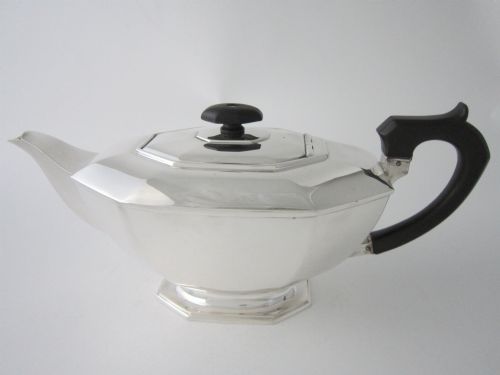
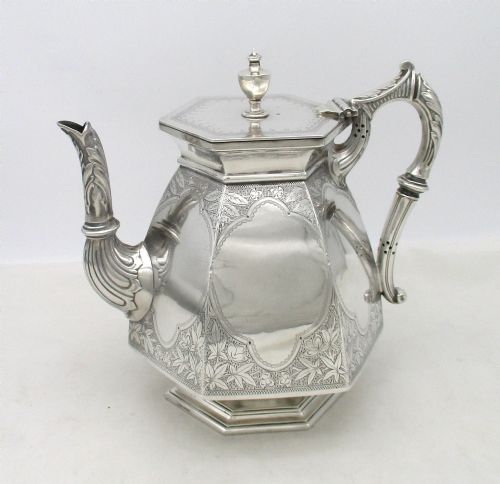
A vintage silver teapot represents a tangible link to historical domestic routines, encompassing standalone pots alongside larger tea and coffee services, kettles on stands, and spirit kettles. Buyers encounter single vessels and multi-piece sets spanning the 19th century, Edwardian period, Art Deco era, and mid-century modern design. The selection ranges from robust silver plate intended for daily use to substantial sterling silver examples made by established silversmiths.
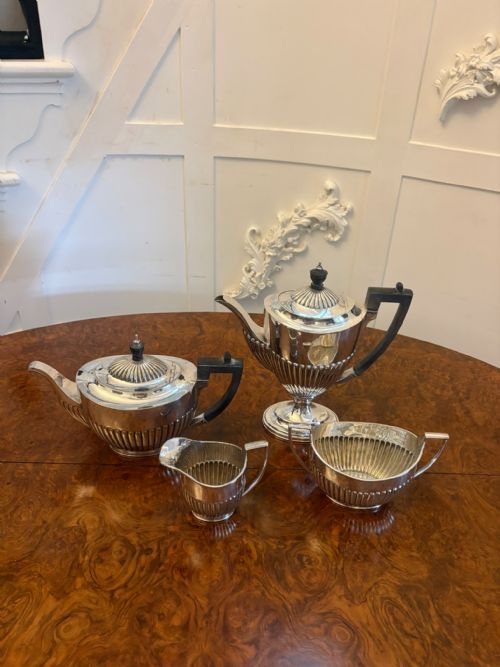
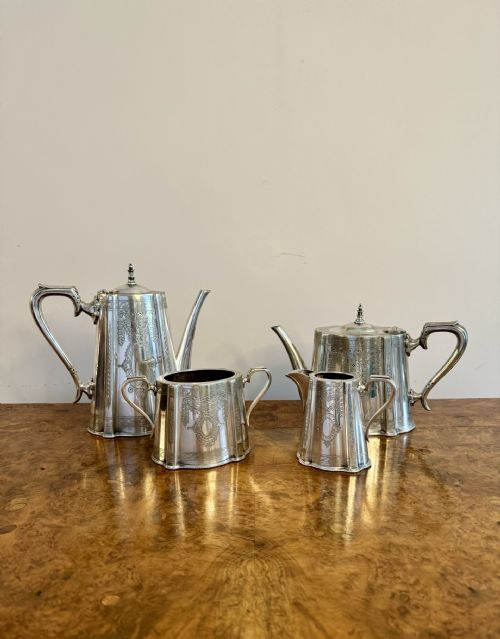
The Edwardian era heavily populates the selection, frequently arriving as silver-plated sets complete with matching creamers and sugar basins in ornate revivalist or neoclassical styles. Alongside these, buyers find individual pots from the Georgian and Victorian periods, alongside streamlined Art Deco and mid-century forms. Whether seeking a standalone ceramic pot with a silver collar or a heavy solid silver coffee pot, the variety reflects shifting domestic fashions across two centuries.
Distinctions in Quality
Quality rests upon the weight of the metal, the crispness of chased or engraved ornamentation, and the integrity of the structural joints where handles and spouts meet the body. Substantial gauge silver plate resists denting and retains its plating through decades of polishing, whereas thinner plating reveals the base metal underneath over time. Makers who invested in heavy casting achieved balanced proportions and comfortable ergonomics in handle placement.
The reputation of the maker or silversmith firm influences the standing of a piece, with recognised workshops delivering superior finish quality in hinges, lids, and internal strainers. Sets that retain their original matching components display a cohesive design vision superior to assembled collections. The presence of clear hallmarks or maker stamps provides documented proof of origin and material standard.
Several kettles come equipped with tiny spirit burners underneath, ready to keep the Victorian drawing room adequately supplied with boiling water.
Walker and Hall·Goldsmiths and Silversmiths Co·Georg Jensen·Birmingham Silversmiths Company·Robert Hennell II
The Vintage Silver Teapot Glossary
- Sterling silver
- A silver alloy containing 92.5 percent pure silver by mass and 7.5 percent other metals, usually copper. This standard has governed British silver production for centuries.
- Silver plate
- A layer of pure silver applied to a base metal such as copper, nickel silver, or white metal. Electroplated nickel silver became the dominant method of production in the nineteenth century.
- Spirit kettle
- A water kettle mounted on a metal stand with a small burner underneath fueled by methylated spirit. This device kept water hot for extended tea services in the drawing room.
- Hallmark
- An official stamp applied by an assay office to precious metal items, indicating the purity of the metal, the maker, and the year of manufacture.
- Aesthetic Movement
- A late nineteenth-century artistic style that rejected Victorian moralising in art, favouring beauty and visual refinement over narrative content.
Vintage Silver Teapot: Frequently Asked Questions
How do I clean a vintage silver teapot?
Use a specialised silver cream and a soft cloth to remove tarnish gently without abrading the surface details or wearing through silver plate. Avoid harsh chemical dips that strip the natural dark patina from recessed decorative areas.
Wash the interior with warm soapy water and rinse thoroughly before use, ensuring no polish residue remains inside the spout or around the lid seating.
Can I actually use a vintage silver teapot for daily tea?
Many solid silver and sturdy silver-plated teapots remain fully functional for brewing and pouring tea today. Inspect the interior for any heavy wear or degradation of the plating before putting an antique pot into regular service.
Take care with pots featuring bone or wooden insulators on the handle, washing them by hand rather than placing them in a modern dishwasher.
What is the difference between sterling silver and silver plate?
Sterling silver is a solid precious metal alloy containing a fixed high percentage of pure silver throughout the entire wall of the vessel. It carries official hallmarks confirming its composition and holds intrinsic metal value.
Silver plate consists of a thin coating of pure silver bonded to a cheaper base metal foundation, offering the appearance of solid silver at a lower weight and cost.
How do I date an Edwardian silver teapot?
Look for hallmarks on sterling silver items, which include a date letter corresponding to the specific year and assay office of manufacture. Silver-plated items rarely feature date letters but often bear maker marks and stylistic cues typical of the period.
The Edwardian era spans from 1901 to 1910, characterised by revival styles drawing inspiration from Georgian and rococo decorative traditions.