
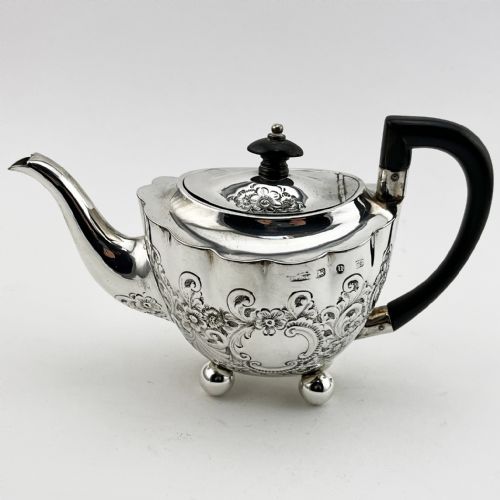


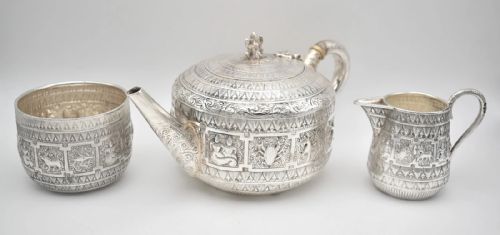
Chased Silver Teapot
A chased silver teapot brings weight and hand-worked detail to the table, forged from solid sterling silver or plate for daily tea service.
Chased Silver Teapot
A chased silver teapot is a vessel designed for pouring tea, distinguished by ornamental hammer and punch work across its metal body. These pieces emerge from periods spanning the Georgian era through the Victorian age and into the Edwardian years.
The buyer meets forms ranging from small bachelor teapots to four-piece tea sets and coffee pots. Materials span sterling silver, silver plate, and Old Sheffield plate, often paired with handles of wood, ebony, bone, or ebonised wood.
Origins stretch across English, Scottish, and Irish workshops, showing styles from George II and Regency to Victorian Rococo Revival and Victorian Anglo-Indian. The selection prioritises solid silver and plated metal vessels decorated with chased ornamentation.
How they were made
Silversmiths formed the bodies of these teapots by hammering sterling silver or silver plate into shape, sometimes building upon a copper base as seen in Old Sheffield plate. Chasing tools were then hammered directly into the metal surface from the outside to push the material inward and raise floral, scroll, or figurative motifs in relief.
Handles and insulators were fashioned from dense materials like ebony, bone, wood, or ebonised wood to prevent heat transferring from the hot pot to the hand. These insulating components were fitted carefully into the metal sockets of the handle to secure the grip.
Chased Silver Teapot Retail Price Guide 2026
Typical asking prices for chased silver teapot among the pieces listed under this phrase on Sellingantiques today, from the lower quarter to the upper quarter. They describe what is for sale here now, not the wider market.
Listings feature sterling silver and silver plate teapots spanning Georgian, Regency, Victorian, and Edwardian periods.
What varies in quality
Quality rests in the crispness and depth of the chased relief work across the body, where skilled hammer control creates sharp, distinct patterns rather than shallow, blurred depressions. The thickness of the original silver or the integrity of the silver plate over base metal dictates how well the vessel withstands centuries of polishing.
Proportion and balance define the superior examples, where spouts, handles, and bodies share a cohesive weight and architectural harmony. The quality of internal joinery and the snug fit of hinged lids further separate standard production items from master silversmith output.
Robert Hennell II·Boardman Glossop and Co·George Fox
The Chased Silver Teapot Glossary
- Chasing
- A silversmithing technique where metal is worked from the front with punches and hammers to sink the surface and create a raised design. This process moves the metal rather than cutting it away.
- Sterling silver
- An alloy containing a high proportion of pure silver combined with other metals to increase durability. It provides the heavy, lustrous standard for fine teapots.
- Silver plate
- A thin layer of silver bonded to a base metal such as copper or nickel silver. Old Sheffield plate represents an early form of this technique.
- Bachelor teapot
- A smaller scale teapot designed for single-person use or intimate tea service. These compact vessels retain all the decorative chasing of their larger counterparts.
- Insulator
- Small rings or spacers made of wood, bone, or ebony set into the metal handle. They stop heat from passing from the boiling pot to the handle.
Chased Silver Teapot: Frequently Asked Questions
How do I clean a chased silver teapot?
Use a soft cloth and a mild silver polish specifically formulated for precious metals. Avoid harsh abrasive pads that wear down the raised chased details.
Take care around handles made of wood, bone, or ebony to keep moisture and cleaning chemicals away from organic materials.
Can I use an antique silver teapot for daily tea?
Many solid sterling silver and plated teapots remain structurally sound for boiling water and pouring tea. Check the interior for clean conditions and ensure the handle insulators are secure.
Silver plate items require gentle handling to preserve the metal layer over the base core during washing.
What is the difference between sterling and silver plate?
Sterling silver consists of solid precious metal throughout the entire body of the pot. It carries hallmarks indicating purity and maker.
Silver plate uses a thin coating of silver applied over a base metal like copper or nickel silver, common in nineteenth-century production.
How do I date a chased silver teapot?
Examine the stamped hallmarks on the base or rim, which typically reveal the city, year letter, and maker's mark for British pieces. Stylistic clues like Regency austerity or Victorian Rococo curves also help narrow the period.
Unmarked silver-plated pieces rely on manufacturing techniques and retailer stamps to approximate their decade of origin.