


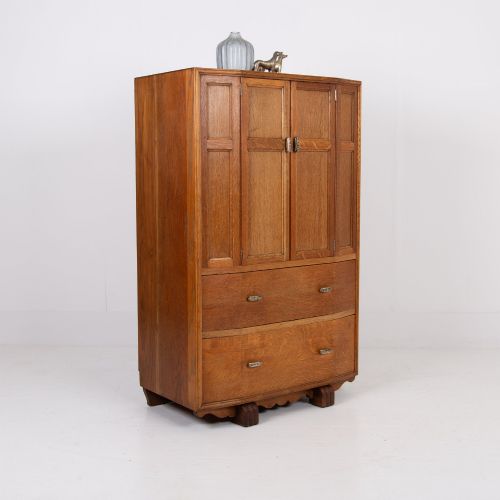
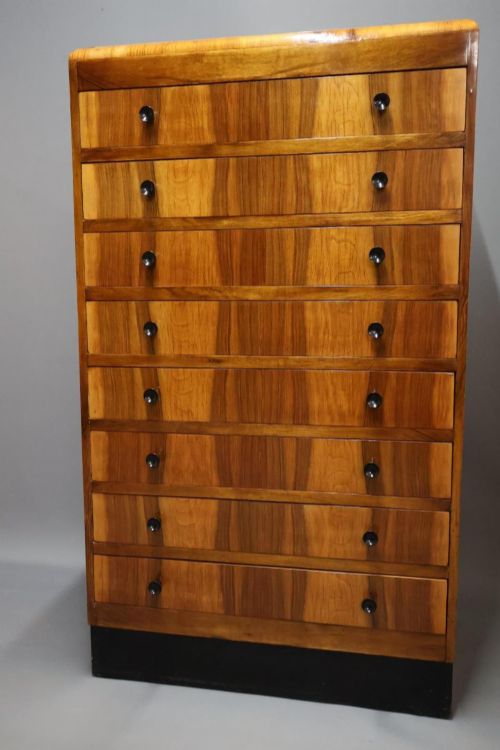

Art Deco Tallboy Chest
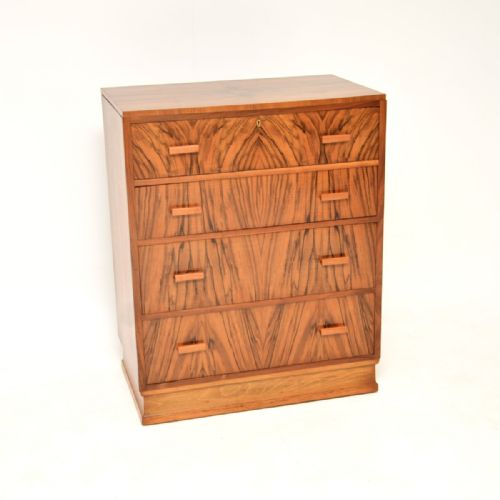
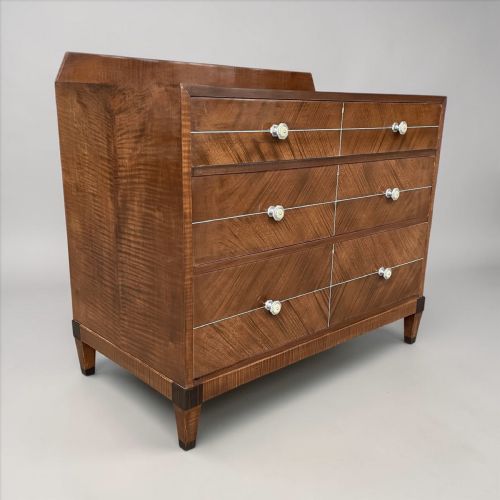
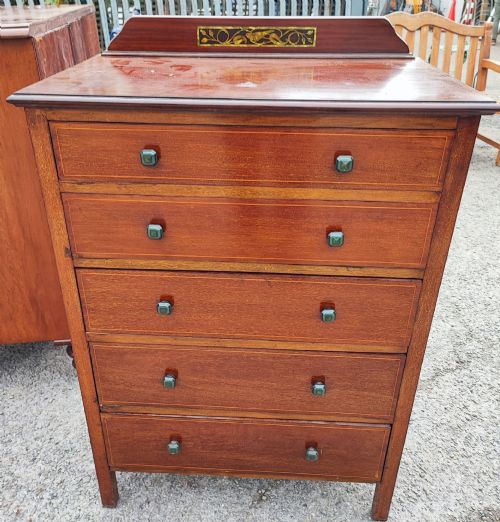
An art deco tallboy chest offers vertical storage in striking walnut, oak or maple, delivering period geometry and functional capacity to a bedroom.
Art Deco Tallboy Chest
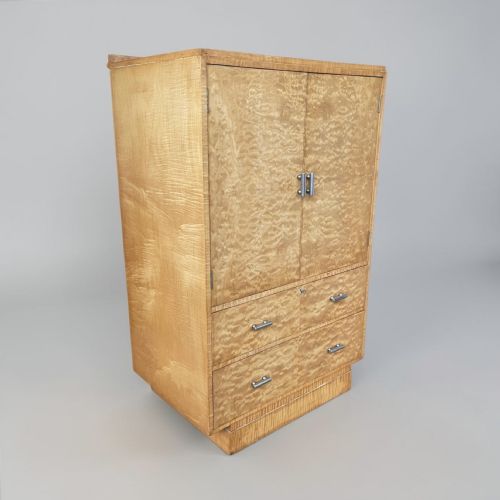
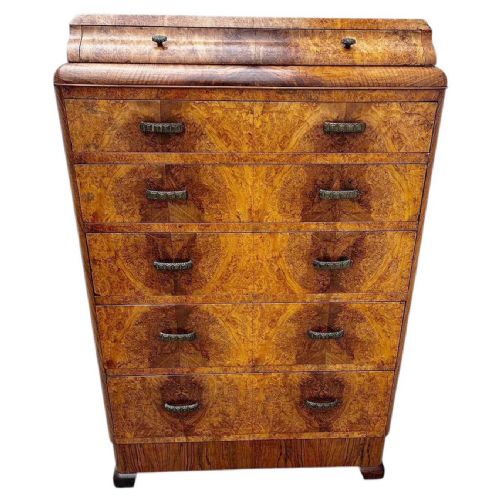
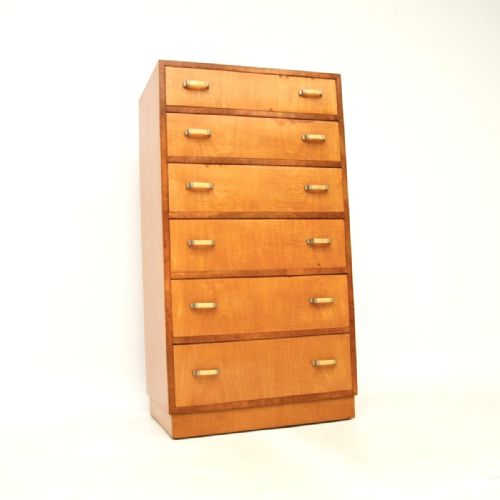
An art deco tallboy chest provides elevated storage through vertical banks of drawers, tallboy cabinets, and compactums originating mainly from the 1920s and 1930s. These pieces combine substantial storage capacity with a compact floor footprint, suiting rooms requiring vertical presence.
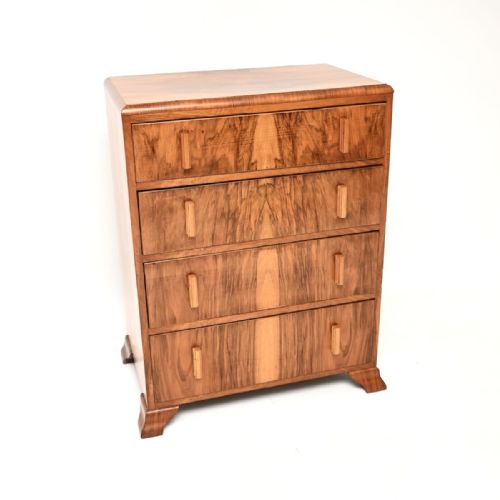
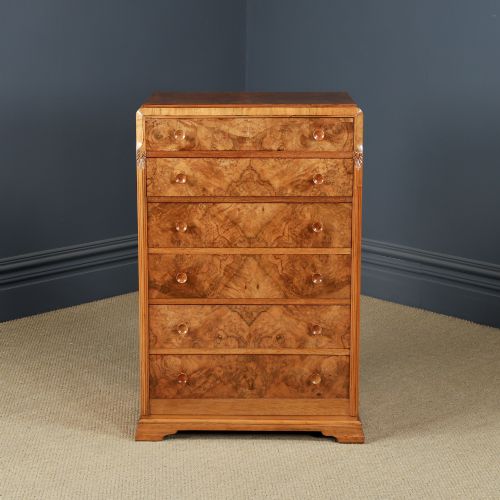
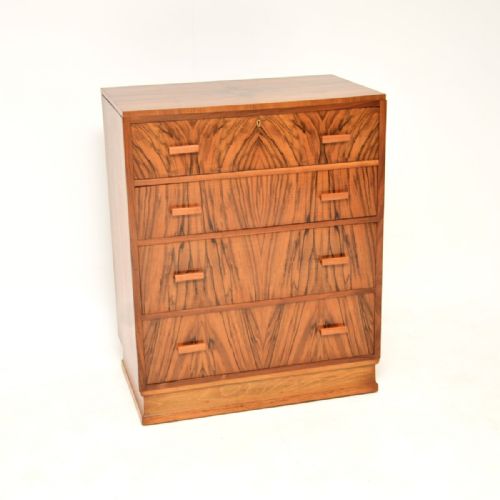
The version most commonly met on this page is the 1930s walnut tallboy chest, often surfaced in burr walnut or figured walnut veneer. Pieces frequently pair tall drawer sections with cupboard doors, creating varied internal storage configurations typical of the period.
How they were made
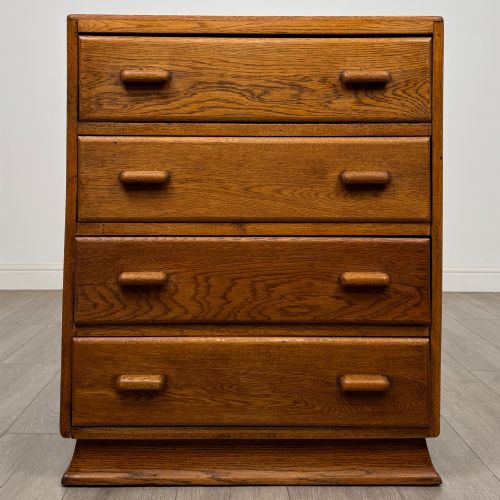
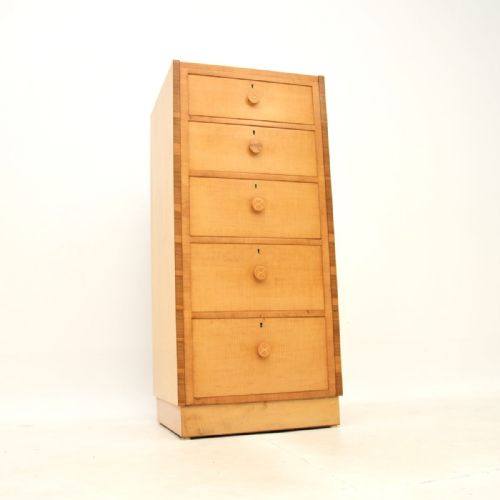
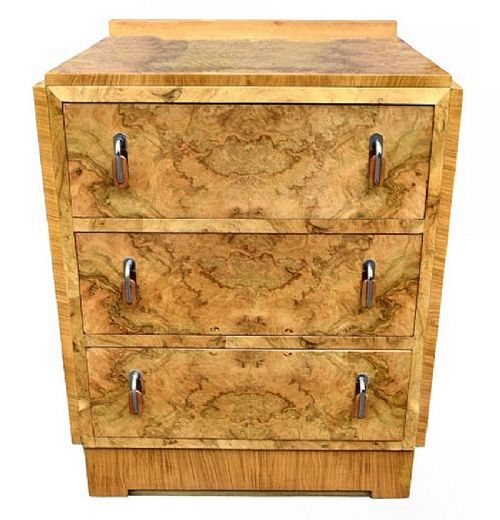
Cabinet makers utilised solid oak, mahogany, and contrasting veneers applied to sturdy carcases. Burr walnut, birds eye maple, satinwood, and blonde walnut provide the distinctive figured surfaces characteristic of the style.
Hardware details rely on metal, brass, and occasional bakelite fittings to accent the geometric drawer layouts and doors. Construction methods balance solid internal framing with decorative face veneers to achieve the characteristic proportions.
Art Deco Tallboy Chest Retail Price Guide 2026
Typical asking prices for art deco tallboy chest among the pieces listed under this phrase on Sellingantiques today, from the lower quarter to the upper quarter. They describe what is for sale here now, not the wider market.
Listings feature pieces spanning the Edwardian period through the 1950s, with walnut, oak, brass, and chrome representing the primary materials used.
What varies in quality
The selection of wood veneers dictates visual distinction, with matched burr walnut and birds eye maple representing the finer end of production. Grain continuity across drawer fronts and doors separates standard examples from works by notable makers.
Joinery execution and drawer construction determine structural longevity. Cabinet makers who employed careful timber selection and precise hardware integration produced pieces that retain smooth mechanical action and stable carcases.
Hille·Betty Joel·Heal's
The Art Deco Tallboy Chest Glossary
- Tallboy
- A tall chest of drawers, often incorporating a wardrobe section or upper cupboard above lower drawers. These units maximise vertical storage capacity while maintaining a modest floor footprint.
- Compactum
- A multi-compartment wardrobe and drawer combination unit designed for efficient clothing storage. These pieces frequently feature internal shelving and hanging space enclosed by doors.
- Burr Walnut
- Timber taken from a tree growth or burl, yielding intricate, swirling grain patterns. Cabinet makers prized this material for decorative veneer panels on prominent surfaces.
- Veneer
- A thin layer of decorative wood applied to a secondary timber base. This technique allowed makers to display dramatic grain figures across large drawer fronts without risking solid wood warping.
Art Deco Tallboy Chest: Frequently Asked Questions
What is an art deco tallboy chest?
An art deco tallboy chest is a tall vertical storage unit combining drawers and cupboards, produced predominantly during the 1920s and 1930s. These pieces utilise figured veneers and geometric lines to provide substantial bedroom storage.
Such items serve as functional focal points in period interiors. Their vertical design accommodates significant clothing storage without dominating floor space.
How do I identify a 1930s tallboy?
Identification relies on observing characteristic materials like burr walnut, oak, and birds eye maple combined with stepped or curved geometric forms. Maker attributions and construction techniques also help confirm the era.
Many examples feature contrasting wood stringing and metal or bakelite hardware. Examining the internal drawer construction provides further clues to the manufacturing decade.
Where should I place a tallboy chest?
A tallboy suits bedrooms or dressing rooms requiring vertical storage solutions that preserve floor space. Placing the piece away from direct heat sources protects the delicate wood veneers.
Allowance should be made for side-hinged cupboard doors if the chosen model includes upper cabinet sections. Adequate clearance ensures unhindered access to all internal drawers.
How do I care for walnut veneer furniture?
Maintenance involves dusting with a soft, dry cloth and avoiding silicone-based polishes that can degrade the surface finish over time. Keeping the piece away from direct sunlight prevents fading of figured veneers.
Maintaining stable room humidity protects the underlying timber and veneer from splitting or lifting. Professional wax application occasionally nourishes the historic polish.