





Art Deco Silver Compact
Art deco silver compact selections bring geometric precision and vibrant enamelling to pocket-sized vanity accessories.
Art Deco Silver Compact
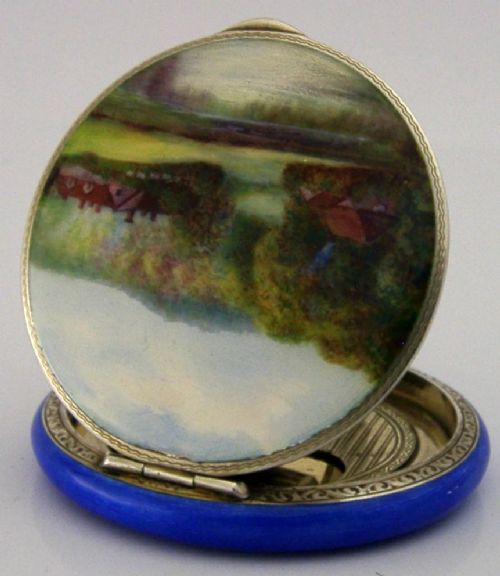
Collectors seeking an art deco silver compact encounter pocket-sized accessories designed for powder, rouge, and mirrors, frequently hailing from the 1920s and 1930s.
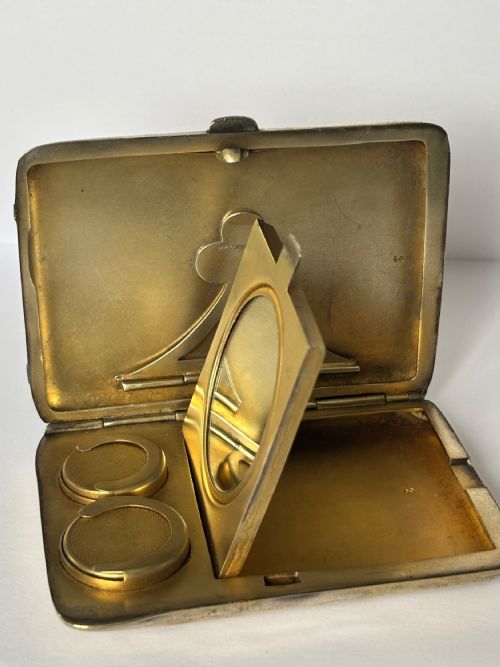
The objects on this page range from simple sterling silver cases to complex combination pieces that incorporate lipstick holders, cigarette compartments, or fob watch movements alongside the mirror.
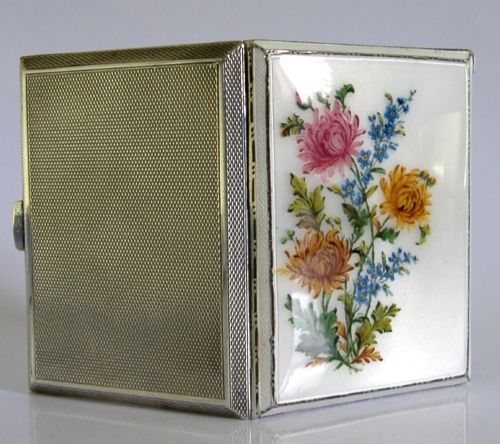
British makers from Birmingham dominate the selection alongside continental European examples, showing geometric motifs, hand-painted florals, and tailored octagonal or square silhouettes.
Materials and construction methods
Silversmiths utilised sterling silver and silver gilt as the primary structural foundations, often employing engine turning to create precise patterned textures across the metal surface.
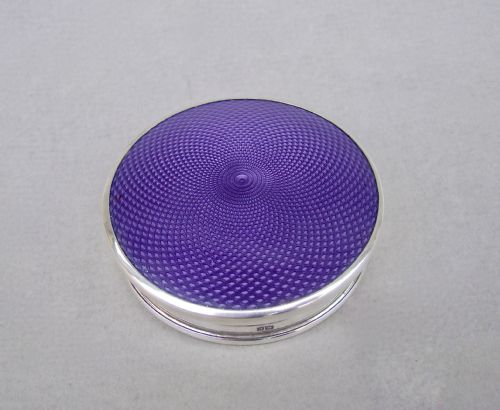
Vitreous enamel and guilloche enamel provide the rich colour fields seen on many lids, while secondary materials such as glass, marcasite, celluloid, and suede feature in hinges, bezels, and internal linings.
Some cases pack a miniature timepiece into the lid so the user could check the hour while powdering her nose.
Assessing craftsmanship and condition
Superior examples display crisp engine-turned engraving and intact guilloche enamel free from hairline fractures or chips across the translucent colour layers.
Fine construction shows in the alignment of the hinge and the secure click of the clasp, alongside clear hallmarks stamped into the metal by known silversmiths.
Henry Williamson·Henry Matthews·The Daniel Manufacturing Co·Henry Perkins & Sons·Crisford & Norris·Deakin & Francis Ltd·Joseph Gloster·Searle & Co·The Adie Brothers·W. I. Broadway & Co·The Goldsmiths & Silversmiths Company·Albert Carter·Henry Clifford Davis·Turner & Simpson·Cohen & Charles
The Art Deco Silver Compact Glossary
- Guilloche enamel
- A decorative technique where an intricate geometric pattern is mechanistically engraved beneath a translucent layer of coloured enamel. This method catches the light beneath the glossy surface.
- Silver gilt
- Sterling silver that has been coated with a thin layer of gold on its surface. This treatment provides a warm golden tone to the interior or exterior of the case.
- Marcasite
- Small faceted polished pyrites set into silver mounts to resemble diamonds. These stones add sparkle around the borders of enamelled lids.
- Engine turned
- A method of mechanical engraving that etches precise geometric, linear patterns into metal surfaces. It forms the textured base underneath transparent enamels.
- Combination compact
- A multi-functional vanity accessory that houses several items within one case, such as powder, a mirror, lipstick, and a cigarette compartment.
Art Deco Silver Compact: Frequently Asked Questions
What is an art deco silver compact?
An art deco silver compact is a pocket vanity case made during the 1920s and 1930s to hold face powder, featuring the geometric lines characteristic of the period style.
These pieces typically combine sterling silver with coloured enamel, mirrors, and occasionally built-in compartments for lipsticks or cigarettes.
How do I use an antique compact?
These historical accessories can be displayed on a dressing table or carried as functional evening items for modern use.
Care should be taken to clean powder residues gently with dry tools to protect the original interior mesh and antique mirror glass.
What is guilloche enamel?
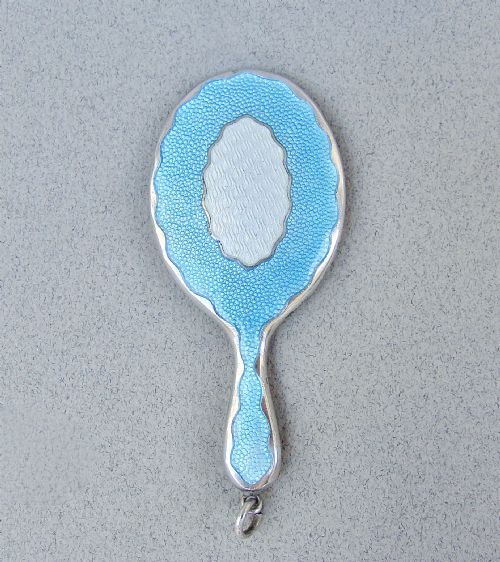
Guilloche enamel involves machinery engraving a precise repeating pattern into a silver base before coating it in translucent coloured glass enamel.
The underlying pattern shines through the coloured glaze to create depth and movement across the surface of the lid.
How can I date an art deco compact?
Dating relies heavily upon the assay office hallmarks stamped into the silver, which record specific letter codes for the year of manufacture.
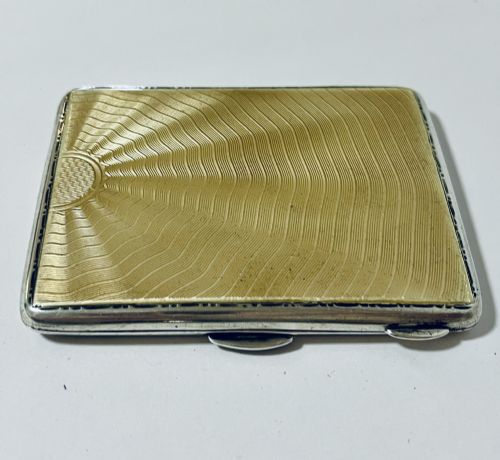
Stylistic markers such as octagonal shapes, sunburst engine turning, and bright pastel enamels also point firmly to the interwar decades.