



Engine Turned Compact
These engine turned compact pieces are pocket essentials of silver and enamel, combining precision geometric patterns with period style for daily carry.
Engine Turned Compact
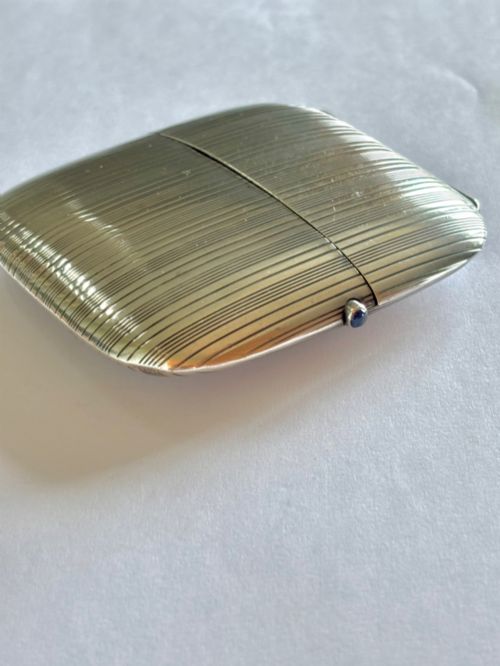
An engine turned compact is a small personal container designed for powder, cosmetics, or cigarettes, frequently encountered from the Art Deco period and the early twentieth century. These portable items range from simple silver cases to elaborate vanity pieces combining metalwork and coloured enamel.
The selection here includes powder compacts, vanity cases, and cigarette cases spanning the nineteenth century to the middle of the twentieth century. Forms include square, rectangular, and round containers, often paired with matching lipsticks or fitted inside leather presentation cases.
Materials and methods
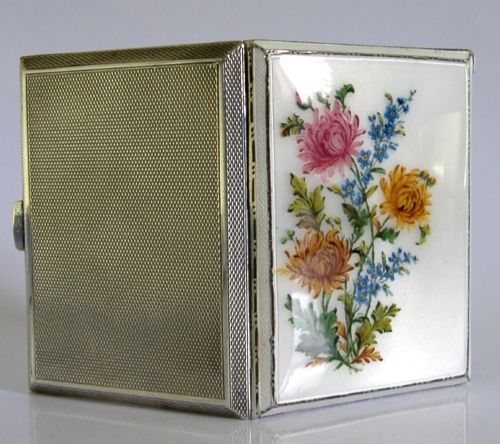
Maker workshops utilised sterling silver, silver-gilt, and nine-karat yellow gold as the primary structural metals for these luxury items. Artisans applied mechanical engraving techniques to cut precise geometric patterns directly into the metal surface.
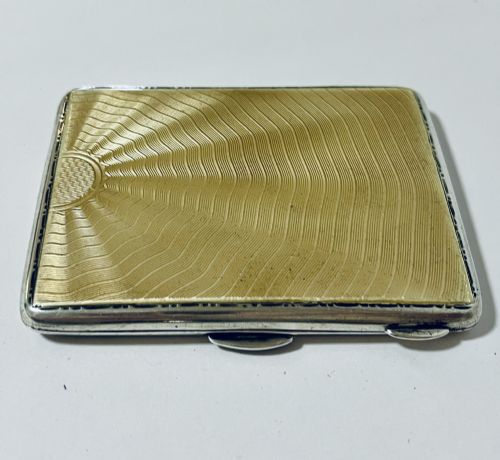
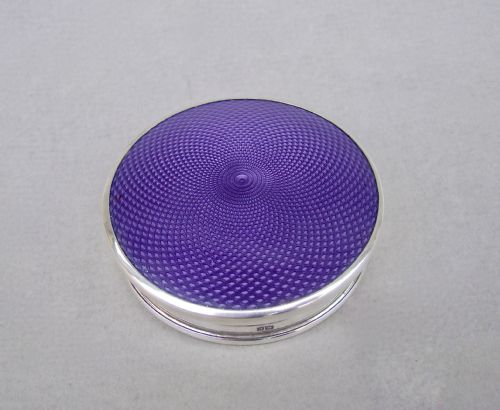
Surfaces frequently incorporate guilloche enamel, celluoid, or hand-painted details such as chrysanthemums. Precious stones including diamonds and rubies appear flush-set into gold and silver frames on high-end examples.
Listings feature sterling silver, gold, enamel, and leather across Art Deco and Edwardian periods.
Judging quality in metalwork and enamel
Quality rests in the crispness of the engraved geometric pattern and the integrity of the enamel work. Deep, even machine incisions catch the light differently than shallow, worn impressions.
The presence of precious gem set details, original leather cases, and intact interior mirrors elevates a piece. Signed maker marks from established houses like Cartier or Van Cleef & Arpels distinguish standard production items from master-worked examples.
Nathaniel Mills·The Daniel Manufacturing Co·Van Cleef & Arpels·Cartier
The Engine Turned Compact Glossary
- Engine turning
- A mechanical engraving method that cuts intricate geometric patterns into metal using a rose engine or straight line machine. This technique creates uniform textures across silver and gold surfaces.
- Guilloche
- A decorative technique where a precise pattern is mechanically engraved into a metal substrate beneath a translucent layer of enamel. The underlying pattern shows clearly through the coloured glass.
- Silver-gilt
- Silver that has been coated with a thin layer of gold through fire gilding or electroplating. This finish provides the warmth of gold combined with the working properties of silver.
- Vinaigrette
- A small ornamental box featuring an internal pierced grille, designed to hold a sponge soaked in aromatic vinegar. These date largely from earlier nineteenth century periods.
- Celluloid
- An early semi-synthetic plastic material used for decorative panels and cosmetic fittings. It mimics organic materials such as ivory or tortoiseshell in period pieces.
Engine Turned Compact: Frequently Asked Questions
How do I date a compact?
Dating relies upon hallmarks stamped into the metal, stylistic indicators such as Art Deco geometry, and manufacturing materials like celluloid or enamel. Maker marks and assay office symbols provide specific years.
Comparing the decorative motifs against known periods from the nineteenth century through the 1940s narrows the timeframe.
Were these used daily?
These pieces served as functional everyday accessories for women during the early and mid-twentieth century. They were carried in handbags for makeup application and social smoking.
Interior mirrors, powder sifts, and integrated lipstick holders confirm their active use in social settings.
How should I clean silver and enamel?
Silver surfaces require gentle cleaning with a specialised polishing cloth to preserve the engraved mechanical patterns without wearing the metal thin. Enamel needs mild soapy water and a soft cloth to avoid scratching the glass surface.
Harsh chemical dips damage both the enamel coatings and any gold wash present on silver-gilt items.