



1920s Vanity Compact
These 1920s vanity compact pieces are quintessential Art Deco carryalls offering a glimpse into jazz age dressing tables and evening bags.
1920s Vanity Compact
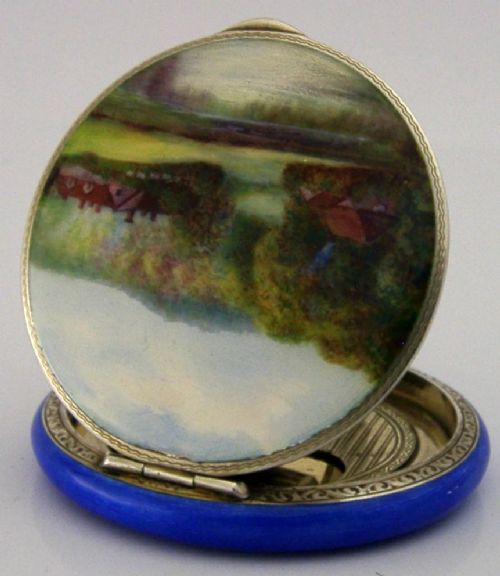
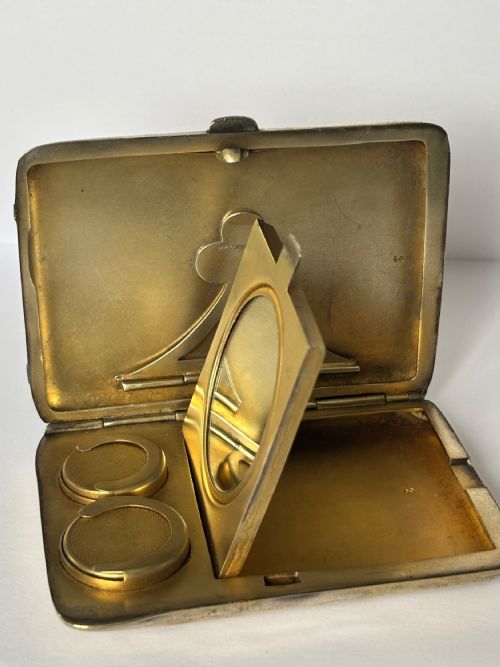
When you search for a 1920s vanity compact, you enter a field defined by Art Deco forms produced during the nineteen twenties and nineteen thirties. These objects take the shape of powder compacts, vanity cases, trinket boxes, pill boxes, and combination cases designed to hold cards or sovereign coins alongside powder.
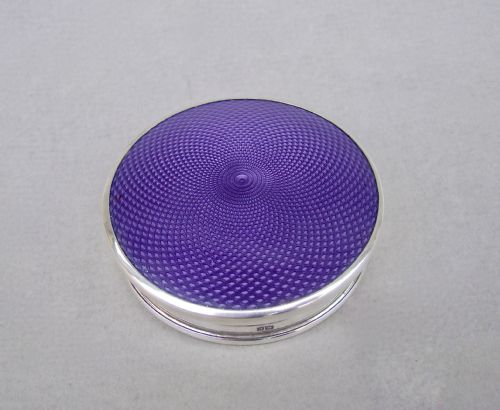
On this page, you are most likely to encounter sterling silver, silver gilt, and gilt metal pieces ornamented with guilloché enamel, celluloid, bakelite, and mirror glass. The origins span British maker marks from Birmingham alongside German silver gilt work and pieces by Richard Hudnut.
How they were made
Makers shaped sterling silver and gilt metal into geometric Art Deco housings, often applying engine turned guilloché enamel patterns to the lids. Hand painted details and inserted mirror glass completed the interior function of these powder compacts.
Alternative materials such as celluloid and bakelite appear alongside German silver gilt constructions and sovereign card combination cases. Birmingham assay offices stamped many of these items, recording the exact year of manufacture.
Flappers relied on these compacts not just for powder, but to sneak cards and sovereign coins past watchful eyes.
What varies in quality
The distinction between ordinary and exceptional pieces rests upon the crispness of the engine turning and the preservation of the guilloché enamel. Intact hand painted decoration and unblemished mirror glass elevate a compact significantly.
Clear hallmarks from recognised makers add structural and historical clarity to silver vanity cases. The complexity of combination cases, such as those housing cards or sovereigns alongside powder, separates standard compacts from more intricate workshop examples.
Henry Matthews·The Daniel Manufacturing Co·Henry Perkins And Sons·Richard Hudnut
The 1920s Vanity Compact Glossary
- Guilloché enamel
- A decorative technique where a precise, intricate pattern is mechanically engraved into metal beneath a translucent layer of enamel. This method creates a shimmering depth that catches the light from different angles.
- Sterling silver
- An alloy consisting of silver and other metals, typically copper, standardising at a purity proportion. British pieces often bear hallmarks verifying this silver standard.
- Celluloid
- An early thermoplastic material utilised for decorative panels and casing details in the Art Deco period. It provides a smooth surface texture often paired with metal frames.
- Silver gilt
- Sterling silver that has been coated with a thin layer of gold on its surface. This technique offers the rich appearance of solid gold while maintaining a silver core.
- Sovereign card combination case
- A multifunctional accessory engineered to hold paper currency, visiting cards, and gold sovereign coins alongside cosmetic powder. These multi compartment items reflect the sophisticated demands of the period.
1920s Vanity Compact: Frequently Asked Questions
What is a 1920s vanity compact?
A 1920s vanity compact is a portable cosmetic case utilised by women during the jazz age to hold face powder, mirrors, and sometimes cards or coins.
These pieces capture the geometric aesthetic of the Art Deco movement and were commonly carried in evening bags or displayed on dressing tables.
How were these compacts used?
Owners used them for quick touch ups of powder during social outings, dances, and dinners.
Combination versions also served to store calling cards or British sovereign coins, making them practical daily accessories for the modern woman.
How do I identify Art Deco style?
Art Deco style is characterised by symmetrical geometric shapes, clean lines, and streamlined forms.
In these compacts, the style appears through engine turned guilloché patterns and contrasting materials like enamel, bakelite, and silver.
What materials should I expect?
The listings show a prevalence of sterling silver, silver gilt, and gilt metal foundations.
Surface decoration frequently incorporates colourful guilloché enamel, celluloid, bakelite, and internal mirror glass panels.
How can I date these items?
Dating is often assisted by British silver hallmarks which record the assay office and specific year of production.
Maker marks and registration numbers stamped into the metal provide further documentation linking pieces to the nineteen twenties.