


Art Deco Mirror Dressing Table
An art deco mirror dressing table combines geometric elegance with practical glass, offering the ideal centrepiece for a period bedroom.
Art Deco Mirror Dressing Table
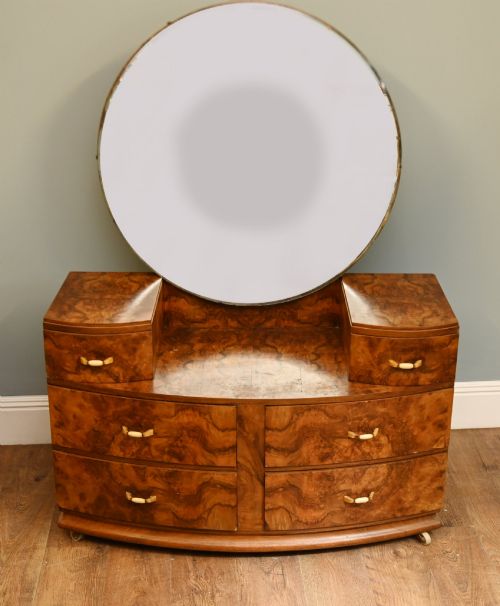
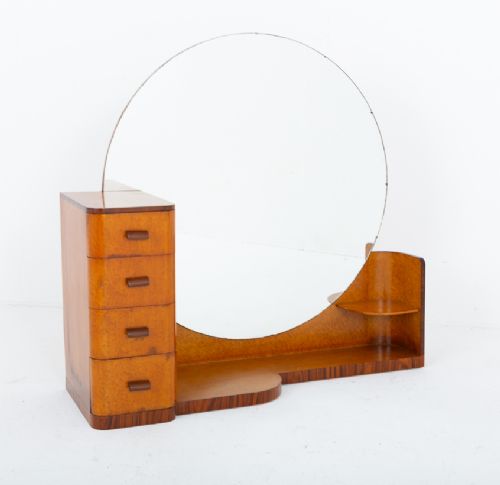
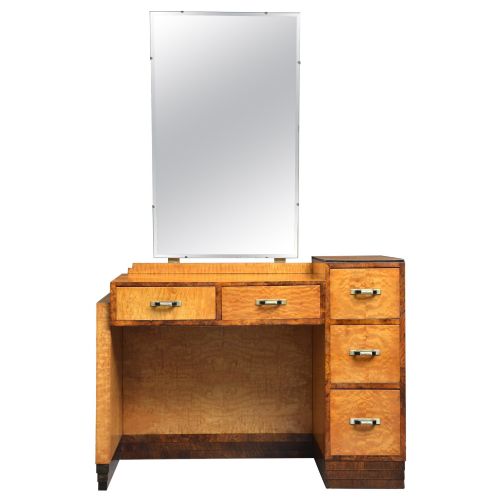
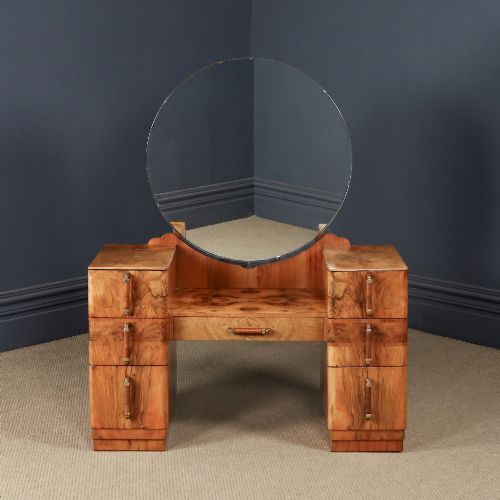
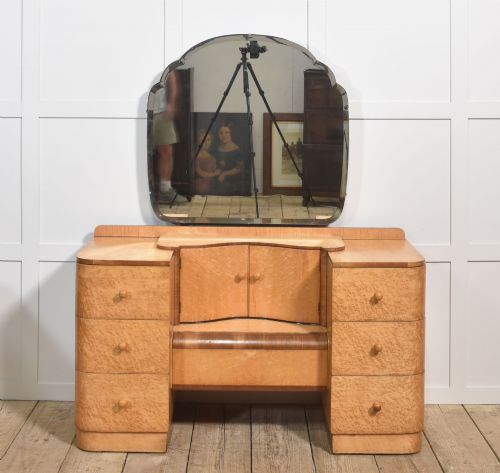
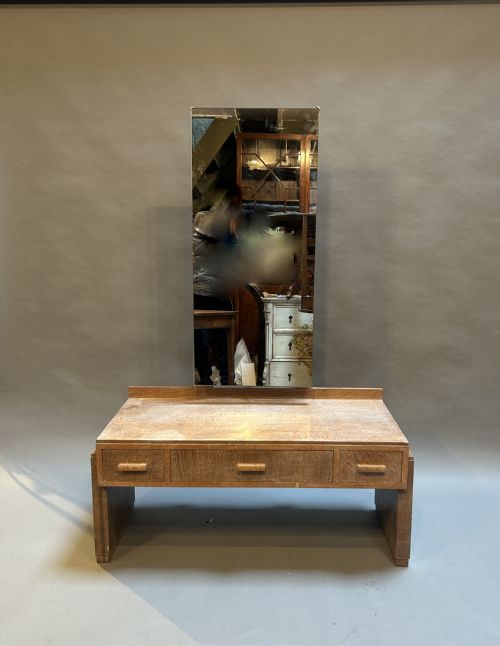
An art deco mirror dressing table brings together the clean lines and geometric forms characteristic of the interwar period. These pieces frequently incorporate large circular, rectangular, or triptych mirrors attached to substantial pedestals or chests of drawers. Most examples date from the 1920s and 1930s, though occasional Edwardian and mid-century variations appear.
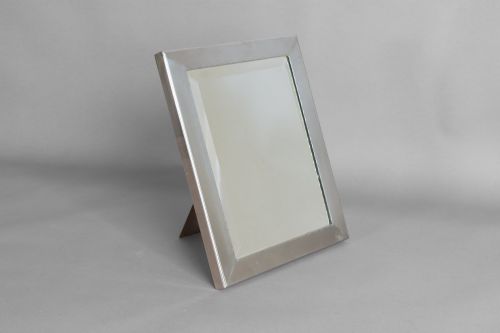
The selection ranges from large pedestal dressing tables with matching chairs and bedroom suites to smaller vanity mirrors and dressing chests. Oak, walnut, and burr walnut dominate the larger furniture forms, whilst smaller table mirrors utilise brass, chrome, and enamel. French and Swedish interpretations sit alongside English pieces, offering distinct regional takes on the modernist aesthetic.
Materials and construction
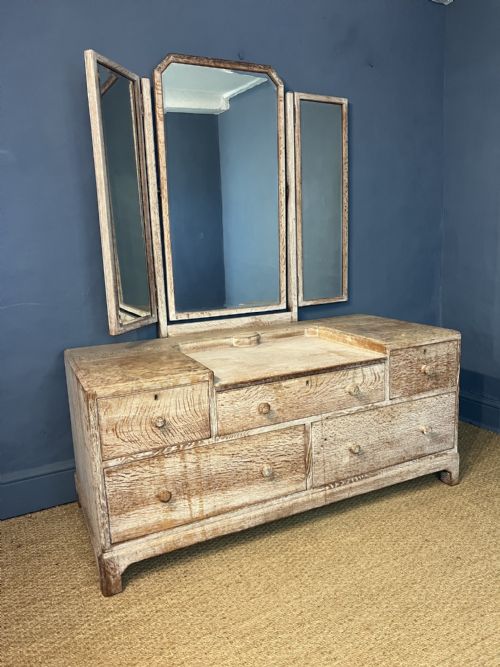
Cabinet makers utilised rich timbers like walnut, burr walnut, maple, and limed oak, often arranging veneers in striking symmetrical patterns. Marquetry inlay and subtle carving frequently accent the primary wood surfaces on pieces from prominent workshops.
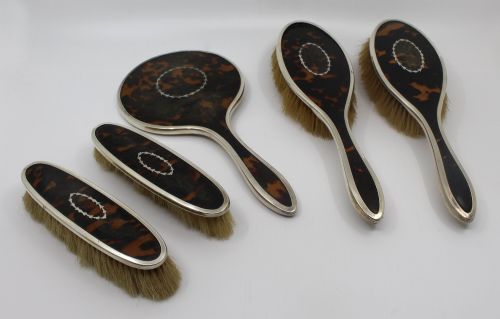
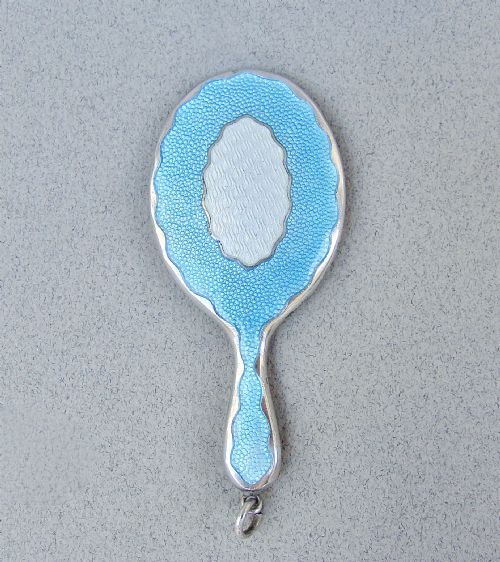
Mirrors form a crucial structural and decorative element, appearing as single pivoting plates or multi-panel triptychs flanked by metalwork in brass, bronze, and chrome. Smaller vanity accessories incorporate silver plate and guilloche enamel details.
Listings feature walnut, burr walnut, and oak alongside specialised glass and metal elements.
Judging quality in design and execution
Quality rests heavily on the selection of timber veneers and the precision of their matching across drawer fronts and pedestals. Superior pieces display thoughtful grain alignment and integrated hardware rather than applied ornamentation.
The engineering of the mirror mounts and the clarity of the original glass plate distinguish standard production from exceptional studio work. Robust pedestal construction and the inclusion of matching seating indicate higher workshop standards.
Henry Williamson·Maurice Adams·Harry and Lou Epstein·Whytock and Reid·Betty Joel
The Art Deco Mirror Dressing Table Glossary
- Triptych
- A three-panel mirror arrangement where the outer wings adjust to angle the reflection. This configuration is particularly common on larger bedroom dressing tables.
- Guilloche
- A decorative mechanical engraving technique producing intricate repeating geometric patterns. It appears frequently under translucent enamel on metal vanity accessories.
- Pedestal
- A support structure containing banks of drawers flanking a central kneehole space. These form the base for many large dressing tables.
- Limed oak
- A wood finishing method that fills the grain with a whitish compound to create a pale, textured surface. Heal's frequently utilised this finish during the 1930s.
- Burr walnut
- Timber taken from walnut tree growths, yielding highly figured and swirling grain patterns. Cabinet makers prized it for veneering prominent surfaces.
Art Deco Mirror Dressing Table: Frequently Asked Questions
What is a triptych mirror?
A triptych mirror consists of a central glass plate flanked by two adjustable side panels hinged to angle the reflection. This setup allowed users to check their profile from multiple angles.
Such configurations are typically mounted directly to large pedestal dressing tables or sit as freestanding tabletop units.
How do I date these pieces?
Dating relies on stylistic markers, construction methods, and materials associated with the 1920s and 1930s. Streamlined geometric forms and the use of chrome point firmly to the interwar decades.
Earlier Edwardian pieces tend to retain more traditional bracket feet and heavier decorative carving, whilst 1950s examples show post-war minimalism.
Where were they used?
These pieces served in domestic bedrooms and dressing rooms as dedicated spaces for grooming and personal care. The larger suites often included matching wardrobes and washstands.
Smaller table versions functioned on simpler chests or sideboards within urban apartments and country houses alike.
Are mirrors removable?
Most attached dressing table mirrors detach via screws or slot into wooden mounts for easier transport and placement. Triptych frames often lift straight out of their base brackets.
Smaller vanity and easel mirrors remain as single integrated units with built-in folding stands.