





Art Deco Vanity Chest
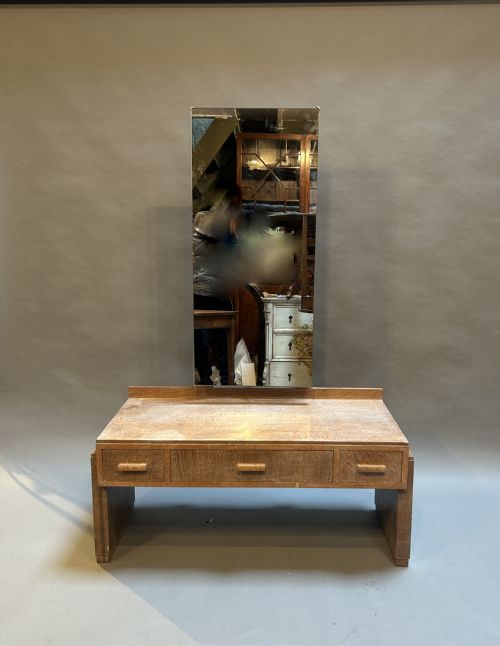
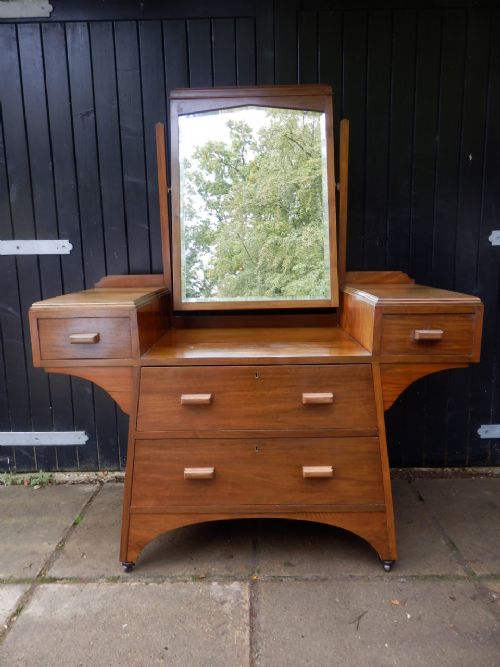
An art deco vanity chest gathers the bold geometric lines of the interwar years into practical bedroom storage.
Art Deco Vanity Chest
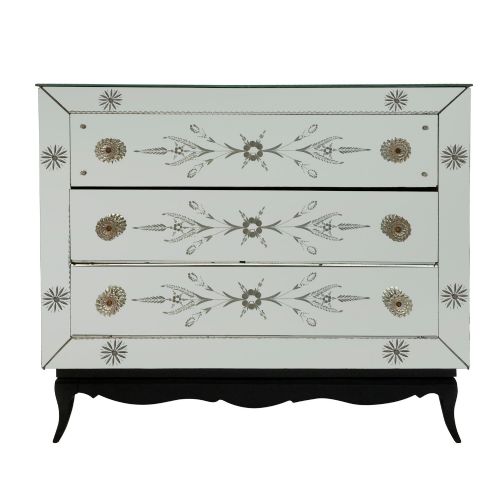
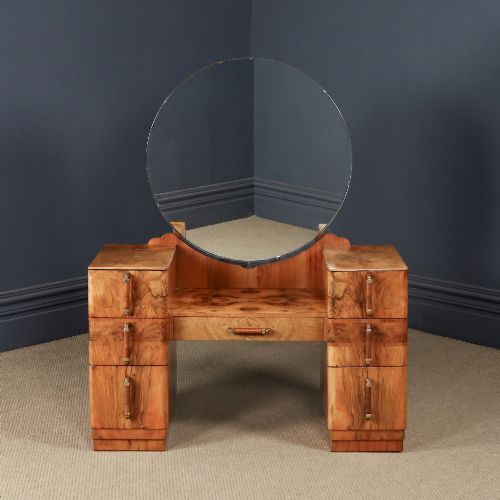
An art deco vanity chest principally takes the form of a dressing table or dressing chest dating from the 1920s and 1930s, though occasional smaller leather jewellery boxes appear under the description. Buyers encounter French and English pieces designed for twentieth-century bedrooms, often incorporating integral mirrors.
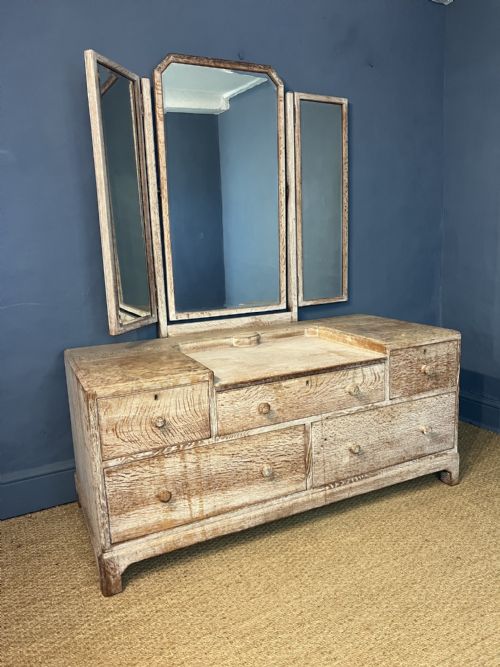
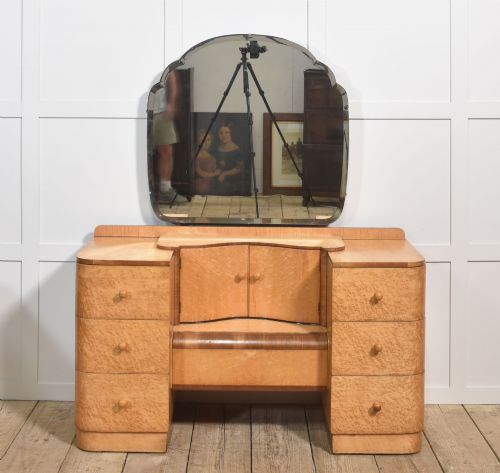
The selection ranges from oak and limed oak examples associated with Heals to highly figured burr walnut suites by makers such as Frank Taylor and Co. or Maurice Adams. Forms vary from twin pedestal dressing tables to compact chests featuring marquetry and modernist lines.
Materials and construction
Cabinetmakers utilised rich timbers including walnut, burr walnut, maple, and oak, frequently enhanced with contrasting veneers and geometric marquetry. Metal fittings in brass complement the timber surfaces, whilst mirror glass forms central and pivoting looking glasses.
French workshops and English firms employed slab construction and pedestal arrangements to emphasise clean architectural silhouettes. Leather appears on smaller pieces such as jewellery boxes, finished with stitched edges.
Even a humble leather jewellery box from the 1920s manages to look like a tiny architectural monument.
Quality and execution
Superior examples distinguish themselves through the choice of timber figure, such as richly patterned burr walnut veneers laid with deliberate symmetry across drawer fronts. The integration of original mirror glass and specialised hardware also separates standard production from ambitious modernist design.
Attribution to noted firms like B Cohen and Sons or specific designers elevates a piece beyond anonymous manufacture. The precision of marquetry work and the crispness of edge moulding define the upper tier of the range.
Frank Taylor and Co·Maurice Adams·Gaylayde·B Cohen and Sons
The Art Deco Vanity Chest Glossary
- Burr walnut
- A prized timber harvested from walnut tree growths, producing swirling, highly decorative grain patterns used on cabinet facades. It defines the luxurious surface finish of many interwar pieces.
- Pedestal dressing table
- A vanity desk supported by two distinct banks of drawers or columns, often framing a central kneehole and mirror. This configuration provides substantial storage alongside a surface for grooming.
- Limed oak
- Timber treated with a white pigment to highlight the open grain while lightening the overall tone. This finish became popular in British modern furniture design during the period.
- Marquetry
- The art of applying small pieces of veneer to a structure to form decorative patterns or pictures. Craftsmen utilised this technique to create geometric motifs on drawer fronts and tops.
Art Deco Vanity Chest: Frequently Asked Questions
What is an art deco vanity chest?
An art deco vanity chest is a dressing table, dressing chest, or fitted bedroom piece produced during the 1920s and 1930s. These items combine practical storage with the characteristic geometric forms of the interwar period.
They frequently feature integrated mirrors and contrasting wood veneers such as walnut or oak. The category also includes smaller related items like leather jewellery boxes from the same era.
How do I identify English and French pieces?
English pieces often utilise oak, walnut, or figured timbers with straightforward rectilinear or limed finishes associated with makers like Heals. They tend to emphasise functional grain and honest construction.
French pieces frequently display more dramatic veneer patterns, mirrored surfaces, and elaborate modernist silhouettes. The use of exotic woods and experimental geometry is more pronounced in continental work.
Where should I place a vanity chest?
These pieces suit bedrooms and dressing rooms where their surfaces and mirrors serve daily grooming needs. Pairing them with contemporary or period seating creates a dedicated dressing area.
Because many include large mirrors or pedestals, measuring the available wall space and floor clearance ensures proper fit within the room layout.
How do I care for walnut veneer?
Burr walnut and standard walnut veneers require protection from direct sunlight to prevent fading of the rich timber tones. Dusting with a dry, soft cloth maintains the polished finish without moisture damage.
Avoiding wax buildup and keeping the furniture away from direct heat sources preserves the stability of the wood and the integrity of the veneer bonds.