
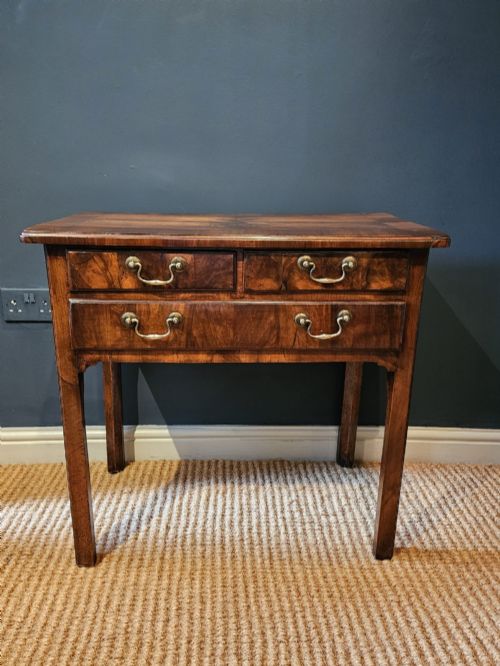
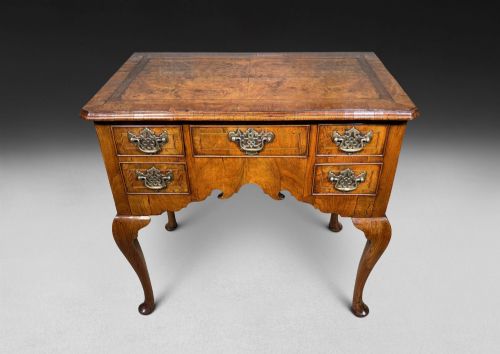
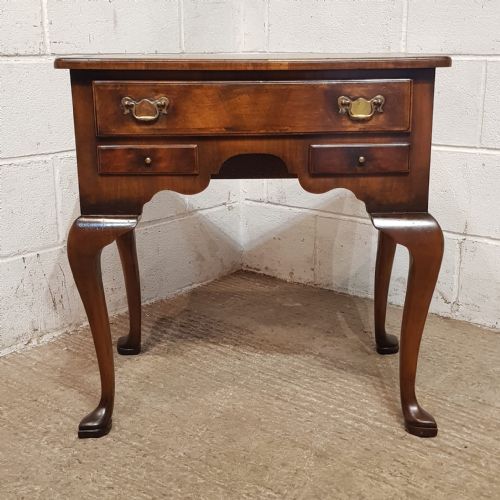
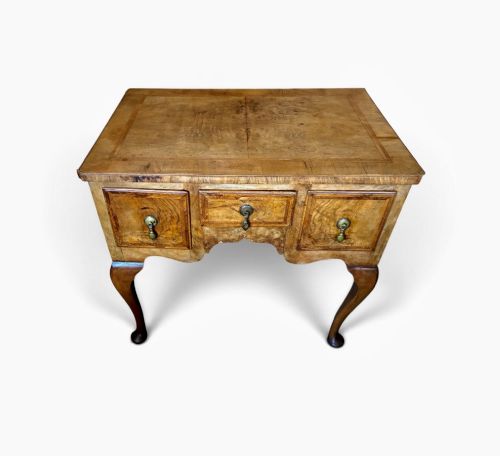
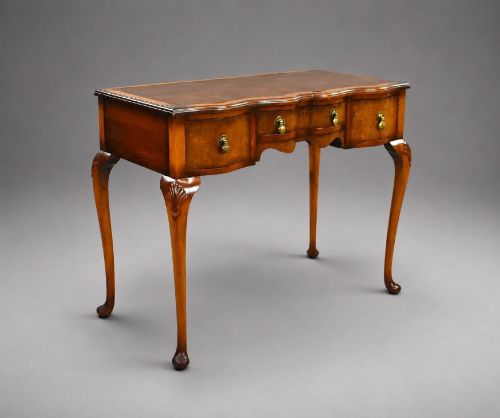
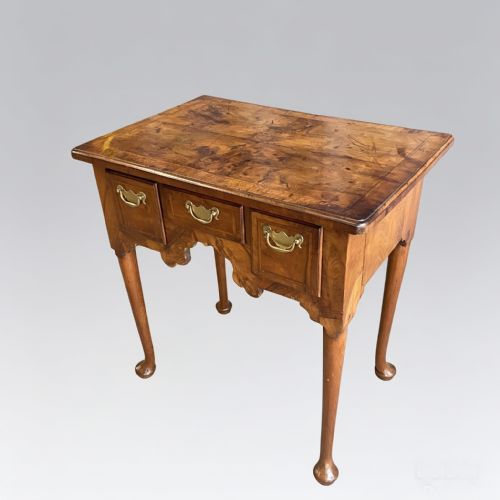
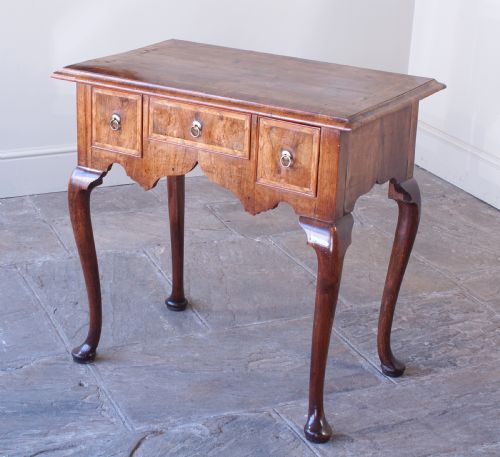
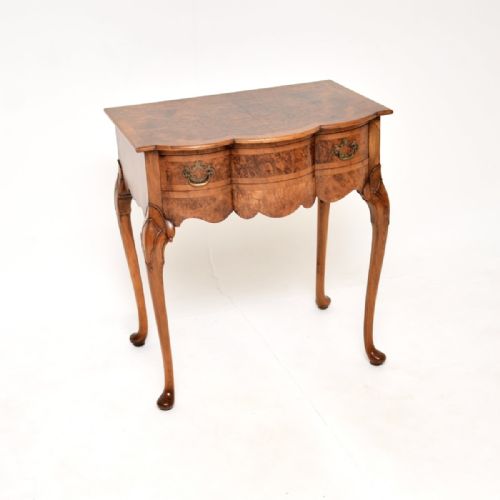
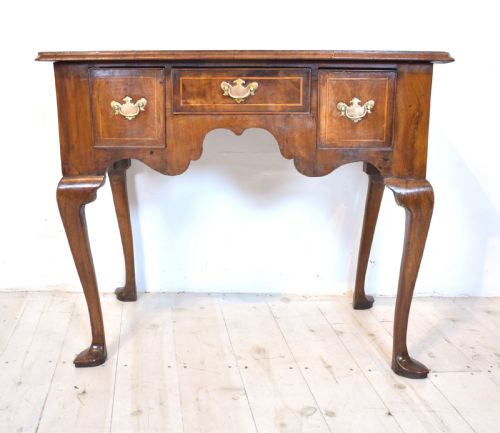


Walnut Lowboy Dressing Table
A walnut lowboy dressing table offers compact, elegant surface space and drawers, appealing to collectors seeking period craftsmanship.
Walnut Lowboy Dressing Table
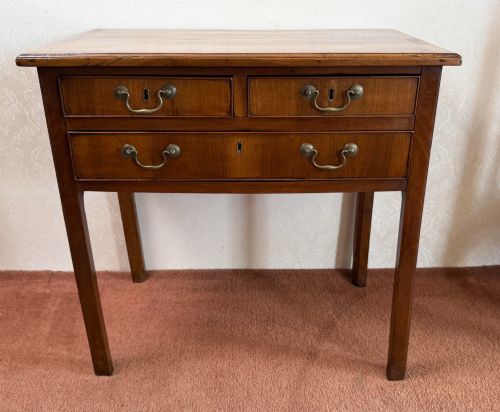
A walnut lowboy dressing table functions as a compact side table, writing desk, or personal vanity fitted with multiple small drawers. Buyers searching for a walnut lowboy dressing table encounter both original Georgian pieces from the eighteenth century and later revival examples from the twentieth century.
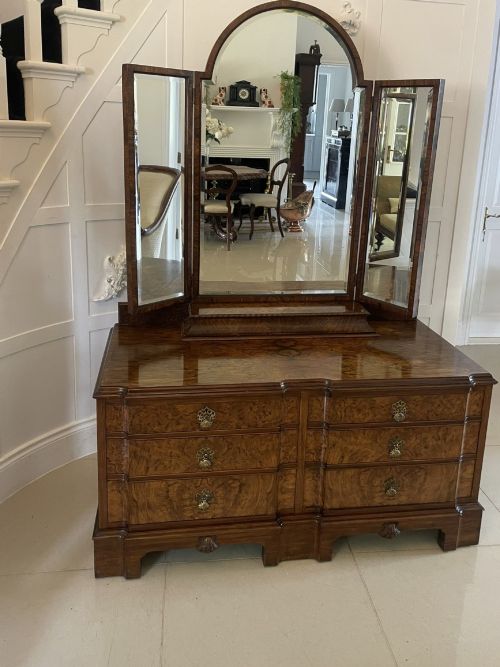
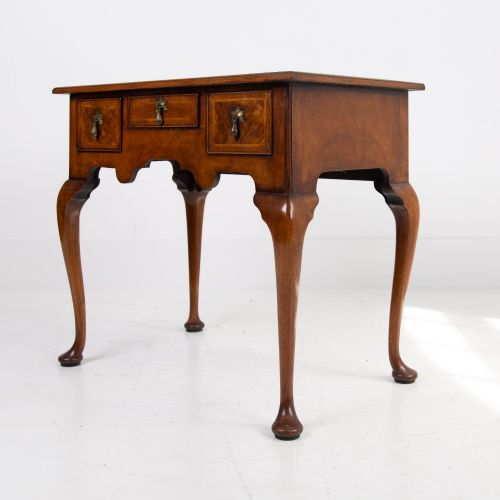
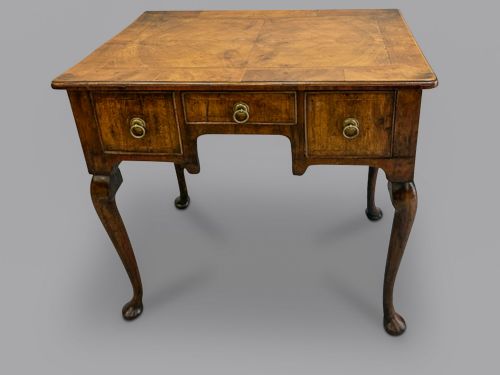
The form typically rests on slender cabriole legs, maintaining a low profile that suits hallways, bedrooms, and reception rooms alike. Variations in the evidence span plain walnut surfaces, highly figured burr veneers, and examples adorned with delicate marquetry or feather banding.
Materials and construction methods
Cabinetmakers utilised solid walnut and burr walnut veneer applied over secondary timbers such as oak and fruitwood. These wooden elements combine with brass handles and escutcheons, occasionally paired with inset leather writing surfaces and mirror glass.
Joinery techniques focus on the display of rich wood grain, particularly through matched burr veneers and decorative banding around drawer fronts. Cabriole legs shape the lower framework, sometimes featuring carved details or simple, clean lines depending on the period of manufacture.
Some lowboys doubled as scholar's tables, hiding secret correspondence drawers for confidential notes.
Judging quality and character
Quality rests primarily on the choice of timber figure, where richly patterned burr walnut veneer commands greater visual presence than plain grain. The crispness of carved details on the legs and the subtlety of feather banding distinguish finer workshops from simpler production.
Proportion and the retention of original brass hardware heavily influence the overall integrity of the piece. Eighteenth-century originals carry the patina of age, whereas revival pieces from the Edwardian era and the nineteen-twenties reflect the skill of later cabinetmakers reproducing classic forms.
Shoolbred and Co
The Walnut Lowboy Dressing Table Glossary
- Lowboy
- A small side table or dressing table featuring a low waist with one or more rows of drawers. This versatile form served as a writing desk or personal vanity in eighteenth-century interiors.
- Burr Walnut
- A specialised wood veneer harvested from tree growths, producing intricate, swirling grain patterns. Cabinetmakers prize this material for decorative table tops and drawer fronts.
- Cabriole Leg
- A furniture leg that curves outward at the knee and tapers inward toward the foot, often ending in a pad or hoof. This distinctive shape defines much of the Queen Anne and Georgian output.
- Feather Banding
- A decorative inlay technique using small strips of veneer arranged in a herringbone pattern around the edges of drawer fronts or tabletops. It frames the primary wood grain with subtle geometric contrast.
- George II
- An eighteenth-century design period characterised by robust proportions, scrolling forms, and the continued popularity of walnut before mahogany gained dominance.
Walnut Lowboy Dressing Table: Frequently Asked Questions
How were lowboys used originally?
Eighteenth-century households utilised lowboys primarily as dressing tables for grooming or as compact writing desks for correspondence. Their modest scale allowed placement in bedrooms, dressing rooms, and smaller parlours.
Over time, these versatile tables adapted to various domestic roles, functioning equally well as side tables in hallways or serving surfaces in dining spaces.
How do I date a walnut lowboy?
Dating relies on examining construction methods, timber types, and hardware alongside overall stylistic cues. Eighteenth-century examples display hand-cut joinery and authentic period patina, while pieces from the nineteen-twenties often show revival characteristics.
Secondary woods like oak, specific handle designs, and the presence of feather banding or burr veneers provide further clues to whether a piece originates from the Georgian era or later periods.
Can a lowboy work as a desk?
Many lowboys function effectively as writing desks due to their comfortable height and convenient drawer storage. The kneehole space underneath allows a chair to tuck in easily.
Buyers often select these pieces for modern home offices or studies where standard desks prove too bulky or visually heavy for the room.
What is the difference between Georgian and revival pieces?
Georgian pieces date from the eighteenth century, carrying genuine age, period construction methods, and historical wear. Revival pieces emerged later, particularly around nineteen-twenty, recreating earlier Queen Anne and George II styles.
While both utilise walnut and traditional forms, revival items reflect twentieth-century craftsmanship interpreting historic aesthetics rather than contemporary domestic production.