



Art Deco Pedestal Dressing Table
An art deco pedestal dressing table brings clean geometric lines and rich figured timbers directly into the bedroom.
Art Deco Pedestal Dressing Table
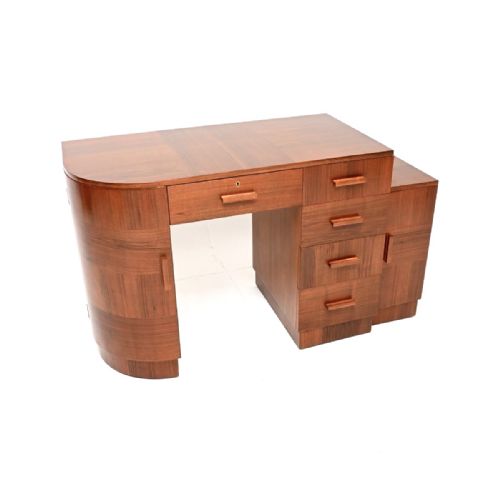
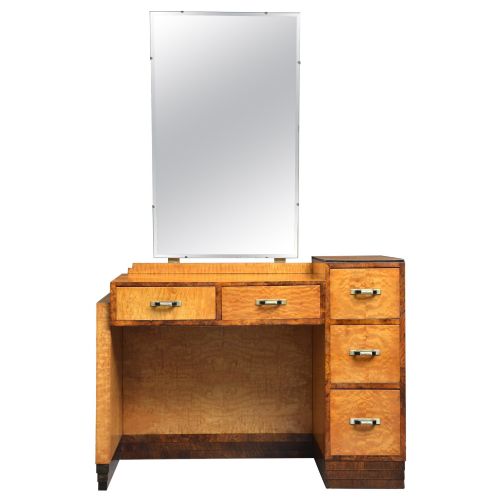
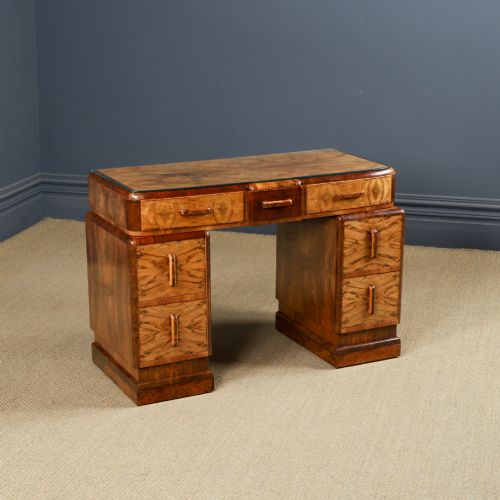
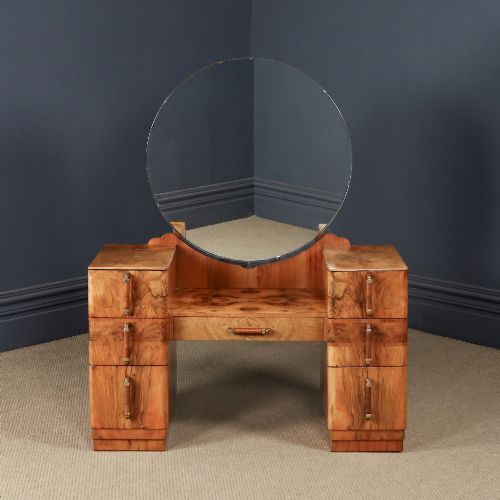
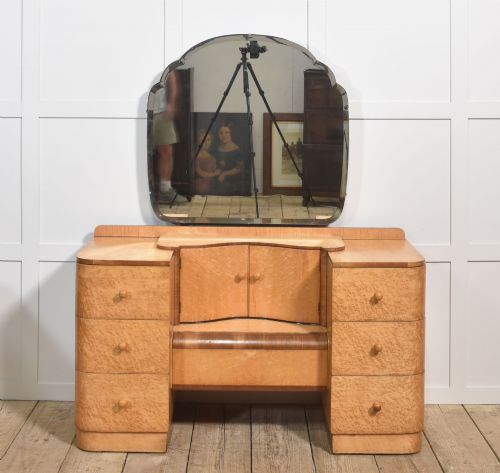
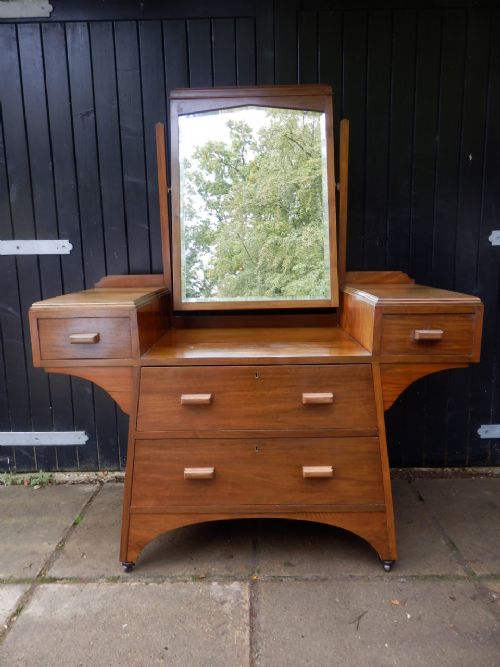
An art deco pedestal dressing table is a functional bedroom centrepiece defined by twin flanking pedestals and integral mirrors, most frequently originating from the 1930s. These pieces combine strong architectural silhouettes with the practical storage of side drawers flanking a central kneehole.
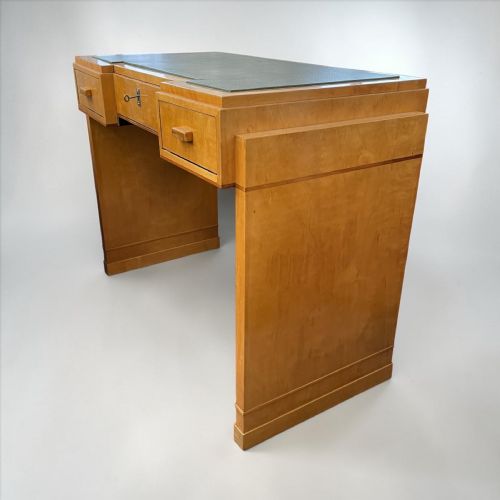
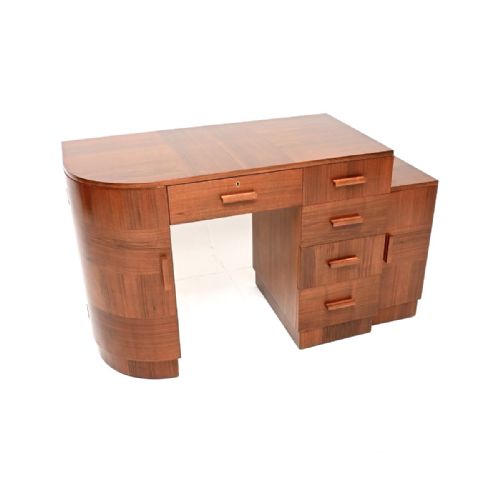
The versions met on this page span the 1920s and 1930s, alongside Edwardian examples, appearing in forms such as vanity tables with mirrors and pedestal desks. Walnut, burr walnut, and maple dominate the surfaces, often paired with matching mirror glass.
Makers such as Harry and Lou Epstein, Maurice Adams, and Betty Joel shaped the output of this era, alongside Swedish Grace interpretations. Buyers select these items to anchor a room with period character and polished veneered surfaces.
How they were made
Cabinet makers applied figured veneers like burr walnut, burr elm, and satin birchwood over solid wood carcases, using the natural grain patterns to create symmetrical decorative effects on drawer fronts and pedestals. Glass and mirror glass were integrated into the design, serving both as functional dressing mirrors and protective top surfaces.
Details such as chrome fittings, leather inserts, and metal accents complemented the polished timber surfaces. Construction techniques included pedestal bases supporting wide writing or dressing surfaces, often accompanied by matching round or shaped vanity mirrors.
Some dressing tables hide their mirrors behind sliding panels, turning a morning vanity into a sleek writing desk by tea time.
What varies in quality
The distinction between standard production and top-tier execution rests in the selection and matching of wood veneers. Master workshops utilised heavily figured burr walnut, maple, or burr elm, arranging the grain patterns deliberately across the drawer fronts and pedestals to create balanced visual rhythm.
Design ambition and attribution set certain pieces apart, particularly those bearing the marks of recognised makers or progressive London firms. The integration of high-grade mirror glass, original chrome hardware, and secondary timbers further separates ordinary utility items from superior examples.
Harry and Lou Epstein·Maurice Adams·Betty Joel
The Art Deco Pedestal Dressing Table Glossary
- Pedestal
- A supporting column or cupboard base that flanks the central kneehole of a desk or dressing table. These units generally contain multiple drawers for storage.
- Burr walnut
- A mottled, highly figured wood grain harvested from tree growths or burls. It yields rich, swirling patterns prized by period furniture makers.
- Swedish Grace
- A refined classicist design style bridging neoclassical traditions and early modernism. It is characterised by slender proportions and understated elegance.
Art Deco Pedestal Dressing Table: Frequently Asked Questions
How do I care for walnut veneer?
Dust surfaces regularly with a soft, dry cloth to prevent micro-scratching on the polished finish. Avoid placing timber furniture in direct sunlight or near heat sources to prevent the veneer from drying.
Keep humidity levels stable in the room where the dressing table sits. Apply a microcrystalline wax periodically to nourish the wood without building up heavy residues.
Were these tables used as desks?
Many pedestal dressing tables share proportions with writing desks, featuring central kneeholes and ample surface area. Buyers frequently adapt them for modern office use.
Original interiors often included compartments for cosmetics and grooming items rather than stationery. The addition of a glass top protected the writing surface from ink and daily wear.
How do I distinguish 1920s from 1930s pieces?
Pieces from the 1920s often display transitional Edwardian influences or lighter Swedish Grace proportions. Satin birchwood and simpler geometric arrangements appear frequently in this decade.
By 1930, designs shifted toward heavier skyscraper silhouettes, dramatic burr walnut veneers, and integrated chrome mirrors. The presence of bolder architectural massing usually points to the later decade.
Are the mirrors original to the tables?
Mirrors on art deco dressing tables were typically cut to bespoke shapes, including circular, arched, or skyscraper profiles. Original mirrors often show light silvering loss or gentle foxing.
Replacement glass is sometimes fitted if the original was broken or degraded beyond restoration. Inspecting the mirror backing and fixing brackets helps determine period authenticity.