


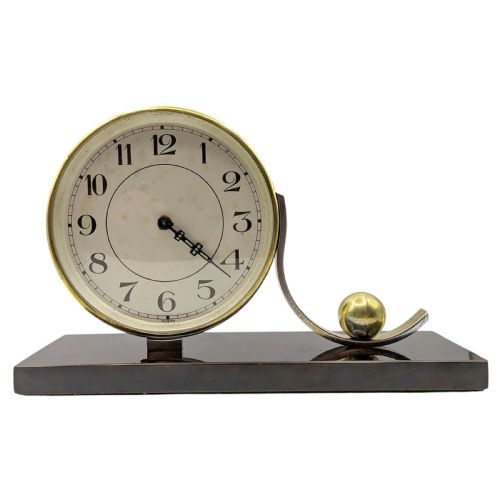

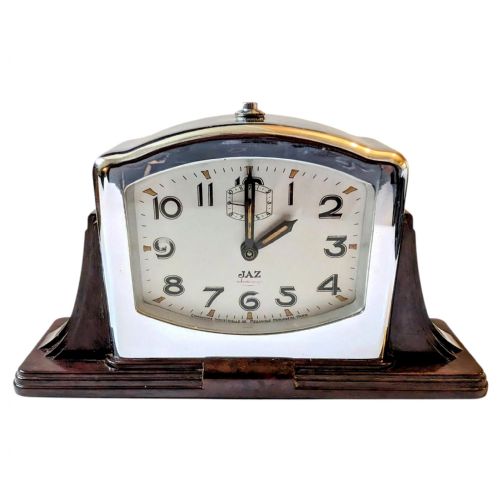
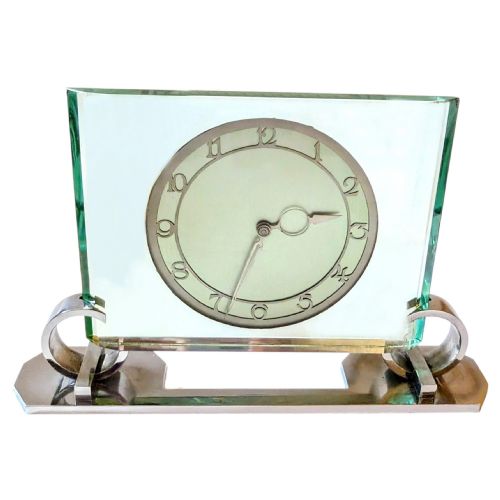
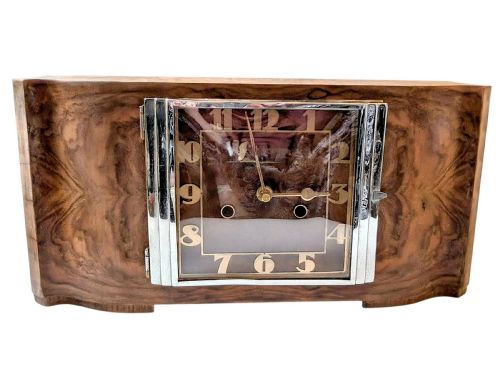
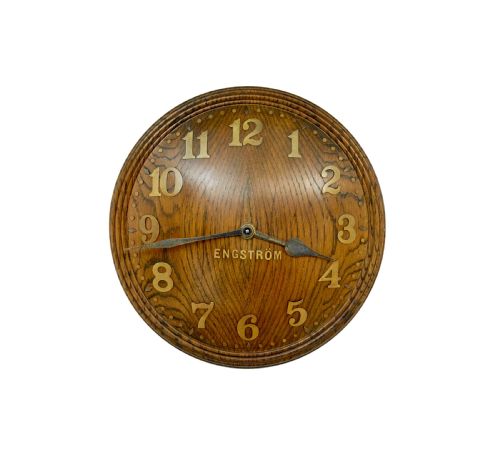


Art Deco Mechanical Clock
An art deco mechanical clock brings geometric precision and bold materials to any interior, combining heavy movement work with striking modernist design.
Art Deco Mechanical Clock
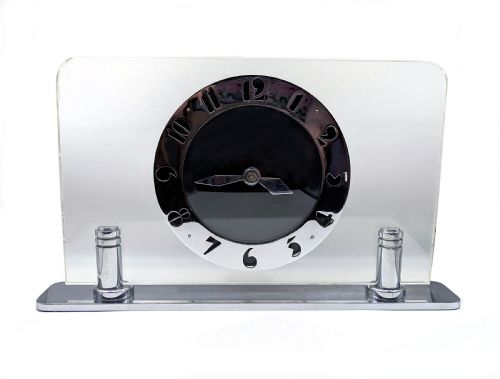
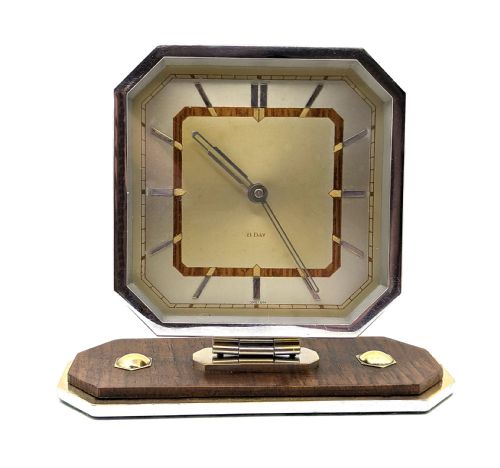
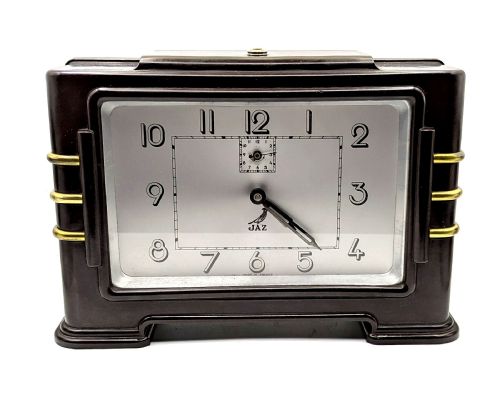
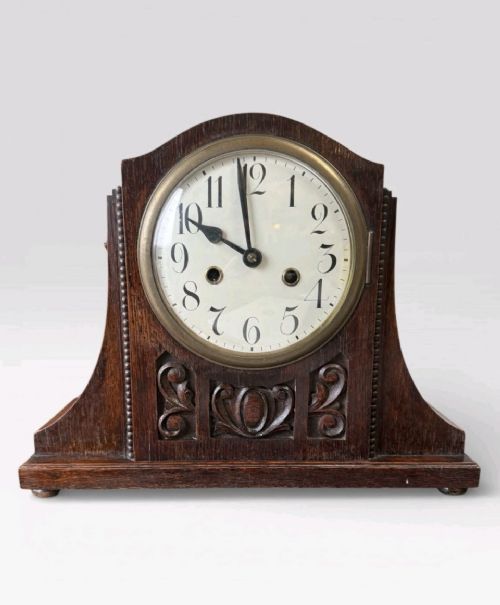
An art deco mechanical clock spans desk, wall, mantel and longcase formats driven by a wind-up escapement rather than electricity. You will most frequently encounter mantel and desk versions from the nineteen-thirties, often housed in walnut, oak, chrome or bakelite.
The objects take influence from streamline modernism and the geometric idioms of the interwar decades. English, French and German workshops dominated production, yielding pieces that range from small travelling alarms to substantial chiming floor clocks.
Materials and construction
Cases combine traditional cabinet woods like walnut, burr walnut and oak with industrial elements such as chrome, brass and coloured glass. Bakelite emerges as a defining synthetic material of the period, moulded into smooth streamline forms for mass production.
Movements rely on mechanical gear trains wound by key or manual tension, offering eight-day or thirty-hour durations. Enamelled metal dials, geometric numerals and chromium bezels complete the assembly of housing and calibre.
Current listings feature pieces spanning from nineteen-ten to nineteen-sixty, with the nineteen-thirties forming the vast majority of available clocks.
Evaluating craftsmanship
Quality rests in the precision of the mechanical movement and the integrity of the cabinet work. Finer examples feature signed escapements from established makers with clean, uncorroded internal brass work.
Material selection divides standard production from superior pieces. Solid hardwoods, heavy cast chrome plating and thick bevelled glass indicate higher manufacturing standards than pressed sheet metal or thin veneers.
Smiths Clockmakers·Jaz·Zenith·Junghans·Mauthe·Mappin and Webb
The Art Deco Mechanical Clock Glossary
- Escapement
- The internal mechanism that controls the release of power from the mainspring to regulate timekeeping. This assembly dictates the rhythmic ticking sound characteristic of mechanical timepieces.
- Bakelite
- An early synthetic thermosetting resin prized for its durability and rich colour palette. It allowed makers to mould smooth, curved clock cases during the interwar decades.
- Calibre
- The specific internal design and layout of a clock movement. Collectors examine this architecture to identify the workshop or factory of origin.
- Bezel
- The metal ring that holds the glass face protecting the dial. On these pieces, bezels are typically finished in polished chrome or brass.
- Veneer
- A thin layer of decorative wood applied to a secondary timber base. Burr walnut veneers provide the distinct figured grain patterns seen on interwar mantel cases.
Art Deco Mechanical Clock: Frequently Asked Questions
How often should I wind my mechanical clock?
Most desk and mantel pieces require winding every thirty hours or every eight days depending on the mainspring capacity. Check the specific gear train rating before applying tension to the key.
Avoid over-winding the spring past its natural resistance to prevent internal damage to the escapement. Regular consistent winding keeps the balance wheel oscillation steady.
Can these clocks be repaired if they stop?
Horologists can service and repair most interwar mechanical movements by cleaning gear trains and replacing worn bushings. Standard parts are often fabricated by hand if originals are missing.
Professional servicing ensures the escapement maintains correct beat and timekeeping accuracy. Regular oiling prevents friction wear on brass pivots over decades of use.
How do I identify a French movement?
French makers often stamp their trademark symbols and city names directly onto the brass backplate of the movement. Look for signatures from firms such as Jaz or regional guild stamps.
French designs frequently lean towards decorative novelty or streamline aesthetics using bakelite and chrome. Dial typography also offers clues regarding country of origin.
Where should I place a heavy walnut mantel clock?
Position the clock on a stable, level surface away from direct sunlight and damp environments to protect the walnut veneer. Mantel shelves and heavy sideboards provide ideal structural support for dense wooden cases.
Ensure the surface does not vibrate excessively from foot traffic, which can interfere with the pendulum or balance wheel operation. Level placement is essential for the escapement to beat evenly.