








Art Deco Marble Statue
An art deco marble statue brings the sleek geometry and dynamic movement of the interwar years straight into a room.
Art Deco Marble Statue
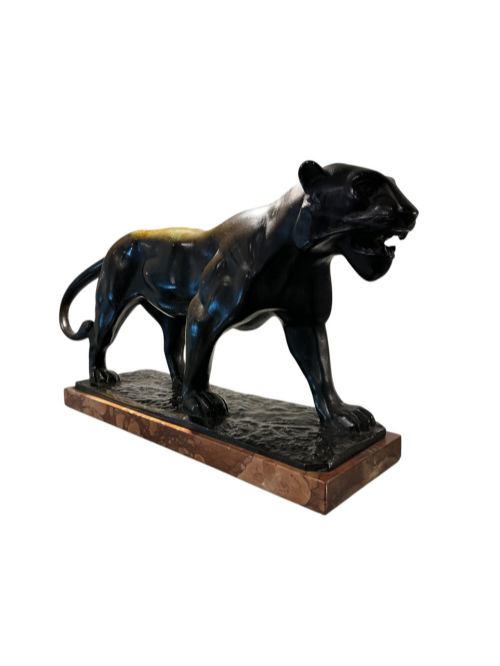
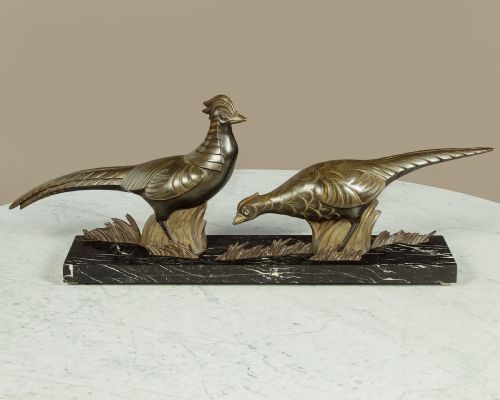
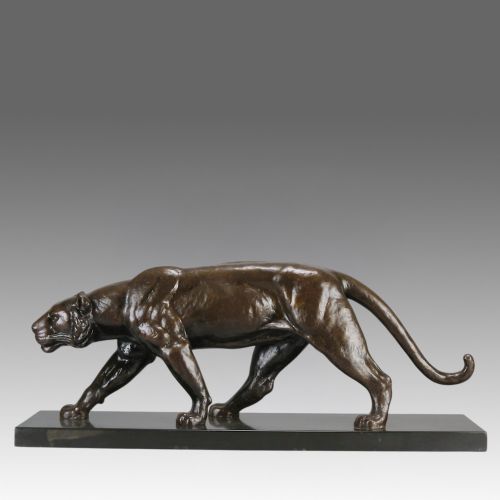
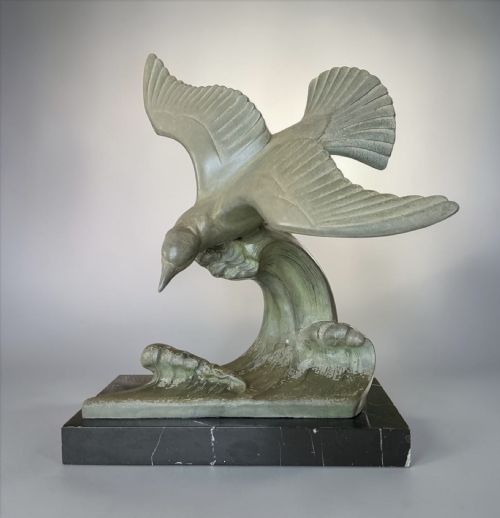
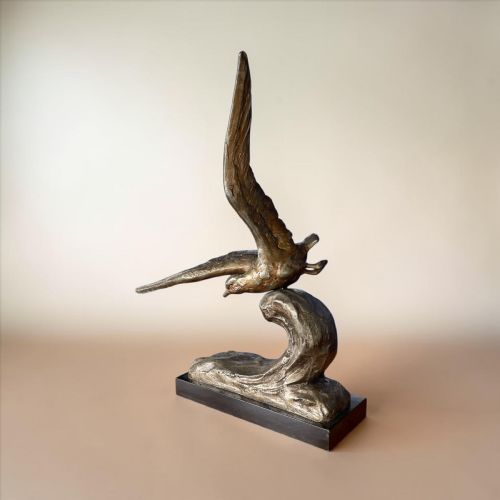
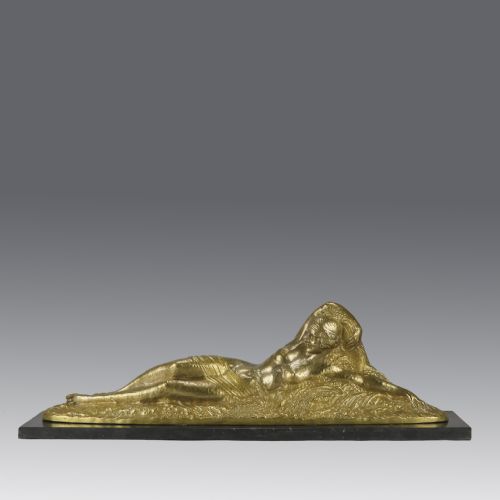
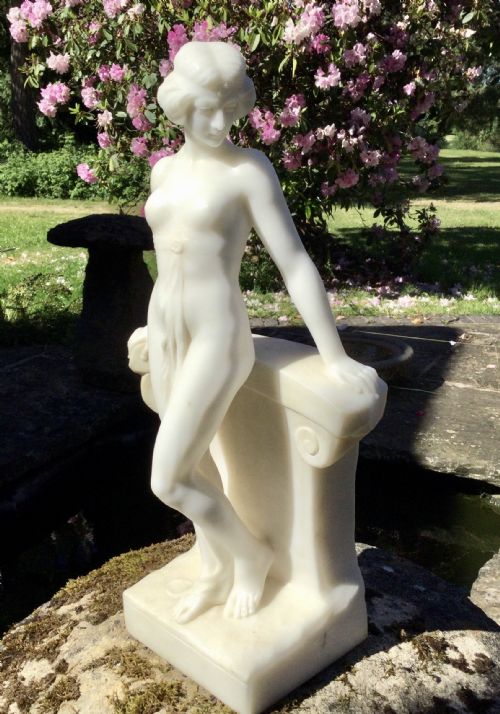
An art deco marble statue typically combines carved stone plinths or bases with figures cast in bronze, spelter, or patinated metal. These pieces capture dancers, athletes, animals, and mythological subjects in stylised, energetic poses rooted in early twentieth-century design.
The most frequent examples on this page pair marble or onyx bases with bronze or spelter figures dating from the 1920s and 1930s. Sculptures range from compact bookends and table lamps to substantial figural studies and animal groups.
Materials and Technique
Figures were frequently cast using the lost-wax bronze method or cast in spelter before receiving cold-painted, gilt, or silvered surface finishes. Foundries employed patination acids and paints to create vibrant colour contrasts on clothing, feathers, and skin.
Bases and plinths were shaped from natural marble, onyx, or alabaster, providing a heavy, stable foundation that contrasted visually with the metallic figures mounted upon them.
Materials documented across the listings include marble, bronze, spelter, onyx, patinated metal, gilt bronze, glass, silvered bronze, and alabaster.
Factors of Quality
The selection of the marble or onyx base also dictates overall standard, with harmonious veining and solid construction marking out finer studio output.
Bruno Zach·Pierre le Faguays·Ferdinand Preiss·Alexandre Ouline·Demetre Chiparus·Aurore Onu·Zoldan Kovats·Georges-Charles Coudray·Gotthilf Jaeger·Eugene Emile Borga·P. Sega·Maurice Guiraud Riviere·C Masson·Claire Jeanne Roberte Colinet
The Art Deco Marble Statue Glossary
- Cold painted
- A finishing technique where oil or water-based paint is applied to metal without high-temperature firing. This method allowed makers to introduce rich multi-coloured detail to bronze and spelter garments.
- Spelter
- A zinc alloy commonly utilised as a less costly alternative to bronze during the period. It accepts patination and cold painting readily but possesses a lighter weight than bronze.
- Patinated metal
- Metal treated with chemical solutions to produce a specific surface colour or aged appearance. It protects the underlying alloy while defining contours and shadows.
- Onyx
- A banded variety of chalcedony quartz frequently utilised for pedestals and plinths. Its translucent layers offer distinctive natural patterns beneath mounted sculptures.
Art Deco Marble Statue: Frequently Asked Questions
How do I clean an art deco marble statue?
Dust marble surfaces gently with a soft dry cloth and avoid harsh chemical cleaners that might strip surface polishes. Metal figures require simple feather dusting without liquid solutions unless handled by a professional.
Keep pieces away from direct heat sources and strong sunlight to protect cold-painted finishes and prevent stone discoloration.
Are these pieces solid bronze?
Sculptures vary between solid bronze, gilt bronze, silvered bronze, and spelter castings mounted on stone. Many pieces rely on heavy marble, onyx, or alabaster plinths for structural balance.
Material descriptions specify whether a figure is cast in bronze or spelter alongside the stone composition of the base.
Where should I display my statue?
Place statues on stable surfaces such as sideboards, mantelpieces, or dedicated display tables where their weight is fully supported. Ensure the location minimises the risk of accidental knocks due to protruding stone corners.
Good ambient lighting helps reveal the fine surface patination and colour variations in the metal and stone.
How can I tell bronze from spelter?
Bronze feels heavier, displays greater tensile strength in slender details, and develops a stable oxide layer over decades. Spelter is softer, lighter, and often shows a greyish metal tone where paint chips away.
Consulting the listing details provides confirmation of the exact alloy used by the maker.