



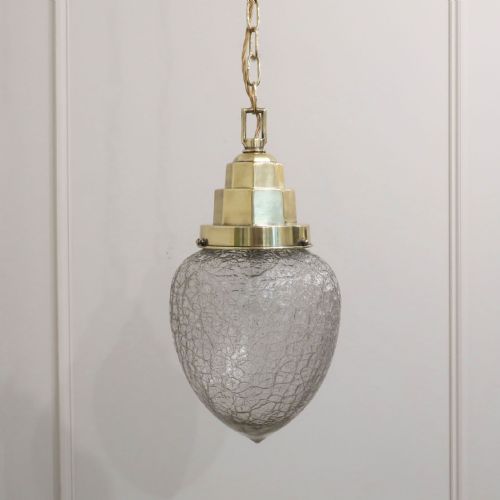
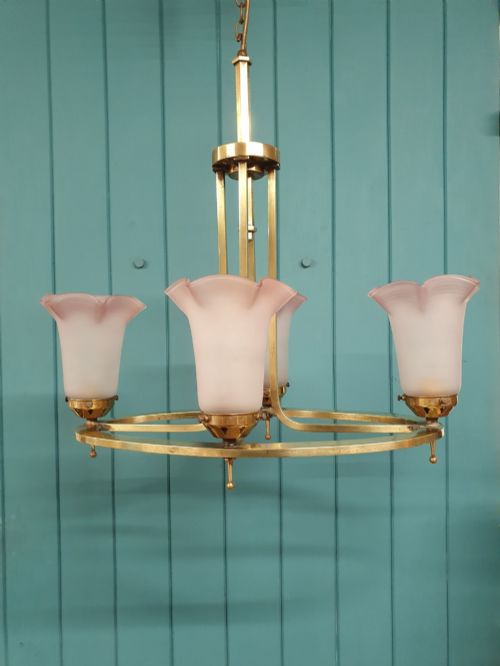
Art Deco Lighting Fixture
An art deco lighting fixture brings geometric form and industrial polish into a room, spanning wall sconces, chandeliers, and pendant lights.
Art Deco Lighting Fixture
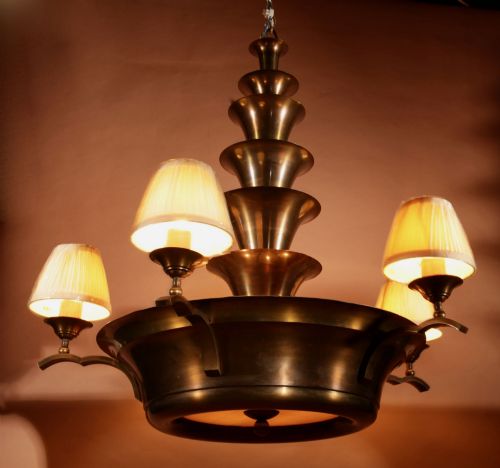
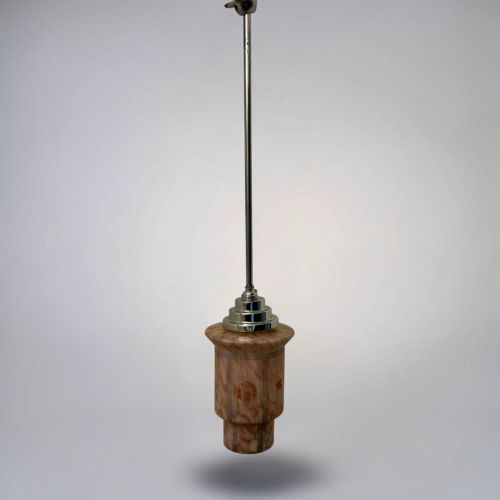
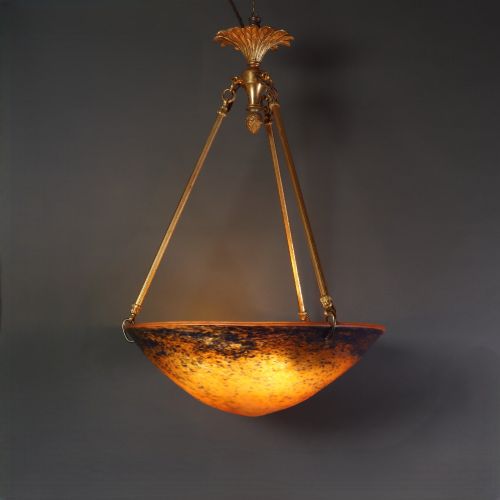
When buyers search for an art deco lighting fixture, they encounter an array of architectural forms designed to illuminate interiors through varied periods and regional styles. The selection spans ceiling lights, wall sconces, floor lamps, and multi-branched chandeliers produced across the early twentieth century.
The objects most frequently met on this page belong to the nineteen-twenties and nineteen-thirties, manifesting distinct geometric silhouettes and symmetrical patterns. Alongside these, examples touch upon Edwardian, Victorian, and nineteenth-century origins, incorporating transitional motifs from earlier eras.
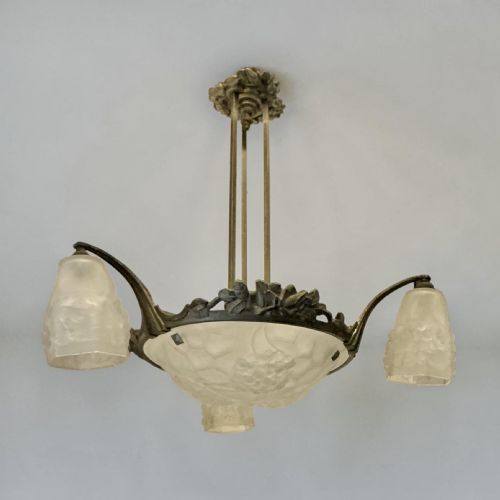
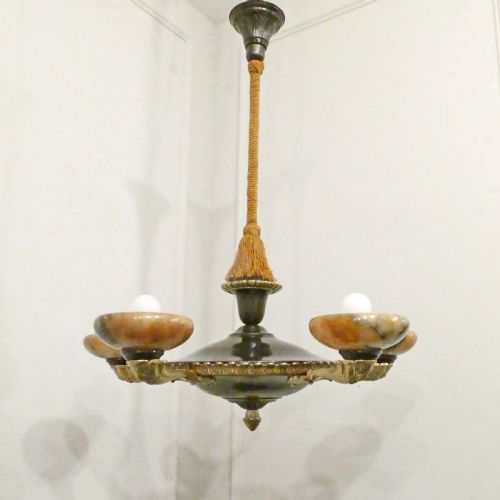
Makers and designers worked within diverse aesthetics, producing pieces that range from French pressed glass bowls to Dutch copper lanterns and American slip shade units. Forms adapt to domestic spaces, offering overhead suspension or direct wall mounting via brass, chrome, and bronze frameworks.
How they were made
Makers constructed these fixtures using robust metals such as brass, copper, chrome, bronze, and steel to form the structural frames, lanterns, and sconce arms. Hand chasing and metal spinning shaped the components before polish or plating was applied.
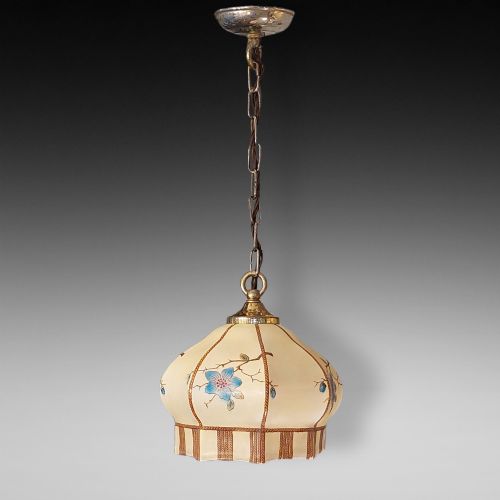
Glass elements were cast, pressed, or cut, resulting in frosted, opalescent, crackle, and opaline finishes designed to diffuse electric light. Specialised shades, including slip shades and moulded glass globes, were integrated directly into metal fixings.
Art Deco Lighting Fixture Retail Price Guide 2026
Typical asking prices for art deco lighting fixture among the pieces listed under this phrase on Sellingantiques today, from the lower quarter to the upper quarter. They describe what is for sale here now, not the wider market.
Several wall lights are shaped like clouds, bringing actual weather indoors without the forecast.
What varies in quality
Quality differentiates through the weight and finish of the metalwork, where hand-chased copper and substantial bronze castings stand apart from lighter sheet metals. The precision of the joinery and the original integrity of the framework dictate the mechanical standard.
Glass components display variation through depth of moulding, clarity of cut crystal, and the presence of signed signatures from notable glassworks. Thick pressed satin glass and uniform opaline shades represent superior manufacturing output compared to basic commercial pressings.
Émile-Jacques Ruhlmann·Schneider·Lalique
The Art Deco Lighting Fixture Glossary
- Slip shade
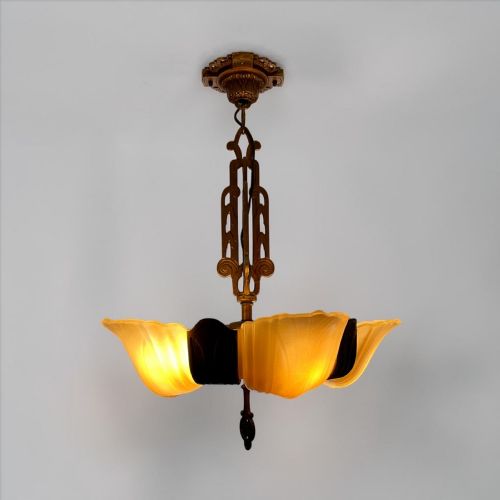
- A moulded piece of glass that slides directly into a metal frame on a ceiling light or wall sconce. These shades are characteristic of nineteen-thirties American design.
- Opaline glass
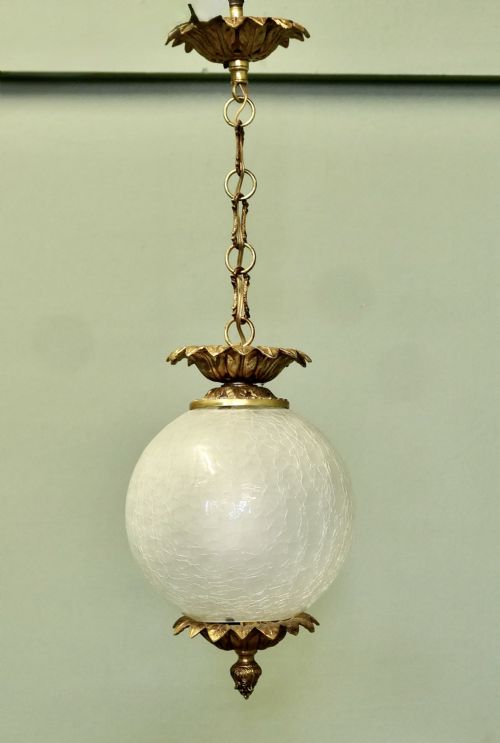
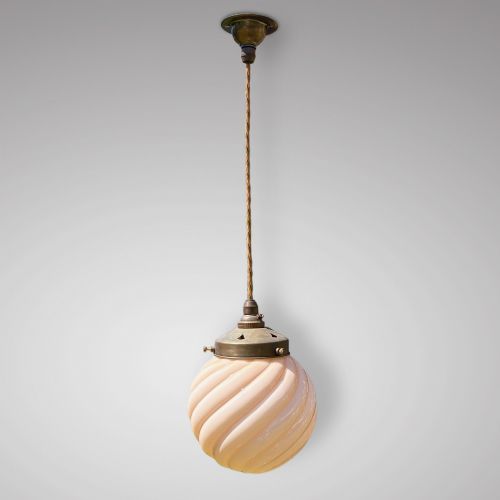
- A milky, semi-translucent glass that diffuses light softly across a room. It was frequently blown or pressed into pendant and globe forms during the early twentieth century.
- Chandelier
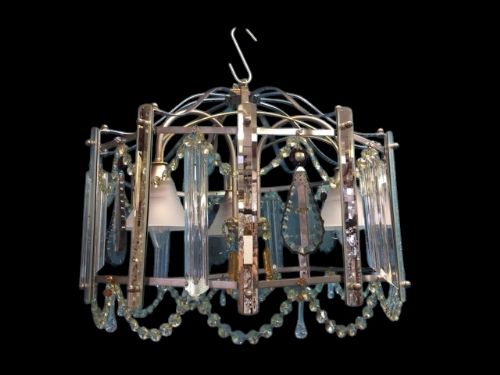
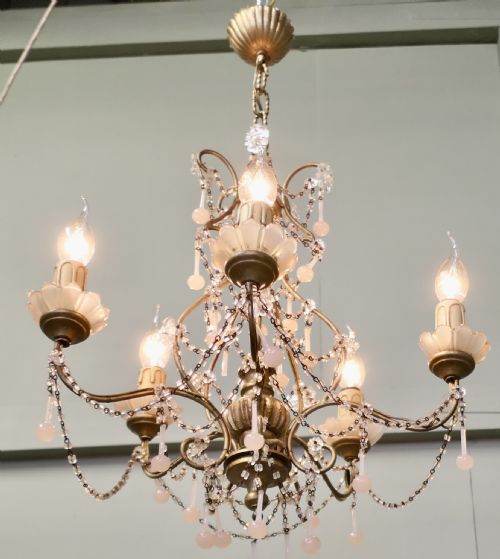
- A branched suspended lighting fixture designed to hold multiple bulbs or candles. Examples in this category range from multi-tiered crystal configurations to pink glass shell designs.
- Wall sconce
- A decorative lighting fixture affixed directly to a vertical surface. These items often feature matching pairs of trumpeted or cloud-shaped glass shades.
- Amsterdam School
- An architectural and design movement from the Netherlands emphasising expressive brickwork and hand-chased metalwork. Pieces from this tradition display organic, flowing metallic textures.
Art Deco Lighting Fixture: Frequently Asked Questions
How do I install an antique fixture?
Wiring standards on these fixtures often require professional rewiring to meet modern safety regulations before mounting to a ceiling or wall junction box.
Qualified electricians can adapt historical brass and chrome frames to accept contemporary bulbs while preserving the original metalwork.
What rooms suit these lights best?
Pendant lights and chandeliers provide central illumination for hallways, dining spaces, and living rooms with high ceilings.
Wall sconces and smaller lanterns fit narrow corridors or bedside areas where ambient directional lighting is required.
How do I identify a nineteen thirties piece?
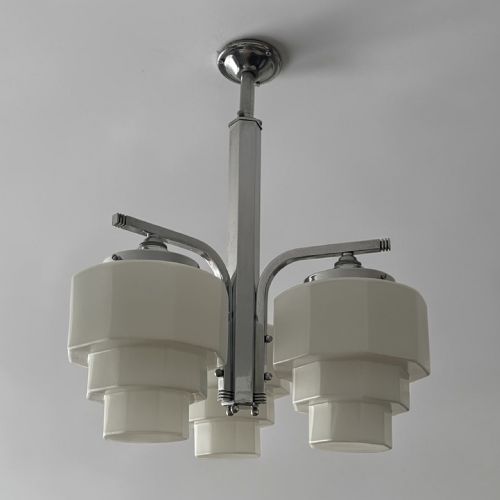
Nineteen-thirties examples typically feature streamlined chrome plating, geometric slip shades, and pressed satin glass.
In contrast, nineteen-twenties items lean towards colourful opaline glass, Venetian pink branches, and more elaborate bronze or brass structures.
Are replacement glass shades available?
Original glass shades are specific to their period and maker, meaning exact replacements for moulded or signed pieces can be difficult to source.
Buyers should verify that the glass components match the supporting frame and show no structural cracks.