
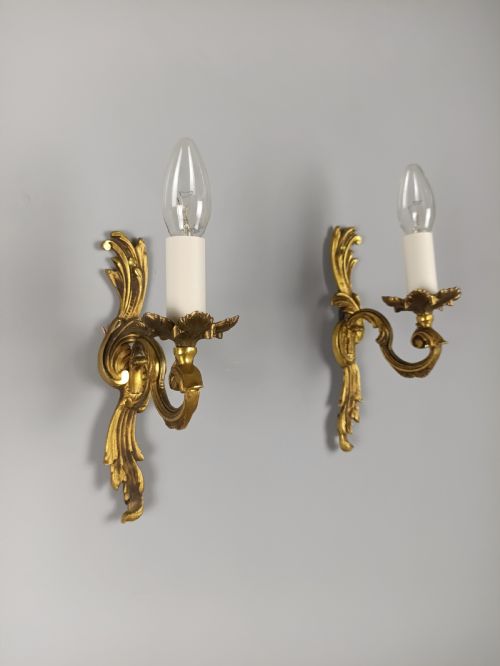
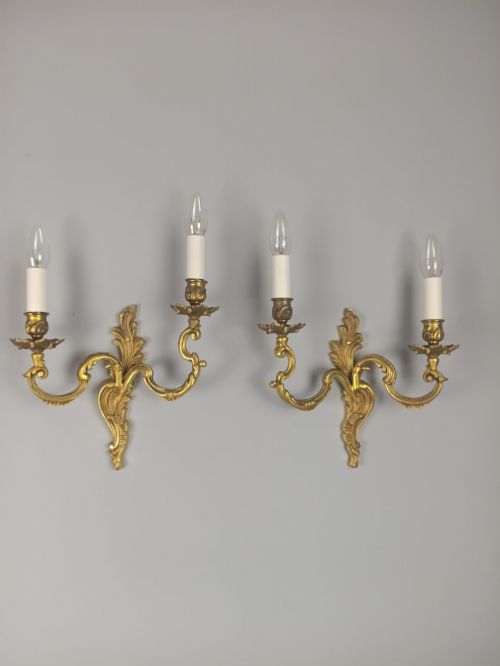
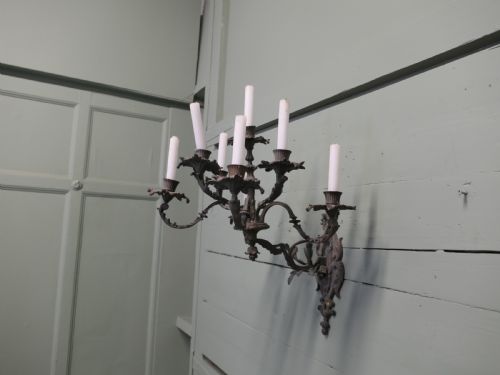


Cast Bronze Sconce
These cast bronze sconce pieces are enduring metal wall lights designed to illuminate interiors with sculptural weight and period character.
Cast Bronze Sconce
A cast bronze sconce is a wall-mounted lighting fixture designed to hold candles or electric lamps, combining structural metalwork with decorative backplates and arms. When you search for a cast bronze sconce, you encounter fixtures that span multiple centuries and stylistic revivals from English and French workshops.
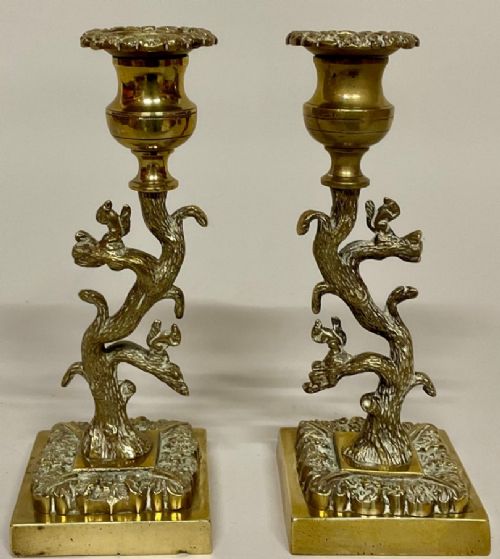
The selections available here rely heavily on 19th-century designs alongside pieces from the Edwardian era and the early decades of the twentieth century. Pairs and matched sets appear frequently alongside single wall lights and converted candlesticks.
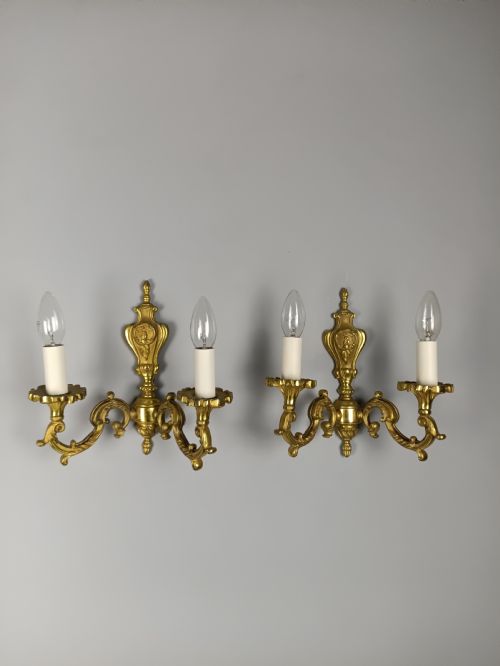
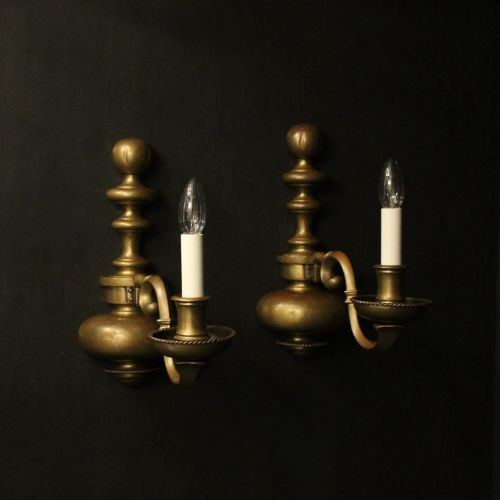
French influence dominates the selection through Rococo, Neoclassical, and Art Nouveau interpretations, while English traditional and Gothic Revival pieces offer alternative architectural forms. The physical form ranges from simple single-arm brackets to multi-armed girandoles and elaborate figural compositions.
Materials and construction
Foundry work relies on bronze, brass, and ormolu, often enhanced through gilding or silver plating to alter the surface finish. These metal alloys provide the structural rigidity necessary for wall-mounted arms and detailed sculptural casting.
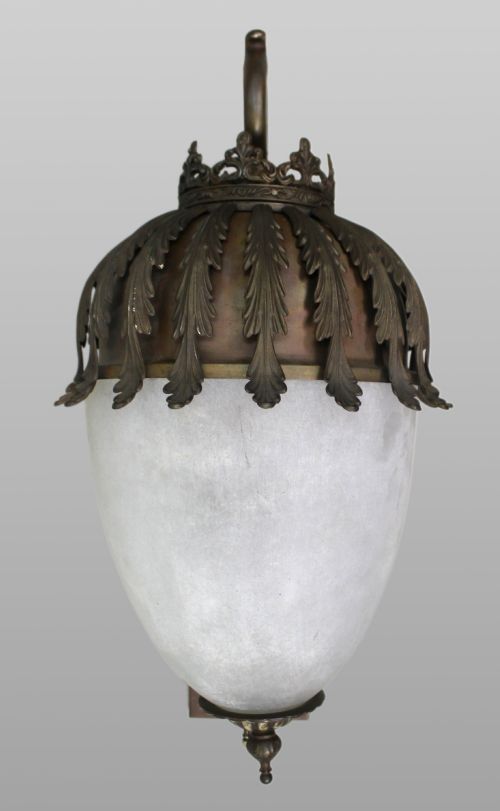
Secondary elements incorporate glass components, specifically frosted glass shades and amber panels that diffuse the light cast from the mounted bulbs or candles. Construction techniques combine sand casting for heavy components with chased surface detailing and mechanical joints.
The inventory records French Rococo Revival, Gothic Revival, and Edwardian styles executed in bronze, brass, and gilded metal.
Evaluating quality
Quality in these wall lights rests upon the crispness of the original cast and the depth of the subsequent chasing work. Finer examples retain sharp relief in foliage, figures, and scrollwork without softening from worn moulds.
The integrity of the metal surface and the execution of the gilding or patination dictate the visual presence of the fixture. Heavier gauge metal and secure structural joins distinguish superior foundry production from lighter commercial alternatives.
Liberty
The Cast Bronze Sconce Glossary
- Ormolu
- A technique of applying finely ground high-carat gold to an object of bronze. This mercurial gilding creates a rich, durable golden lustre characteristic of high-status French decorative arts.
- Girandole
- An ornamental branched wall light or candelabrum featuring reflective backplates. The polished surfaces multiply the ambient illumination from the candles.
- Campana
- A vase-shaped receptacle resembling an inverted bell, frequently forming the bobeche or socket of a candlestick or sconce. This classical silhouette appears across various 19th-century revivals.
- Chasing
- The manual finishing of a cast metal object using small punches and hammers. Artisans use this method to refine surface textures and sharpen ornamental details after the metal leaves the sand mould.
Cast Bronze Sconce: Frequently Asked Questions
How do I clean a bronze sconce?
Dust the metal gently with a soft, dry cloth to prevent the accumulation of grime within the cast crevices. Avoid abrasive polishes that can strip away historic patination or damage delicate gilding.
For glass elements such as frosted shades, remove them carefully and wash them in warm soapy water before drying thoroughly and reattaching.
Were these lights originally for electricity?
Most pieces originating from the nineteenth century and earlier were manufactured to hold wax candles before later conversion to electricity. Surviving examples often retain their original bobeches and socket configurations beneath modern wiring.
Twentieth-century editions frequently integrate electrical fittings from the outset, particularly boudoir and hotel lighting designs.
How are wall sconces secured safely?
Wall fixtures require attachment to solid masonry or appropriate timber studwork behind the plaster to support the considerable weight of cast metal. Professional installation ensures the electrical components comply with current safety standards while bearing the structural load.
Backplates generally feature designated screw holes designed to align with standard mounting brackets.
How do I distinguish Rococo from Neoclassical styles?
Rococo designs embrace asymmetric scrolling forms, C-scrolls, naturalistic foliage, and shell motifs derived from mid-eighteenth-century French aesthetics. These pieces emphasise fluid, organic movement across the bronze arms and backplates.
Neoclassical pieces rely on symmetry, strict geometric proportions, urns, and classical architectural motifs inspired by ancient Greece and Rome.