




Carved Bronze Wall Sconce
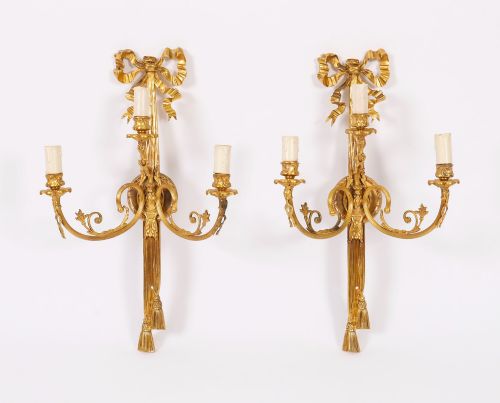
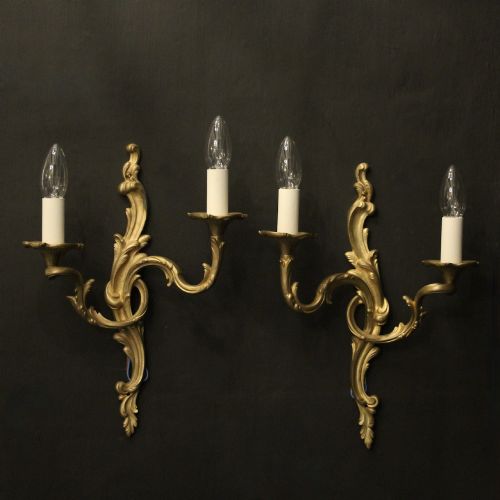
A carved bronze wall sconce brings period illumination and sculptural warmth to a wall, transforming a plain room with French flair.
Carved Bronze Wall Sconce
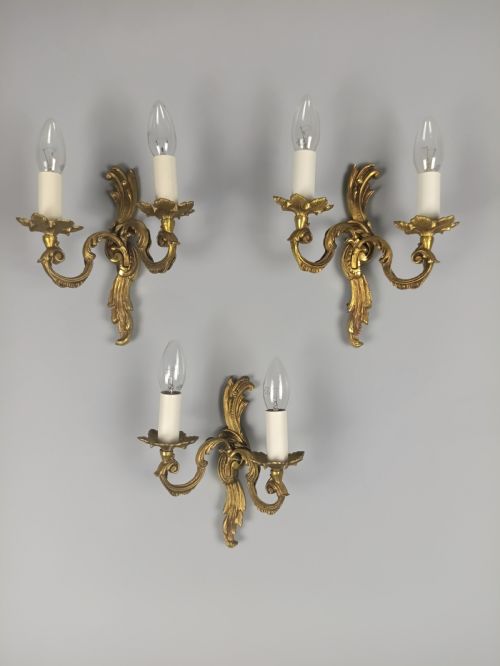
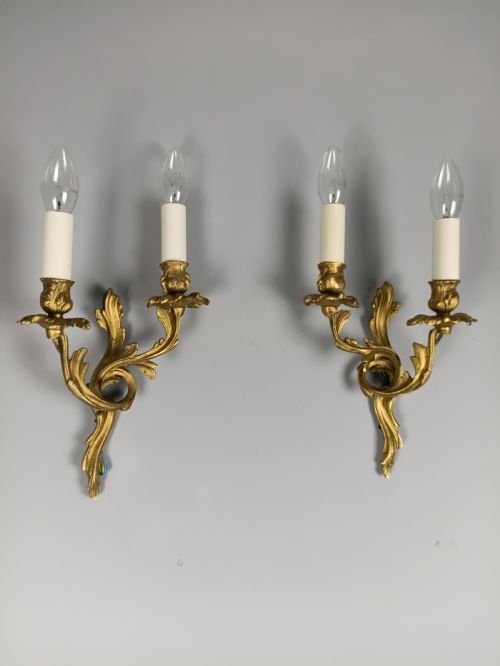
When you search for a carved bronze wall sconce, you encounter wall lights and sconces originating mostly from French workshops across the nineteenth and twentieth centuries. These pieces appear frequently in pairs or sets of three, designed to mount directly onto walls to hold candles or electric bulbs.
The selection ranges from Victorian and Edwardian examples to items dated through the 1880s, 1890s, 1910s, 1920s, and 1930s. Styles lean heavily towards French Rococo, Louis XV, Louis XVI, and Neoclassical revivals.
Buyers meet variations such as twin-arm and triple-branch configurations alongside single brackets and specialised forms like mermaid candle holders or boudoir lights incorporating amber frosted glass.
Materials and construction
Found metals include gilt bronze, ormolu, gilded brass, gilt metal, standard metal, and silver plate. These base materials receive detailed surface work, ranging from cast decoration to carved and decorated wall light brackets.
Casting methods allow for intricate scrollwork, asymmetrical Rococo flourishes, and figurative elements like detailed mermaids. Finishing techniques involve gilding to create the characteristic bright or softened metallic sheen associated with high-end period interiors.
Carved Bronze Wall Sconce Retail Price Guide 2026
Typical asking prices for carved bronze wall sconce among the pieces listed under this phrase on Sellingantiques today, from the lower quarter to the upper quarter. They describe what is for sale here now, not the wider market.
Even the most serious French salon occasionally needs a pair of highly detailed mermaids holding your candles.
Distinctions in quality
The distinction between ordinary and superior pieces rests in the crispness of the casting and the depth of the chasing. Finer examples display sharp, well-defined motifs in the bronze or ormolu without smoothing or loss of detail in the scrollwork.
Proportion and scale also separate standard brackets from important architectural pairs. Heavier multi-arm configurations with balanced weight and robust backplates demonstrate superior craftsmanship compared to simpler single-arm versions.
The Carved Bronze Wall Sconce Glossary
- Ormolu
- Finely chopped high-karat gold applied to a bronze base using a mercury amalgamation process. This technique creates a durable, warm metallic finish seen on nineteenth-century French lighting.
- Gilt bronze
- Bronze metal that has received a thin layer of gold applied by chemical or mechanical means. It provides the appearance of solid gold while utilising a sturdy bronze core.
- Rococo
- An ornate design style characterised by asymmetry, C-scrolls, and naturalistic plant motifs. It dominates the decorative vocabulary of many French wall lights from this selection.
- Neoclassical
- A revival style drawing on classical Greek and Roman architecture and ornament. Pieces in this style feature symmetrical lines, urns, and restrained classical foliage.
- Boudoir light
- A smaller, more intimate wall light intended for private rooms. These fixtures sometimes incorporate decorative elements like amber frosted glass.
Carved Bronze Wall Sconce: Frequently Asked Questions
How do I hang a heavy bronze wall sconce safely?
Heavy wall sconces require direct anchoring into wall studs or appropriate heavy-duty wall fixings to support the weight of the metal. Because many of these pieces date from the nineteenth and twentieth centuries, checking the backplate stability is essential before mounting.
Consulting a qualified electrician ensures that the wiring meets modern standards and that the bracket attaches securely to the wall surface without damaging period plaster or paneling.
Are these wall lights wired for electricity?
Many listings indicate that the fixtures have undergone rewiring to accommodate modern electrical standards, while others retain their original candle-holding configuration. It is standard practice to examine each listing's description regarding electrification.
Buyers planning to use electricity should verify whether the sconces accept standard modern bulbs or require specialist fittings compatible with the existing vintage arm structure.
How do I clean gilded bronze and ormolu?
Gilded surfaces require gentle dusting with a soft, dry brush to prevent accumulation of dirt in the recesses of the casting. Avoid abrasive cleaners, polishes, or harsh chemicals that can strip the delicate gold layer from the bronze underneath.
Professional conservation advice is recommended if tarnish or grime obscures the original finish, as aggressive rubbing damages the historic surface layer permanently.
What is the difference between ormolu and gilt brass?
Ormolu specifically denotes mercury-gilded bronze from the eighteenth and nineteenth centuries, featuring a deep, luminous golden tone. Gilt brass utilises a different base alloy and often employs alternative plating methods developed later in the nineteenth and twentieth centuries.
Both materials provide a golden metallic appearance, but ormolu typically displays a heavier, more resonant bronze body beneath the surface gilding.