



Brass Art Deco Chandelier
These brass art deco chandeliers bring distinctive period illumination to a room, combining warm metalwork with shaped and textured glass.
Brass Art Deco Chandelier
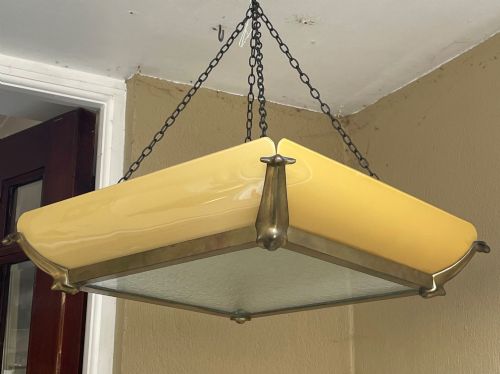
When searching for a brass art deco chandelier, a buyer encounters a diverse range of ceiling fittings primarily spanning the nineteen twenties and nineteen thirties, alongside earlier nineteenth century and Edwardian antecedents. The selection includes multi-armed hanging fixtures, single pendants, and substantial dish lights suited to period interiors.
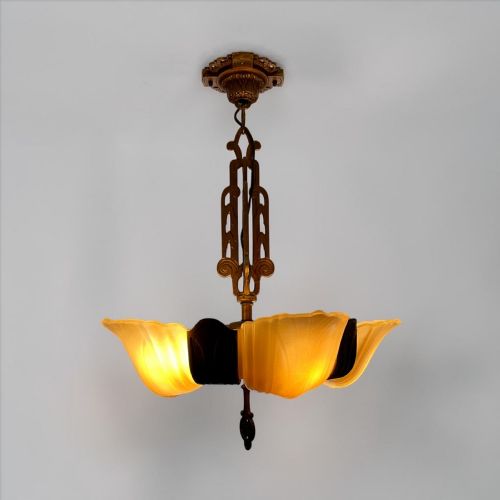
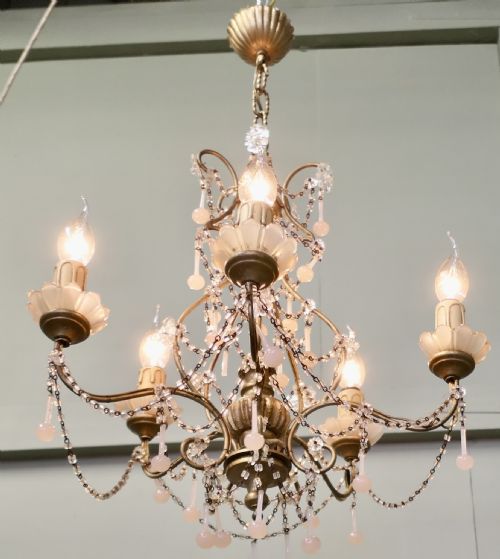
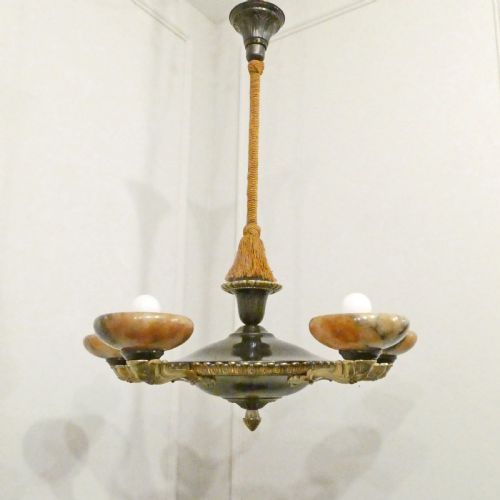
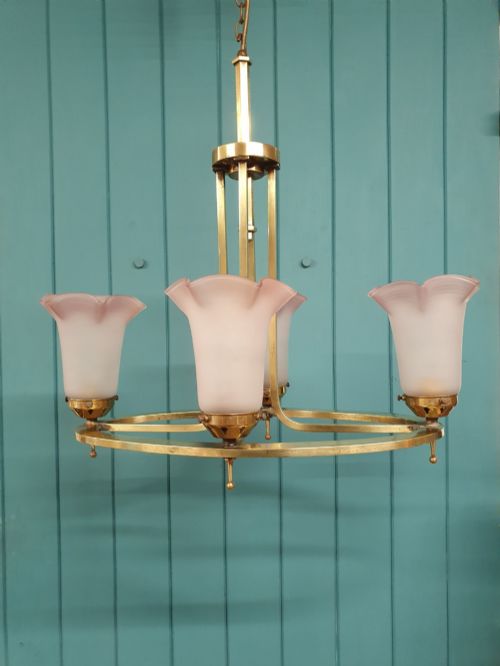
The most common examples on this page are nineteen thirties designs featuring brass framework paired with glass shades, crystal elements, or alabaster bowls. Pieces range from compact three-arm lights to large multi-tiered chandeliers and monumental architectural fixtures.
How They Were Made
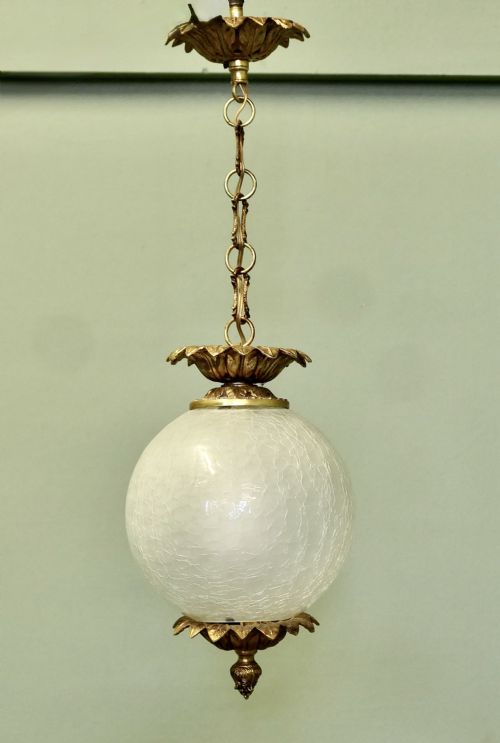
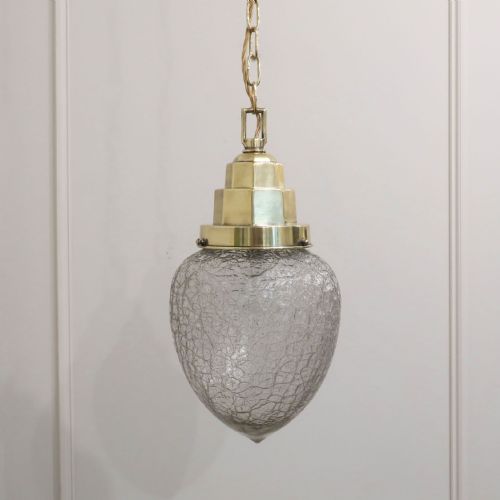
Makers utilised cast and sheet brass to form the structural framework, mounting arms, and suspension hardware for these ceiling lights. This metalwork is frequently combined with various glass techniques, including slip-moulded shades, frosted finishes, crackle glass, and cut crystal.
Alternative materials appear alongside brass and glass, notably carved alabaster used for hanging dishes and bowls that diffuse light evenly. Construction methods encompass multi-tier branching frames, enclosed lanterns, and bowl suspensions supported by chains or rods.
Some fixtures transport a slice of nineteen thirties glamour straight from an architectural landmark like the Adelphi Building.
What Varies in Quality
The refinement of the casting and the weight of the brass components distinguish simpler pendant lights from monumental chandeliers. Thicker gauge metal and crisper detailing in the structural joints denote superior construction.
Quality also rests in the glass elements, from standard pressed shades to intricately etched panels, Venetian pink glass, and substantial hand-finished alabaster bowls. The integration of complex multi-branch configurations or tiered crystal arrangements elevates the complexity of the piece.
The Brass Art Deco Chandelier Glossary
- Slip Shade
- A moulded glass shade designed to slide directly into a metal frame or arm on a ceiling light. These shades often display characteristic geometric or floral moulding.
- Alabaster
- A fine-grained stone used for carved hanging dish lights and bowls. It provides a soft, diffused glow when illuminated from within.
- Crackle Glass
- Glass treated during production to create a fine network of internal fractures across the surface. This technique diffuses light and adds texture.
- Venetian Art Deco
- A regional stylistic variation originating in Italy. It frequently incorporates coloured glass components such as pink or tinted arms and bowls.
- Amsterdam School
- An architectural and design movement originating in the Netherlands. Works from this tradition often feature expressive brickwork, heavy masonry, and distinctive metal fixtures.
Brass Art Deco Chandelier: Frequently Asked Questions
How do I hang a heavy chandelier safely?
Heavy fixtures require direct anchoring to a ceiling joist or a substantial metal brace installed within the ceiling cavity. The weight of brass and glass assemblies demands secure mechanical support rather than standard plaster fixings.
Consulting a qualified electrician ensures the wiring and suspension points meet current safety standards for overhead lighting.
Can these lights take modern LED bulbs?
Most vintage fittings accommodate modern screw or bayonet LED bulbs provided the physical dimensions fit within the glass shades or enclosing bowls. Selecting warm white output helps replicate the original glow of period illumination.
Care should be taken with older wiring and socket types, which may require professional updating to run contemporary lamps efficiently.
How should I clean brass and glass fixtures?
Brass components benefit from dusting with a soft cloth and gentle cleaning that preserves the aged patina developed over decades. Harsh chemical polishes can strip desirable historic surfaces from the metal.
Glass shades and crystal drops can be removed carefully and washed in lukewarm soapy water, then dried thoroughly before reattachment.
How do I distinguish nineteen thirties art deco from earlier Edwardian styles?
Nineteen thirties pieces typically exhibit bold geometric lines, stylised symmetrical motifs, and slip shades mounted to clean brass frames. Edwardian and earlier nineteenth century designs tend towards more ornate casting, floral ornamentation, and traditional lantern shapes.
Examining the construction joints, screw types, and overall silhouette helps clarify the specific period of manufacture.