

Art Deco Leather Seating
Art deco leather seating delivers robust comfort and sleek geometric forms, spanning club chairs, sofas, and stools from the 1920s and 1930s.
Art Deco Leather Seating
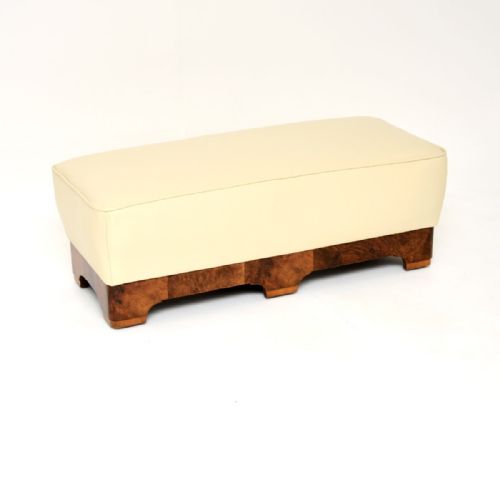
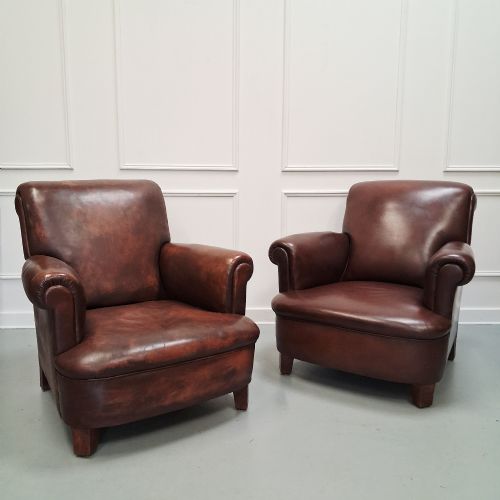
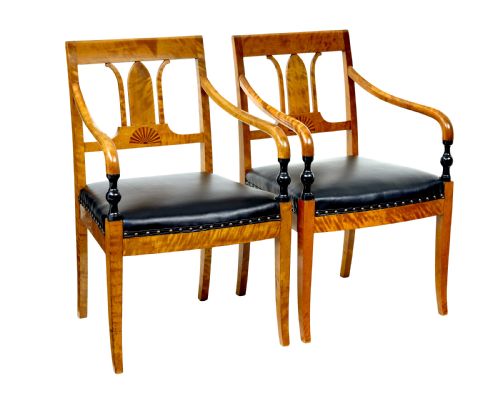
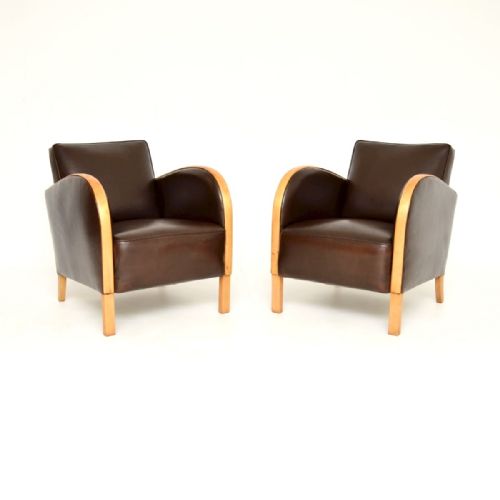
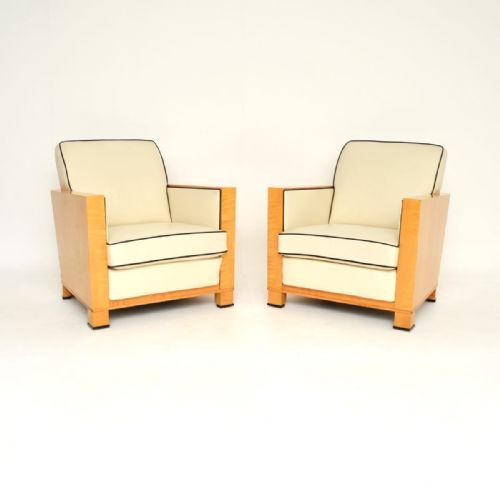
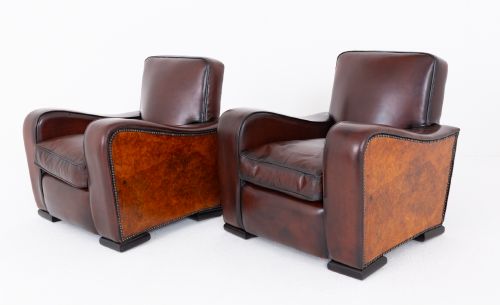
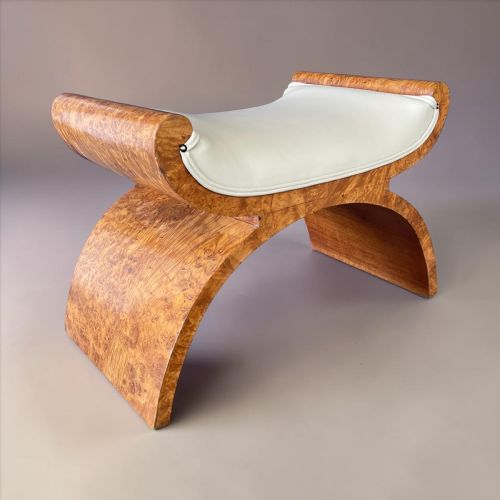
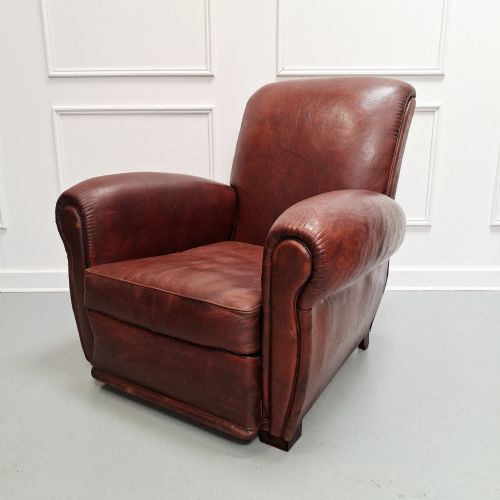
Art deco leather seating encompasses armchairs, club chairs, sofas, lounge suites, stools, and club fenders originating primarily from the 1920s and 1930s. Pieces frequently combine supple leather upholstery with rich hardwoods like walnut, burr walnut, birch, and satin birch.
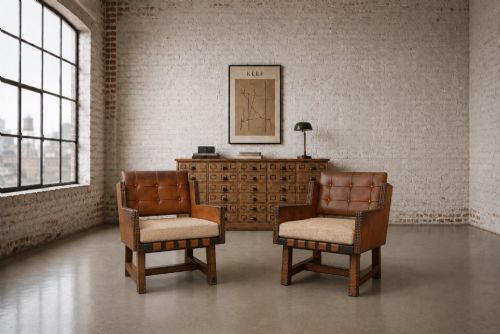
The selection on this page relies heavily on French, Scandinavian, and English interpretations of the style. Buyers encounter substantial club armchairs alongside compact stools, side chairs, and occasional seating.
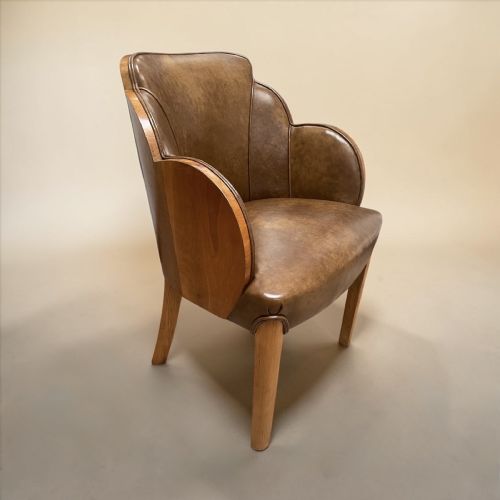
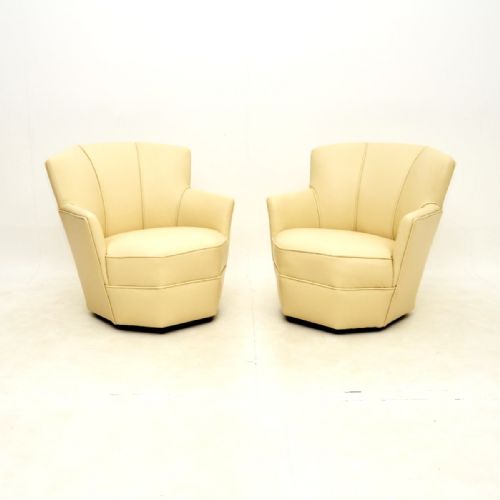
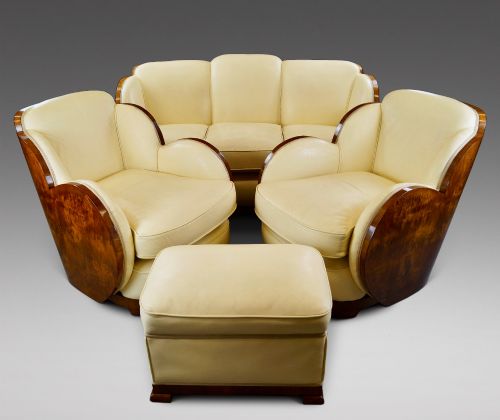
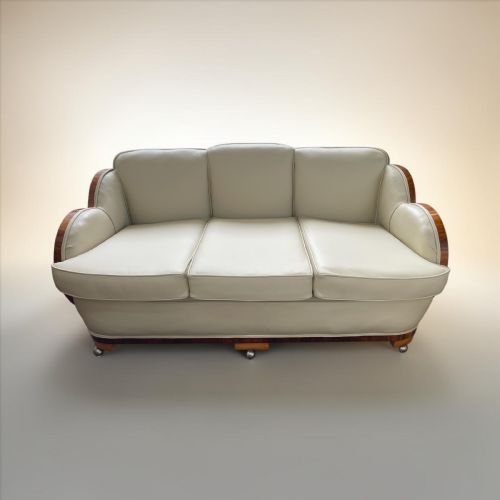
The aesthetic merges clean, streamline silhouettes with organic textures of leather and timber. Certain forms introduce distinctive cloud-shaped profiles and brass or iron framework.
How art deco leather seating was made
Maker construction pairs timber frames of walnut, birch, and hardwood with durable leather hides, occasionally sheep's hide, secured by button-backing or smooth tension. Metal elements such as brass and iron appear principally in club fenders and structural frames.
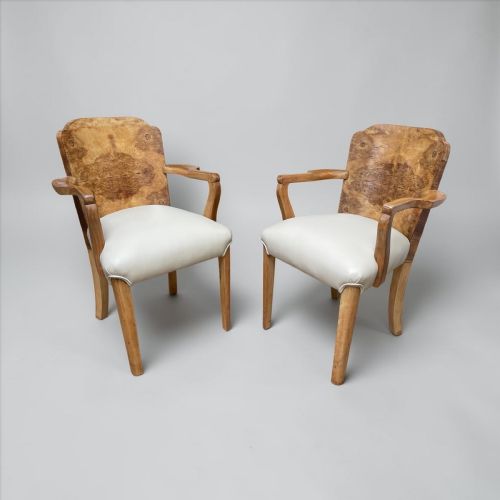
Wood surfaces showcase the natural grain of burr walnut, satin birch, and birds eye maple through polished veneers and solid timber sections. Upholstery methods combine supportive internal springing with hand-finished leather work tailored to geometric contours.
Listings feature periods spanning from the Victorian era and Edwardian times through to the 1920s and 1930s.
What varies in quality
Quality separates through the integrity of the timber framing, the richness of veneers like burr walnut or birds eye maple, and the handling of the leather hide. Finer examples display deliberate matching of wood grains and substantial joinery.
The definition of the silhouette, particularly on cloud-shaped armchairs and suites, dictates execution standard. Superior pieces maintain crisp proportions and structural rigidity across complex curved forms.
Harry and Lou Epstein·Hille
The Art Deco Leather Seating Glossary
- Art Deco
- A design style characterised by sleek geometric shapes, streamlined forms, and modern materials prevalent during the 1920s and 1930s.
- Club Fender
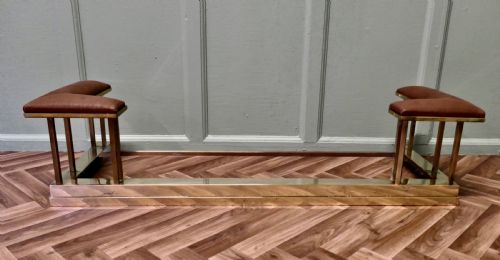
- A low-seated hearth surround constructed from metal like brass or iron combined with leather-topped cushions.
- Burr Walnut
- A highly prized wood veneer marked by swirling, knotted grain patterns taken from walnut tree growths.
- Cloud Chair
- An upholstered armchair featuring rounded, sweeping backrests and padded armrests resembling stylised clouds.
- Satin Birch
- A pale, lustrous timber utilised extensively in Scandinavian and English furniture design of the period.
Art Deco Leather Seating: Frequently Asked Questions
What defines art deco leather seating?
These pieces combine twentieth-century modernism with tactile materials, pairing smooth leather with rich woods like walnut and birch.
Designs range from heavy club chairs and sofas to streamlined stools and club fenders.
How do I identify a club fender?
A club fender is a low metal framework fitted with cushioned leather seats designed to sit around a fireplace.
They combine iron or brass structures with comfortable padded surfaces for fireside seating.
What woods were used in these pieces?
Cabinetmakers utilised walnut, burr walnut, satin birch, birds eye maple, and general hardwoods.
These timbers provided polished veneers and solid frames that contrasted against the matte or glossy leather upholstery.
Where were these chairs made?
Surviving examples originate from English workshops as well as French and Scandinavian makers.
Regional preferences shaped details like the use of satin birch in northern Europe versus walnut in England.