



Art Deco Dress Brooch
An art deco dress brooch fastens geometric elegance to fabric, bringing period character and bright gemstones to a lapel.
Art Deco Dress Brooch
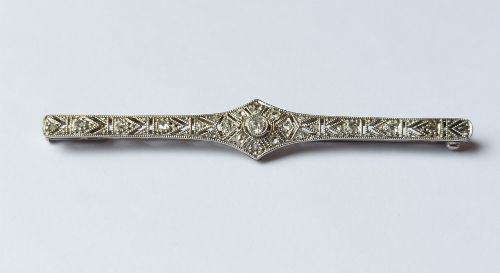
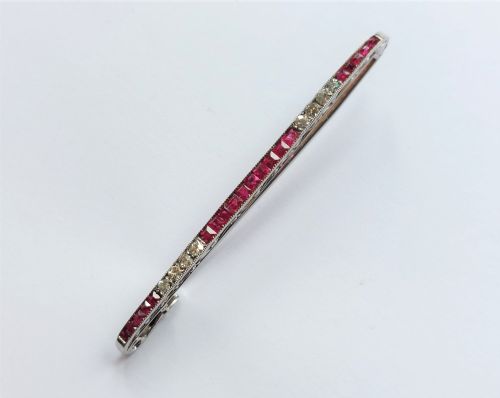
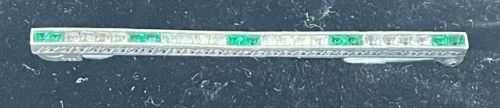
When you search for an art deco dress brooch, you encounter pieces spanning the 1920s and 1930s, alongside related Edwardian, retro, and mid-century examples. The most common version met on this page is the classic bar brooch, alongside substantial double clip brooches, pendant combinations, and playful novelty designs.
Makers and workshops from France, Denmark, and China contributed distinct silver, gold, and platinum creations during these decades. Pieces range from delicate filigree butterfly forms to heavy geometric plaques set with sizeable aquamarines, citrines, and old-cut diamonds.
The selection includes convertible dress clips and duette designs that detach from a central frame to wear separately on a collar. Simpler silver-plated, celluloid, and marcasite versions sit alongside precious platinum creations housing multi-carat gemstones.
Materials and Techniques
Platinum and white gold dominate the metalwork of this period, providing the structural strength needed to hold dense pavé-set diamond arrangements securely. Yellow gold and continental silver also appear frequently, often paired with contrasting dark bands of black onyx or vibrant enamel.
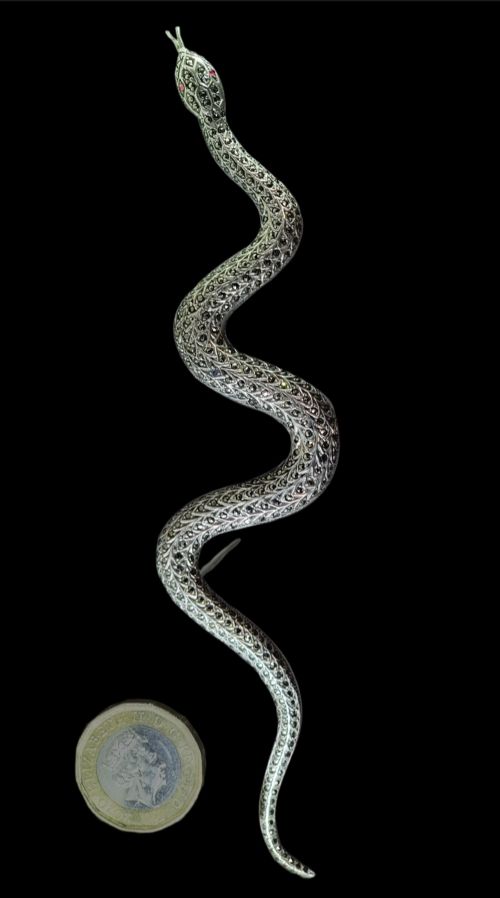
Gemstones were cut into precise baguettes, rounds, and old cuts to fit strict geometric layouts, occasionally accented by rubies, sapphires, and rock crystal quartz. Techniques like silver filigree, marcasite inlay, and metal stamping allowed workshops to produce both fine jewellery and accessible costume pieces.
Listings feature periods from the Edwardian era through the 1960s, with platinum and diamond combinations dominating the 1920s selections.
Evaluating the Range
The distinction between standard commercial pieces and top-tier examples lies in the integration of metalwork and stone weight. Premium items utilise heavy platinum mountings packed with substantial diamond carats, natural pearls, or large aquamarines, whereas everyday versions rely on paste, glass, or silver plating.
The precision of the mechanical elements, such as the hinge mechanism on a double clip brooch or the tight alignment of calibrated onyx panels, defines the standard of craftsmanship. Finer pieces display signed plaques from known designers and intricate hand-pierced gallery work rather than mass-produced casting.
Paillette·Jakob Bengel
The Art Deco Dress Brooch Glossary
- Bar brooch
- A narrow horizontal pin shape popular during the early twentieth century. These typically display a central cluster of diamonds or coloured stones.
- Dress clip
- A hinged clasp designed to grip heavy fabrics without piercing the weave. They often lock into a metal frame to function as a unified brooch.
- Duette
- A paired set of dress clips attached to a removable backing frame. This allows the wearer to split the accessory into two matching lapel pins.
- Marcasite
- Small faceted polished pyrite stones set tightly into silver mounts. They create a dark metallic sparkle that mimics steel.
- Paste
- Hand-cut and polished lead glass used as a diamond substitute. It provides high refractive brilliance in costume jewellery.
Art Deco Dress Brooch: Frequently Asked Questions
How do I wear a double clip brooch?
A double clip brooch separates into two independent pieces that attach to opposite lapels or neckline edges. You can also lock them back into their central frame to wear as a single larger brooch.
Ensure the clothing fabric is thick enough to support the weight of the metal clips without sagging. Wool coats and heavy structured jackets provide the most secure foundation for daily wear.
What is the difference between platinum and white gold?
Platinum is a naturally white, dense metal that was heavily favored for high-end jewellery during the 1920s and 1930s. It holds small diamond settings securely without losing its bright surface finish over time.
White gold is an alloy of yellow gold mixed with white metals to achieve a similar tone. It tends to be lighter in weight than platinum but offers comparable durability.
Can I wear an antique brooch on delicate silk?
Antique brooches often feature substantial pin stems and significant weight from platinum and gemstone settings. Fastening them directly to fine silk or lightweight jersey can stretch or tear the delicate threads.
Instead, anchor the pin through heavier structural seams, lapel facings, or knitwear. Alternatively, use a separate backing disc behind the fabric to distribute the weight evenly.
How do I identify a piece from the 1930s?
Pieces from the 1930s generally move away from the strict, flat symmetry of early 1920s designs. They often introduce curved motifs, fan shapes, and bolder colour contrasts using onyx, emeralds, or clear crystal.
Look for geometric constructions paired with European hallmarks stamped on the pin stem or reverse frame. The transition from platinum-heavy luxury to silver and marcasite also marks this decade.