


Art Deco Ceramic Dish
An art deco ceramic dish brings the bold geometry and playful character of the interwar years straight onto a dressing table or display shelf.
Art Deco Ceramic Dish
When someone searches for an art deco ceramic dish, they encounter a range of functional vessels shaped primarily as powder boxes, trinket jars, and decorative bowls dating from the 1930s. The most common iteration met on this page is the figural powder box topped with a porcelain half doll, flapper girl, jester, or bathing belle.
Originating largely from French makers in Limoges, German potteries, and English workshops, these items served the vanity tables of the early twentieth century. Alongside lidded jars sit decorative chargers, octagonal bowls, and novelty dishes that span earthenware and porcelain bodies.
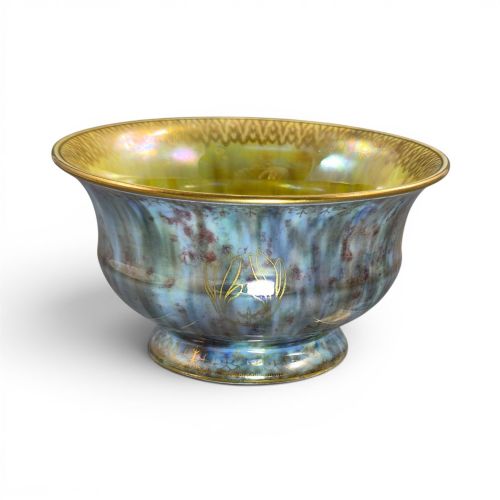
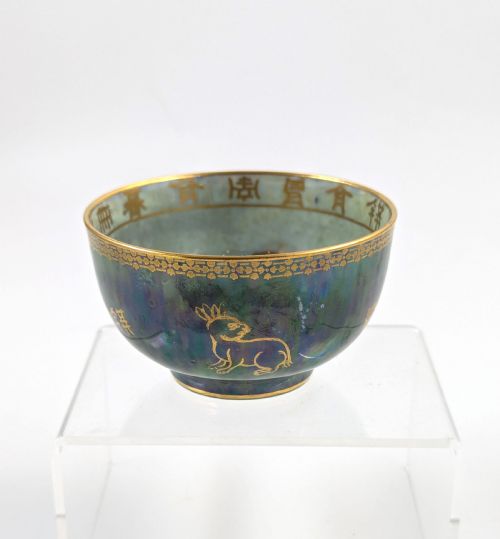
Earlier Edwardian pieces from the 1910s and 1920s also appear, represented by lustre glazed bowls that bridge the transition toward strict geometric styling. Forms vary from simple circular plates to elaborately painted multi-piece vanity accessories.
How they were made
Potters shaped these vessels from earthenware and fine porcelain, applying glazes that produced deep orange, mottled, or lustre finishes through high-fired kiln techniques. Surface decoration frequently relied on hand-painted enamel and gilt details to accentuate the contours of the clay.
English earthenware pieces often utilised tubelined design, a method where liquid clay was piped onto the surface to create raised outlines before painting. French and German porcelain manufacturing prioritized smooth, slip-cast moulds combined with detailed figural modelling for the lids.
Listings feature ceramics from the Edwardian era through to the 1930s, utilising earthenware, porcelain, lustre glaze, and gold leaf.
What varies in quality
The distinction between standard production wares and superior pieces rests on the complexity of the modelling and the precision of the hand-painted decoration. Studio-marked works with named designers demonstrate sharper definition in the mould and more controlled application of lustre and enamel.
Surface finish dictates the visual impact, separating flat monotone glazes from rich iridescent lustre effects that catch the light from multiple angles. The integration of the figural lid with the lower bowl reveals the skill of the original workshop.
Wedgwood·Maling·Charlotte Rhead Crown Ducal·Clarice Cliff·Bursley Ware·Royal Copenhagen·Limoges
The Art Deco Ceramic Dish Glossary
- Tubelined
- A decorative pottery technique where liquid clay is squeezed through a nozzle to form raised outlines that compartmentalize the enamel colours.
- Lustre Glaze
- A metallic film applied to pottery and fired to produce an iridescent, reflective surface that shifts in colour under the light.
- Half Doll
- A porcelain upper figure without legs, commonly manufactured to sit atop the lids of powder boxes and boudoir lamps.
- Charger
- A large decorative plate intended for display on a wall or sideboard rather than for service at the dining table.
- Bonbonniere
- A small decorative jar or box originally designed to hold sweets or confectionery on a drawing room table.
Art Deco Ceramic Dish: Frequently Asked Questions
What were powder boxes used for?
Powder boxes held loose face powder on dressing tables during the early twentieth century, allowing women to apply cosmetics using a soft puff.
They sat as decorative ornaments on vanity sets alongside matching trays, trinket dishes, and perfume bottles.
How do I identify a 1930s piece?
Items from this decade typically display distinct geometric motifs, bold enamel colours, and stylized figures such as flapper girls and jesters.
Makers often stamped the underside with factory marks or registered pattern numbers characteristic of the period.
Where were these ceramics made?
Production was centred across several European countries, with notable porcelain works in France and Germany alongside major English potteries.
Each region brought distinct regional techniques, from Limoges porcelain casting to English earthenware and lustre glazing.
How should I display them?
These decorative bowls and lidded jars suit open shelving, sideboards, or dressing tables where their colours and glazes can be appreciated.
Keeping them away from direct sunlight preserves the hand-painted enamel and gilt details on the surface.