


Vintage Orange Lustreware
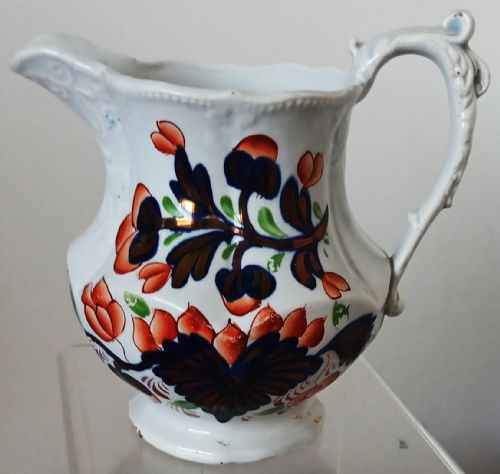
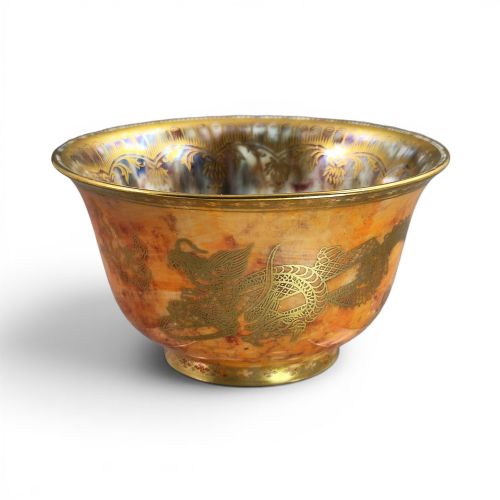
Vintage orange lustreware brings striking metallic iridescence to your home through ceramics finished with glowing copper and bronze sheens.
Vintage Orange Lustreware
Vintage orange lustreware comprises decorative bowls, pitchers, jugs, and perfume bottles finished with specialised metallic finishes that create a distinctive iridescent glow. These pieces span several distinct eras, drawing upon 19th Century, Victorian, and Edwardian traditions alongside later Art Nouveau and Art Deco designs.
The objects most frequently encountered on this page date from the 1910 and 1920 periods, often displaying rich mottled orange or butterfly motifs. Buyers will also find items from the 1930 period, particularly in ceramic perfume bottle forms that showcase the enduring appeal of metallic glazes.
Materials and Construction
Potters utilised earthenware, porcelain, and bone china as the structural body for these vessels, applying ceramic glazes before introducing metallic components. The characteristic finish relies on a specialised lustre glaze combined with gold leaf to produce the signature reflective surface.
The application of metallic glaze requires precise firing techniques to bond the metallic salts with the underlying ceramic surface. This process creates the luminous, shifting colours seen across bowls and jugs from the Edwardian era onward.
The selection includes pieces spanning the Victorian, Edwardian, Art Nouveau, and Art Deco styles.
Assessing Quality and Execution
Quality in these ceramics rests upon the evenness and depth of the metallic glaze, where superior examples display a rich, unblemished iridescence across the entire surface. The crispness of applied patterns, such as delicate butterfly motifs or geometric diaper designs, distinguishes finer studio output from standard commercial production.
The physical form and potting standard also determine the grade of the piece, with well-balanced bowls and finely proportioned jugs showing greater finesse in the ceramic body. Pieces that maintain a vibrant, unbroken sheen without dull patches represent the higher tier of the medium.
Wedgwood
The Vintage Orange Lustreware Glossary
- Lustre Glaze
- A type of ceramic finish containing metallic salts that produce an iridescent, reflective surface upon firing. This technique gives the ware its characteristic glowing sheen.
- Bone China
- A type of soft-paste porcelain incorporating animal bone ash, creating a strong, durable body with a slightly translucent quality. It serves as a refined base for decorative metallic finishes.
- Earthenware
- Porous pottery fired at lower temperatures, commonly used for traditional jugs and decorative bowls before being glazed and decorated. It forms a sturdy foundation for colourful surface treatments.
- Gold Leaf
- Hammered sheets of gold applied to ceramic surfaces to enhance decorative motifs and add warmth to the underlying glaze. It is frequently employed in pieces featuring intricate patterns.
Vintage Orange Lustreware: Frequently Asked Questions
What is orange lustreware?
Orange lustreware refers to ceramic items finished with a metallic glaze that produces a warm, coppery or orange iridescence. These pieces catch the light uniquely and often feature detailed decorative patterns.
Collectors prize them for their vibrant surface effects and the skilled craftsmanship required to achieve such luminous finishes.
How do I style orange lustre bowls?
These bowls work well as standalone display objects on sideboards or open shelving where their reflective surfaces can catch natural light. Pairing them with neutral backgrounds allows the rich orange tones to stand out.
Because of their decorative nature, they are best kept away from heavy everyday use to preserve the delicate lustre glaze.
How can I date my lustreware?
Dating lustreware involves examining the ceramic body, the style of the decoration, and any maker marks or pattern numbers present on the base. Pieces from the Edwardian and Art Deco periods often display specific motifs like butterflies or geometric diaper patterns.
Comparing the manufacturing style and glaze characteristics helps place the object within its correct historical decade.
Are these pieces fragile?
Like most fine ceramics and bone china, lustreware requires careful handling to prevent chipping the body or scratching the delicate metallic surface. Hand washing is essential to protect the glaze from harsh detergents.
Displaying them in stable locations away from heavy traffic keeps them safe from accidental knocks.