

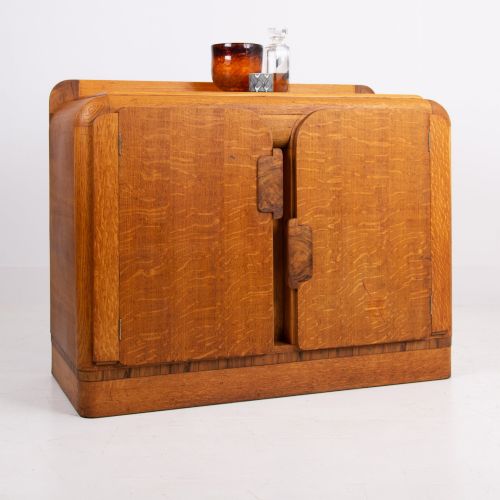
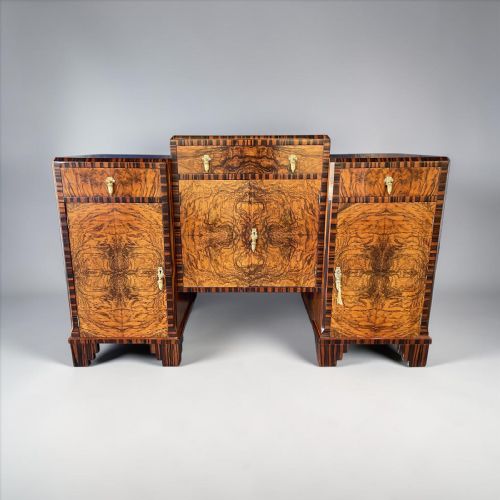
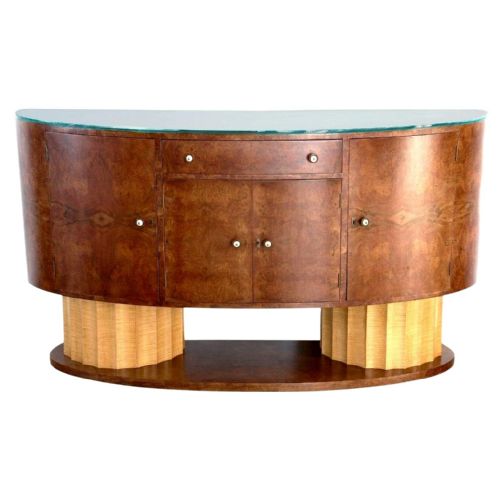


Art Deco Buffet Cabinet
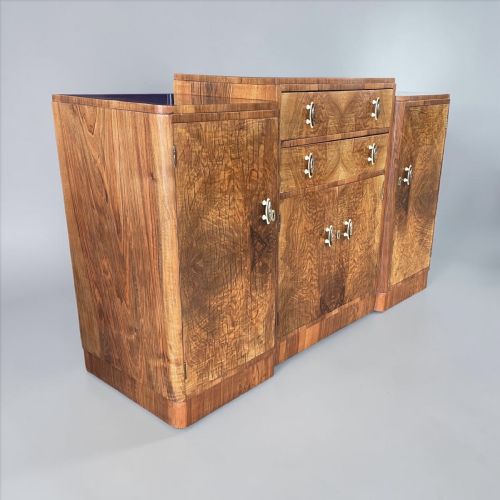
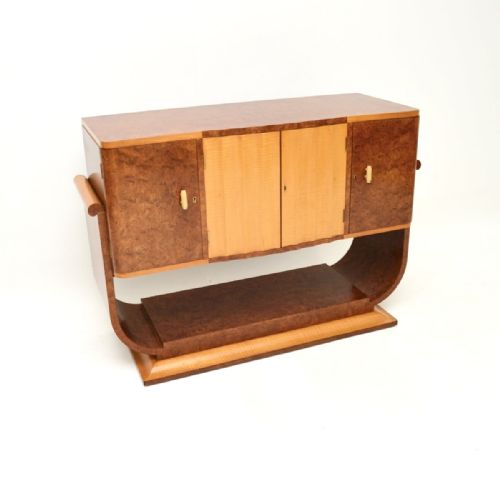
An art deco buffet cabinet brings strong geometric lines and rich figured woods directly into a dining room or living space.
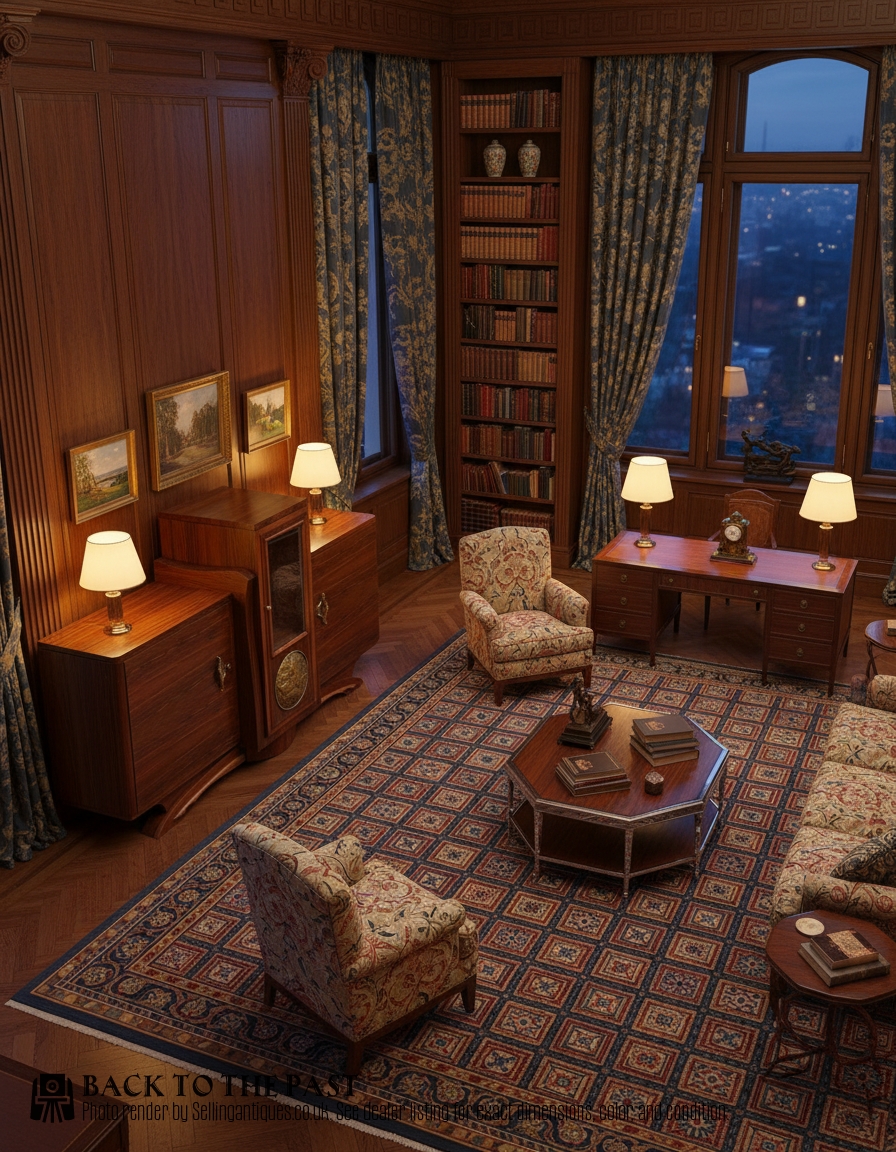
Art Deco Buffet Cabinet
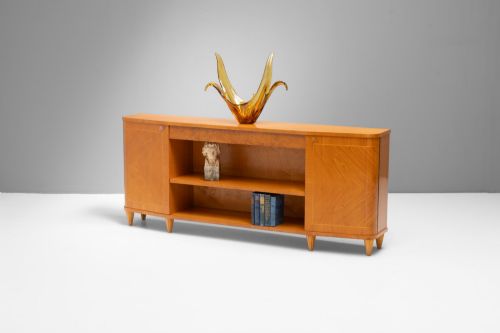
An art deco buffet cabinet functions primarily as a substantial storage piece and serving surface, often described across listings as a sideboard, credenza, or drinks cabinet. These pieces belong predominantly to the 1930 period, though examples stretch from Edwardian times through to 1940.
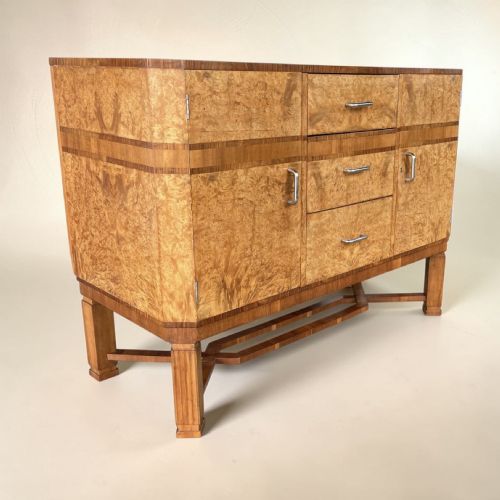
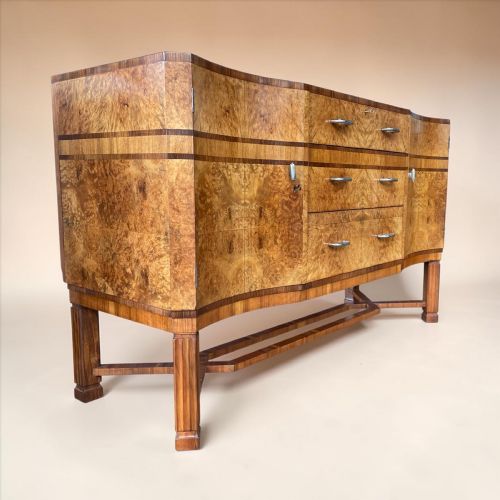
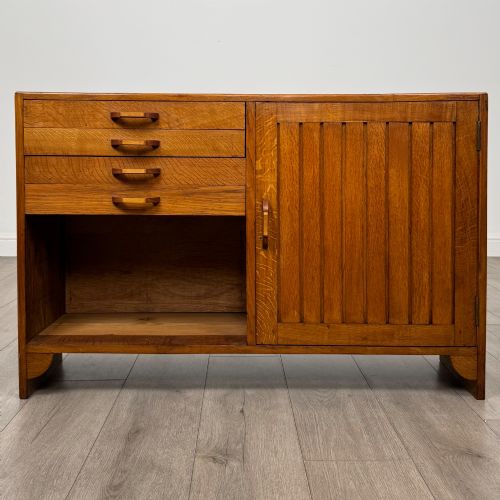
The most common version met on this page is an English or French sideboard constructed in burr walnut, plain walnut, or oak. Makers such as Maurice Adams, Harry and Lou Epstein, and Hille defined the standard forms found here.
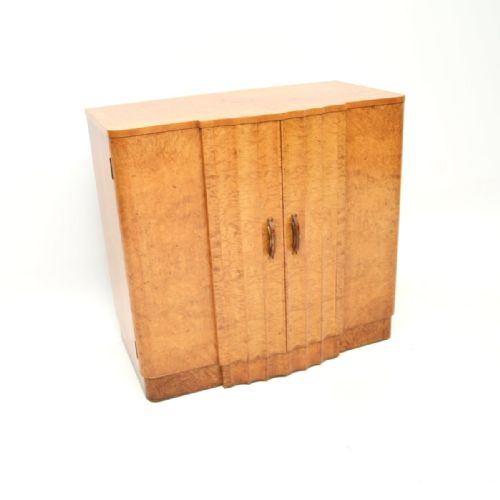
Beyond standard sideboards, variations include compact small sideboards, serpentine cupboards, and specialised drinks cabinets designed for entertaining. Origins span English workshops, French ateliers, and Italian makers.
How they were made
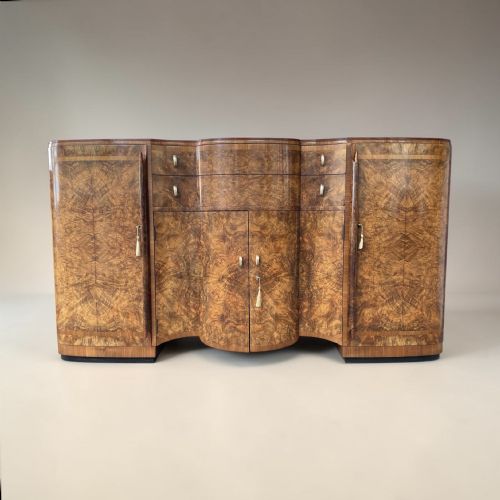
Makers utilised solid timbers alongside decorative wood veneers, applying burr walnut, sycamore, macassar, maple, and oak over sturdy wood carcasses. The grain patterns were carefully matched and laid out symmetrically across large cupboard doors and drawer fronts.
Metal elements such as brass and aluminium feature as structural accents, handles, and trim. Glass panels appear on upper sections or drinks cabinets to display glassware and bottles.
Art Deco Buffet Cabinet Retail Price Guide 2026
Typical asking prices for art deco buffet cabinet among the pieces listed under this phrase on Sellingantiques today, from the lower quarter to the upper quarter. They describe what is for sale here now, not the wider market.
What varies in quality
The choice and execution of veneers dictate the visual impact, ranging from simple golden oak surfaces to highly figured burr walnut and exotic macassar ebony arranged in intricate geometric patterns. Superior examples display seamless veneer matching across curved and serpentine forms.
Attribution to documented makers such as Hille, Gomme, Heal's, or the Epstein brothers elevates a piece through known craftsmanship and refined proportions. The integration of specialised hardware in brass or aluminium further distinguishes standard production from exceptional design.
Maurice Adams·Harry and Lou Epstein·Gomme·Hille·Charles Dudouyt·Heals of London·Hamptons of Pall Mall London·Bowman Brothers
The Art Deco Buffet Cabinet Glossary
- Burr walnut
- A prized timber harvested from the tree's burl, yielding swirling, knotty grain patterns used widely on cabinet doors.
- Credenza
- A low-profile storage unit sharing functional similarities with sideboards and buffets.
- Serpentine
- A curved furniture front featuring a convex centre flanked by concave curves, demanding high woodworking skill.
- Veneer
- Thin slices of decorative wood applied over a secondary wood base to create striking visual patterns without excessive weight.
- Macassar
- A dark, heavily figured ebony wood originating from the East Indies, favoured in Parisian design.
Art Deco Buffet Cabinet: Frequently Asked Questions
What is an art deco buffet cabinet?
An art deco buffet cabinet is a large storage and serving piece designed during the early-to-mid twentieth century, featuring strong geometric forms and decorative wood veneers.
These pieces typically provide deep cupboards and drawers for dining room storage while serving as a prominent focal point in a room.
How do I use a drinks cabinet?
A drinks cabinet is organised specifically for entertaining, featuring internal shelving and surfaces designed to hold bottles, glassware, and bar accessories.
Many examples include drop-down doors that double as mixing trays or glass-fronted compartments to display glassware.
How do I tell French and English pieces apart?
French pieces often incorporate exotic timbers like macassar ebony and dramatic serpentine shapes, reflecting Parisian atelier design.
English cabinets by makers such as Epstein or Gomme tend to rely heavily on burr walnut and oak with restrained geometric layouts.
What materials are most common?
Walnut and burr walnut dominate the selection, complemented by oak, sycamore, and maple veneers.
Metal fittings in brass and aluminium appear frequently as contrasting decorative details on handles and trims.