

Art Deco Bedside Cabinets
Art deco bedside cabinets bring geometric elegance to the bedroom, offering compact storage with distinctive period lines.
Identifying Art Deco Bedside Cabinets
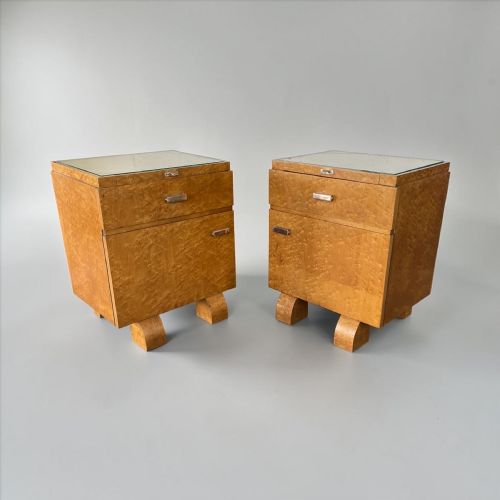
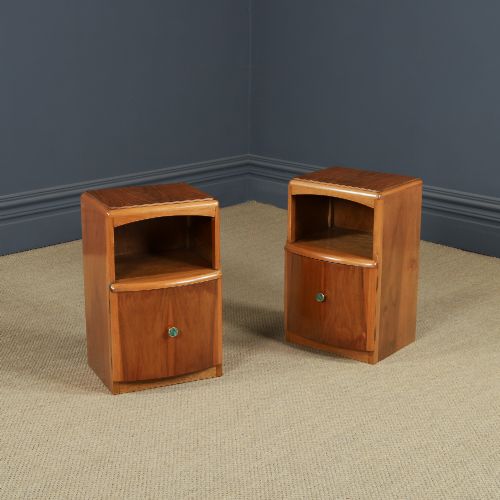
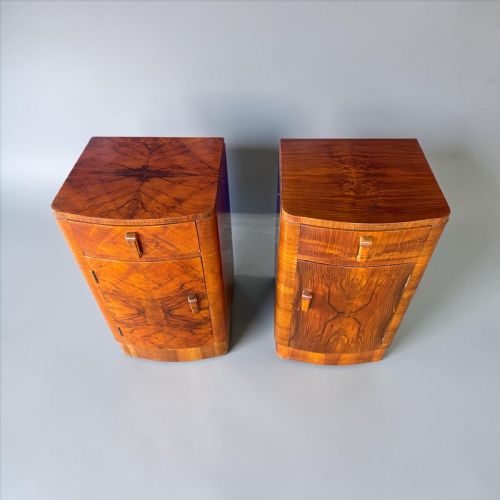
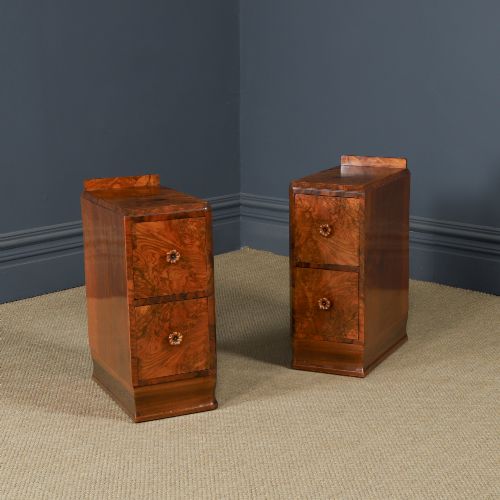
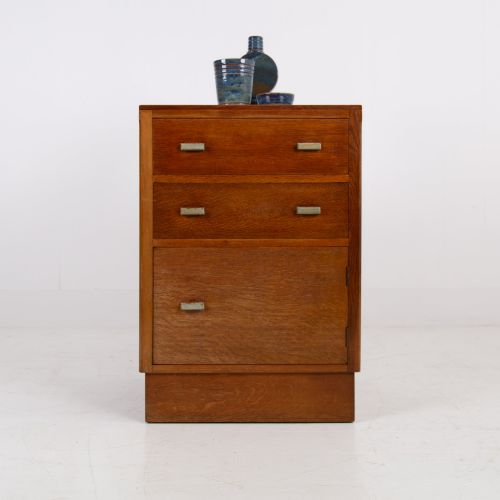
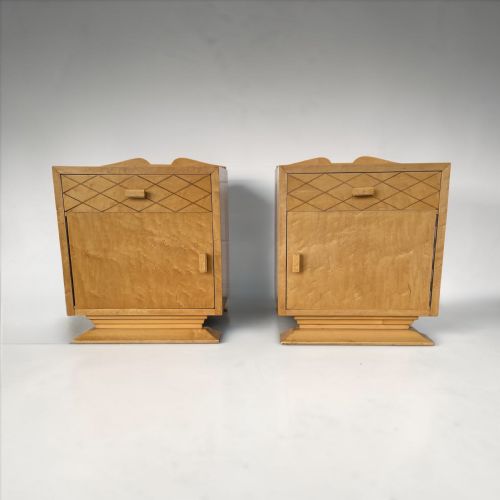
Art deco bedside cabinets are low bedside storage units designed primarily during the 1920s, 1930s, and 1940s. These pieces frequently appear in matched pairs, offering symmetry for flanking a bed.
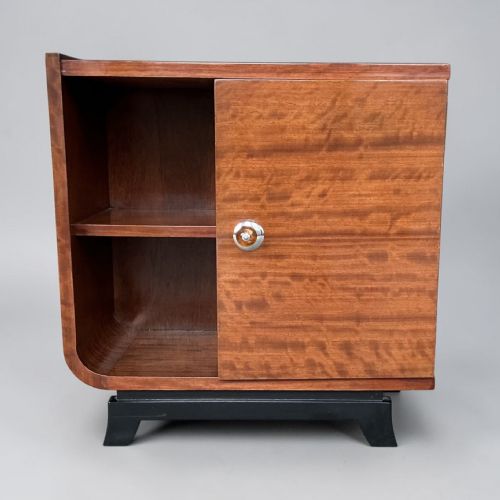
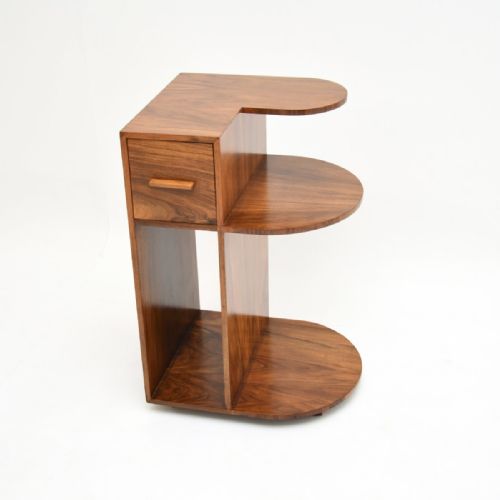
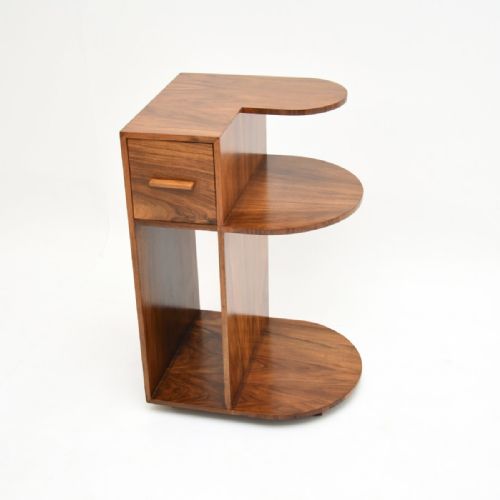
The form ranges from standard rectangular cupboards with open shelf areas to drum-shaped cabinets and chests. Most examples encountered here originate from British, French, Italian, and Scandinavian workshops.
Materials and Construction
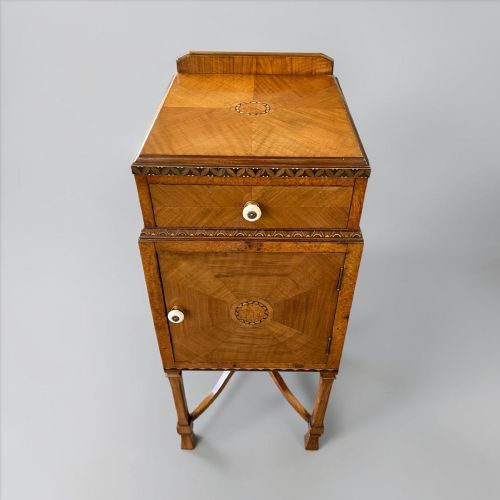
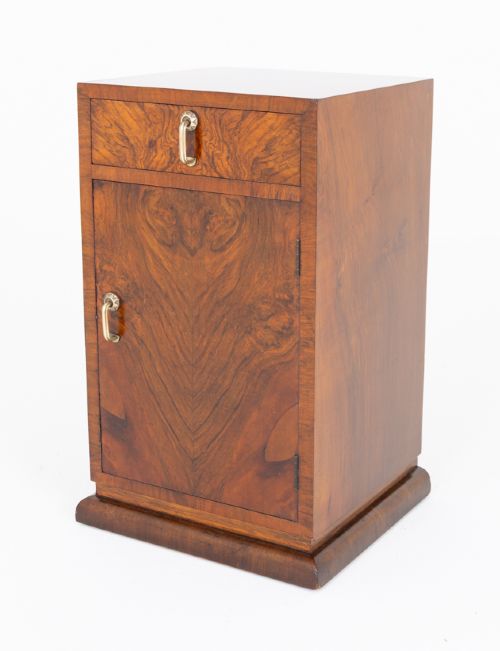
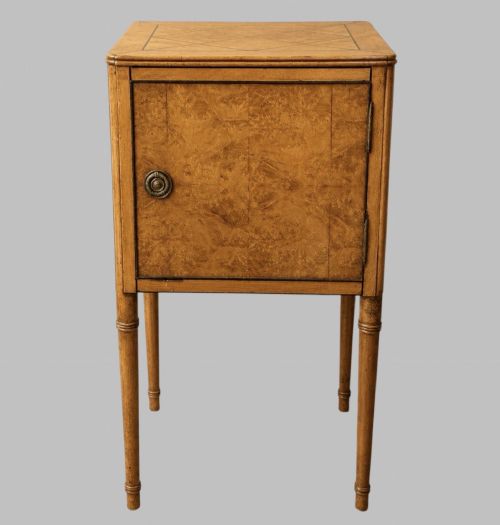
Cabinet makers utilised striking wood veneers over solid carcases, frequently employing walnut, burr walnut, blonde maple, satin birch, mahogany, oak, rosewood, burr elm, and coromandel. These figured veneers were often laid in opposing grain patterns to create dramatic geometric surfaces.
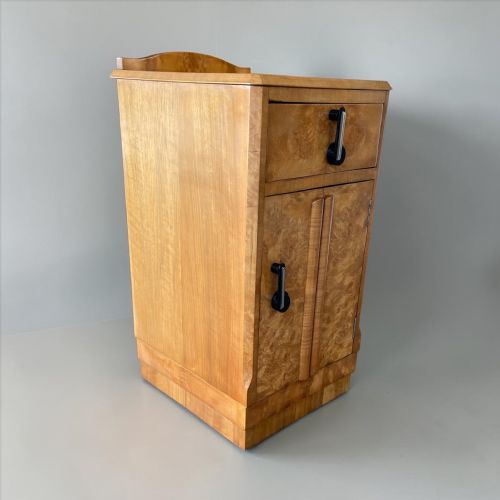
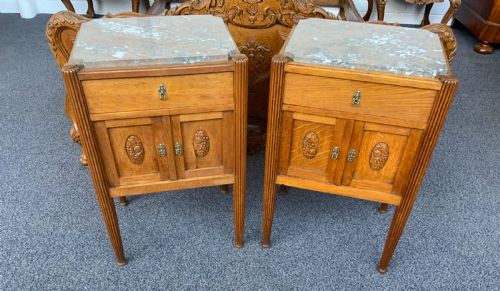
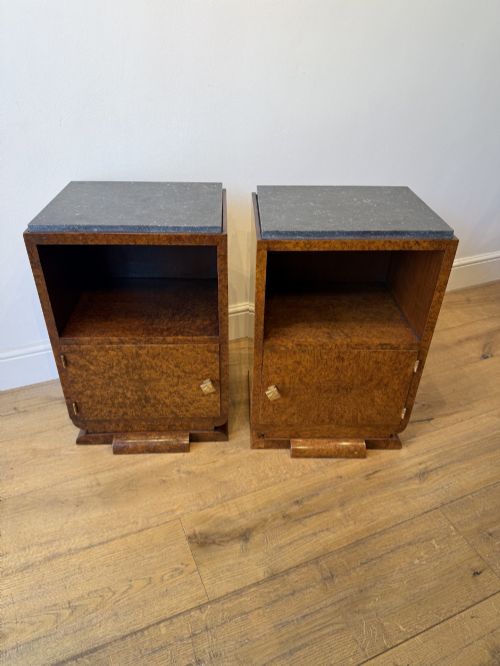
Secondary materials include stone and marble for tabletops, alongside original hardware fashioned from metals and bakelite. Construction combined traditional cabinet-making joints with contemporary sheet materials suited to curved and streamlined silhouettes.
Retail Price Guide 2026
Typical UK retail prices for art deco bedside cabinets, calculated from the Sellingantiques database of over a million retail prices indexed since 2003. This retail price guide relies exclusively on Sellingantiques data; no external sources or auction records are used, so the figures do not describe the wider market.
Drum-shaped walnut cabinets roll effortlessly into conversations about avant-garde bedroom geometry.
Assessing Quality and Execution
The integration of contrasting secondary woods, original marble tops, and intact bakelite details elevates the desirability of a piece. Finer items maintain crisp architectural lines without veneer lifting or distortion along the curved edges.
The Art Deco Bedside Cabinets Glossary
- Bookmatching
- A method of placing two adjacent veneer sheets side by side so that the grain matches mirror-image style. This creates symmetrical patterns favoured in period furniture design.
- Bakelite
- An early synthetic plastic utilised for handles, knobs, and decorative trim. Its dark, durable finish defines many mid-century hardware accents.
- Burr walnut
- A specialised wood cut from walnut tree growths, producing swirling, knotty grain patterns. It remains highly prized for decorative cabinet surfaces.
Frequently Asked Questions
Are these cabinets sold individually?
The majority of pieces listed appear as matched pairs designed to sit symmetrically on either side of a bed. Single units do occur, but pairs dominate the historical archive.
Buyers seeking balance in a bedroom layout will find that pairs offer the most cohesive aesthetic for period interiors.
Which woods are most common?
Walnut and burr walnut form the largest share of surviving stock, often complemented by lighter tones like blonde maple and satin birch. French and Italian examples frequently incorporate exotic hardwoods such as coromandel and rosewood.
Regional preferences influenced timber selection, with Scandinavian makers favouring bright birch variants.
Did these pieces have stone tops?
Certain cabinets feature fitted stone or marble tops, particularly those originating from continental workshops. These heavy surfaces provided durable, water-resistant tops for bedside items.
Timber tops remain far more numerous across British and Scandinavian production.
How do I date an art deco cabinet?
Dating relies on stylistic clues, construction methods, and materials recorded between the 1920s and 1940s. Earlier 1920s items often lean towards heavier classical proportions, while 1930s pieces embrace streamlined curves.
Later 1940s examples simplify these forms due to material restrictions during wartime manufacturing.