
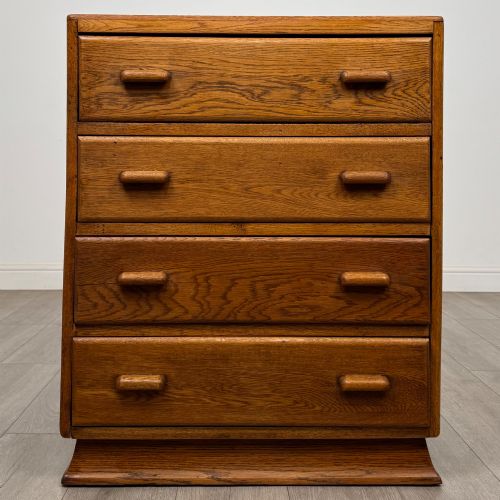
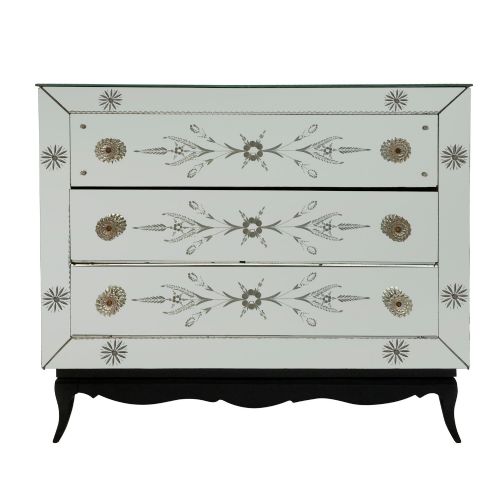
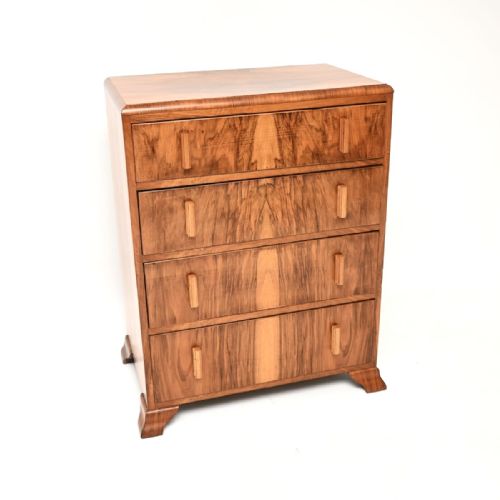
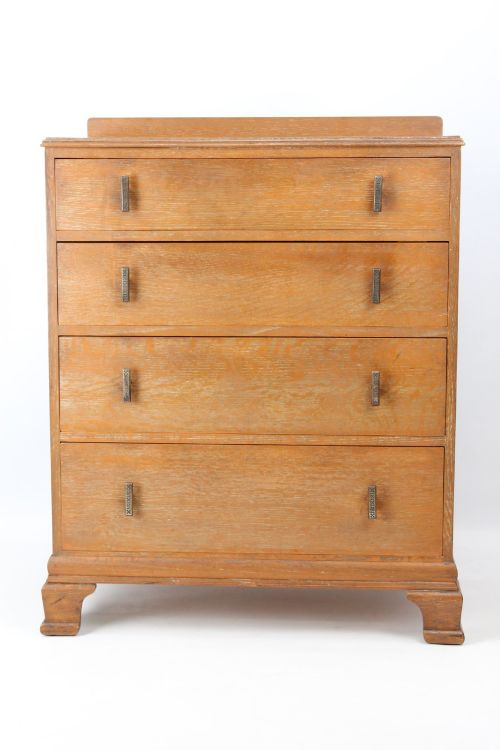

Art Deco Bedroom Drawers
Art deco bedroom drawers bring together geometric form and rich timber veneers, offering practical storage with strong period character.
Art Deco Bedroom Drawers
Art deco bedroom drawers encompass chests of drawers, tallboys, commodes and bedside cabinets originating primarily from the nineteen twenties, thirties and forties. These pieces deliver bold silhouettes and functional compartment layouts suited to period and modern interiors alike.
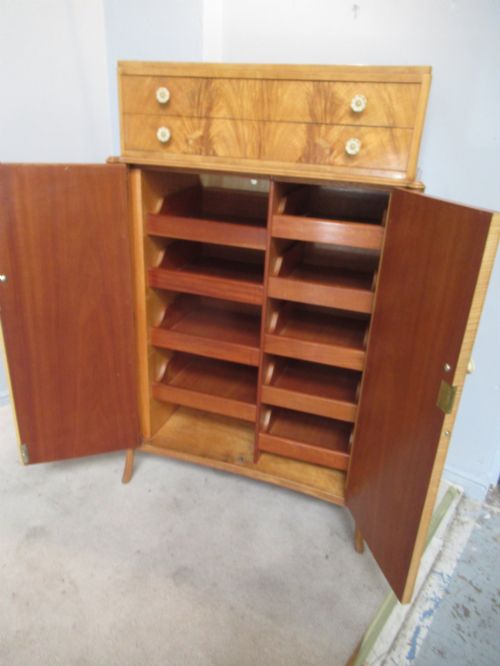
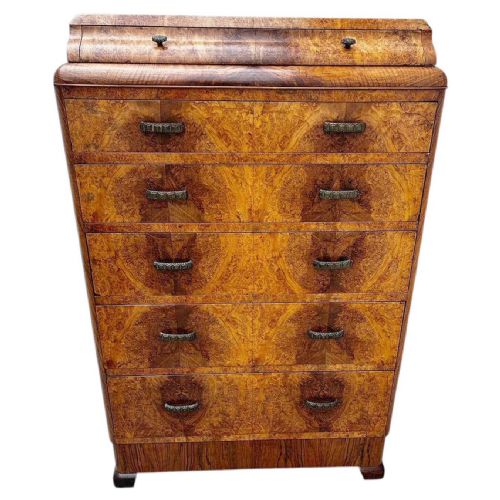
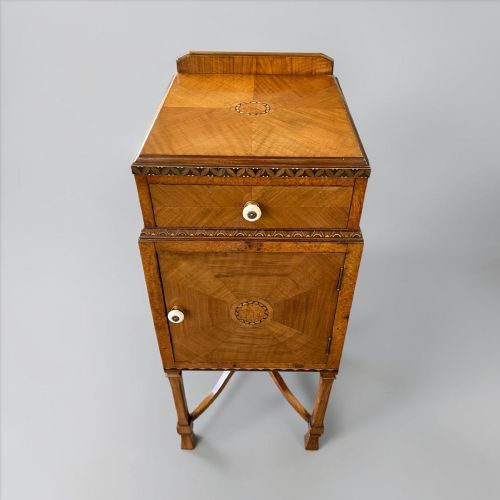
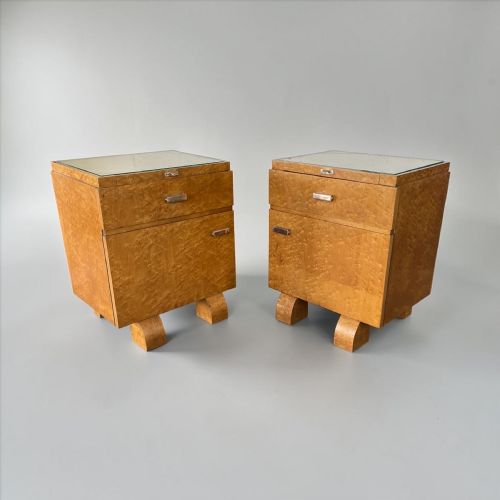
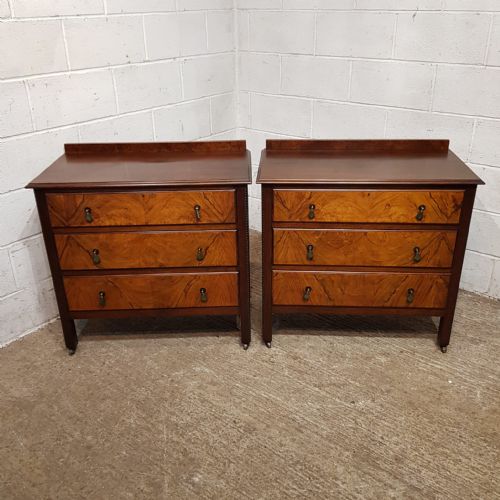
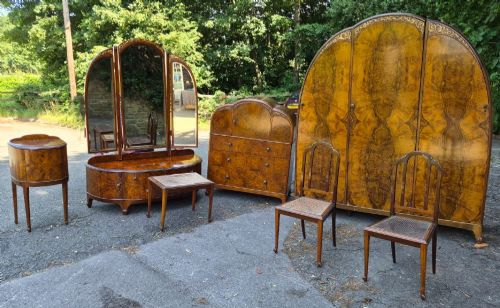
The version most commonly met on this page is the walnut or burr walnut chest of drawers dating from nineteen thirty. Alongside these standalone chests, tallboys and matching bedside tables appear frequently, sometimes forming part of larger bedroom suites.
Materials and construction
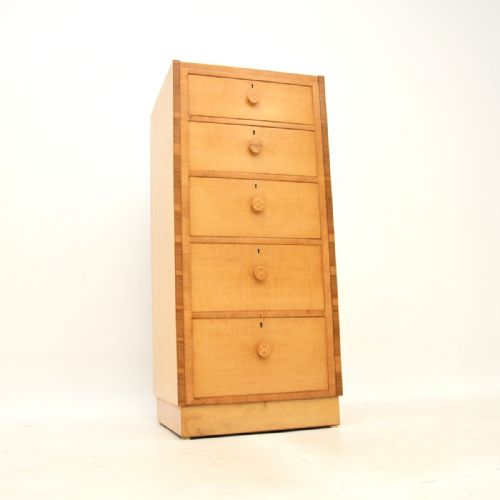
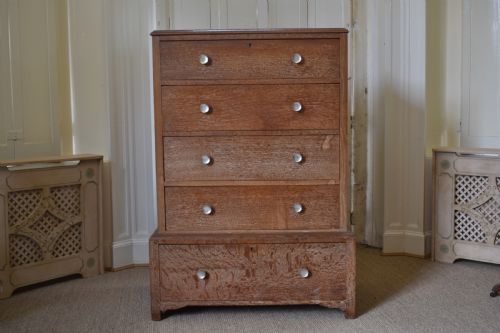
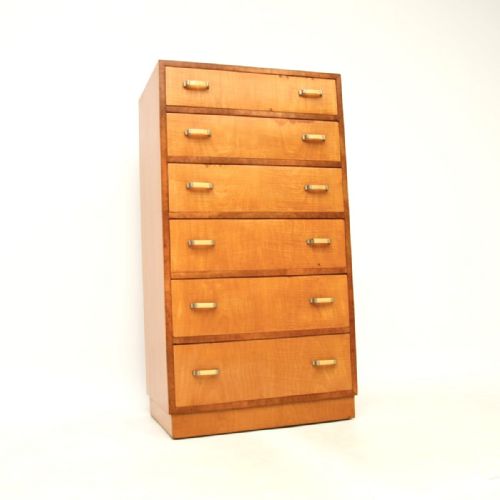
Cabinet makers utilised a foundation of solid woods overlaid with decorative veneers such as burr walnut, birds eye maple, sycamore, satinwood and macassar ebony. These figured timbers were selected to display striking grain patterns across flat drawer fronts and curved carcases.
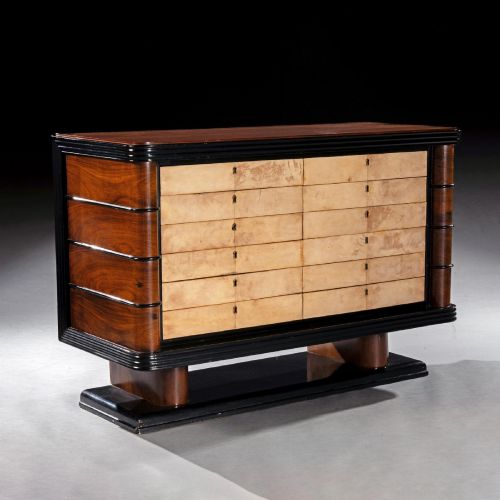
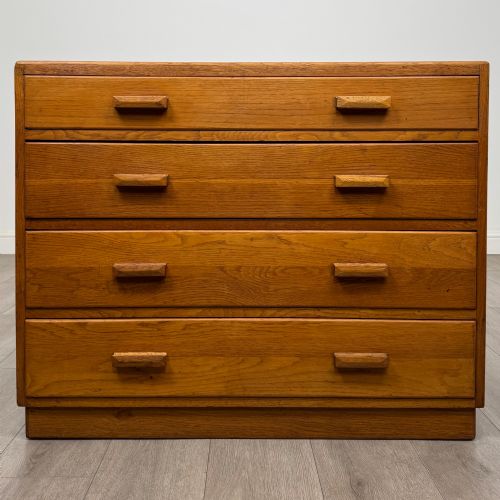
Details in contrasting materials punctuate the designs, including chrome or brass handles, bakelite fittings and occasionally parchment-covered drawer panels. Oak and mahogany also provide sturdy structural framing for both English and French examples.
Some drawers hide secrets behind parchment panels, proving that nineteen thirties designers enjoyed a touch of tactile theatre before bedtime.
Assessing quality and execution
Quality rests upon the selection and matching of wood veneers across the facade, where superior examples exhibit symmetrical grain patterns that wrap fluidly around the carcase. The ambition of the form, from standard horizontal chests to unusual commodes with curved profiles, dictates the standing of the piece.
The integration of secondary materials like bronze, brass, chrome and parchment indicates higher levels of craftsmanship. Well-executed execution shows in the seamless movement of drawers and the thoughtful balance of proportion between the primary timber and metal detailing.
Hille·Frank Taylor & Co·Heal's·B Cohen & Sons
The Art Deco Bedroom Drawers Glossary
- Tallboy
- A tall chest of drawers, often combining a wardrobe section or upper cupboards with lower drawers to maximise vertical storage.
- Commode
- A low chest of drawers or cabinet, frequently associated with French design and featuring decorative mounts or distinctive curved forms.
- Burr walnut
- A prized timber cut from walnut tree growths, producing swirling, intricate grain patterns highly favoured by period cabinet makers.
- Bedside cabinet
- A small bedside table or nightstand enclosed by a door or fitted with drawers for personal storage beside the bed.
- Veneer
- A thin layer of figured wood applied over a stable secondary timber base to create decorative surfaces without excessive weight.
Art Deco Bedroom Drawers: Frequently Asked Questions
How do I identify art deco bedroom drawers?
Look for symmetrical geometric lines, stepped carcases and prominent figured wood veneers like burr walnut or birds eye maple. Hardware in chrome, brass or bakelite further signals the era.
Many pieces also feature specific architectural proportions or tallboy formats distinct from heavier Victorian or Edwardian furniture.
What is the difference between a chest and a tallboy?
A chest of drawers is a low, wide unit designed primarily for flat folding clothes and general bedroom storage. A tallboy is significantly taller and often incorporates a cupboard or wardrobe compartment above the lower drawers.
Tallboys suit rooms with limited floor space by offering increased vertical capacity within a narrower footprint.
How do French art deco drawers differ from English ones?
French pieces often embrace more adventurous forms, such as curved commodes utilising exotic woods like palisander or parchment details. English examples tend to favour rectilinear walnut or oak structures with clean, understated lines.
Both national traditions share an emphasis on high-status veneer work and modernist geometric restraint.
How should I care for vintage walnut furniture?
Keep walnut and burr walnut furniture away from direct sunlight and radiators to prevent the wood veneers from drying out or splitting. Dust regularly with a dry cloth and apply occasional specialist wax to nourish the timber finish.
Avoid using silicone-based polishes which can build up a residue over time and dull the grain.