


Art Deco Tallboy Dresser
An art deco tallboy dresser combines vertical storage with distinct period geometry, offering practical bedroom space through striking twentieth-century design.
Art Deco Tallboy Dresser
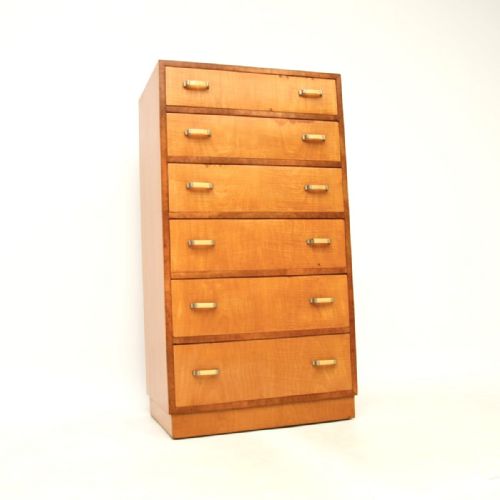
An art deco tallboy dresser provides tall chest storage configured specifically for bedroom organisation. These pieces combine multiple drawers within a vertical footprint to maximise floor space.
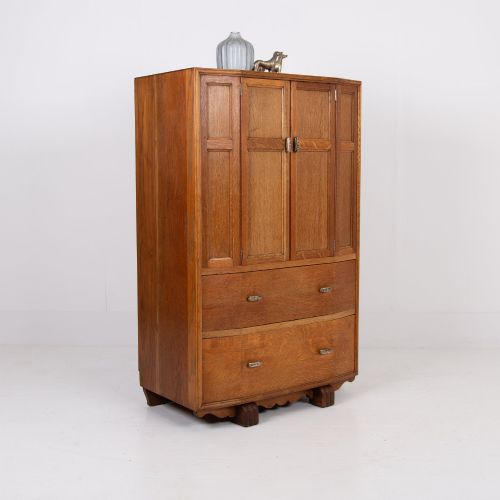
Most examples originate from the 1930 and 1920 periods, alongside Edwardian precursors. The primary forms include tall chests of drawers and cabinets manufactured in oak, walnut, and satinwood.
Materials and construction
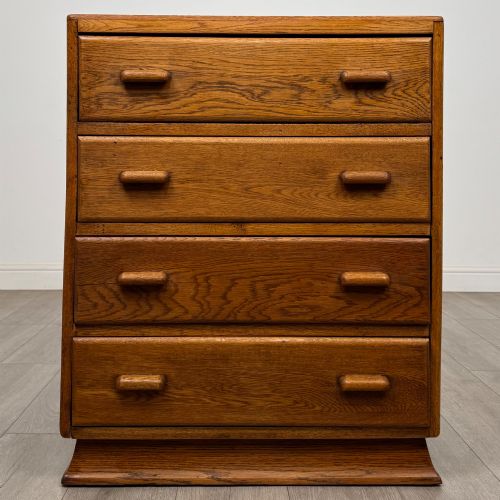
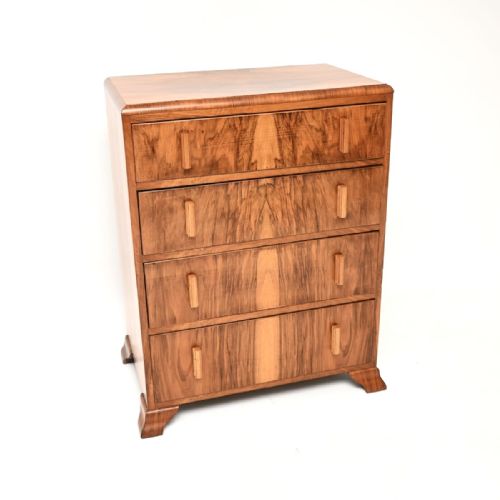
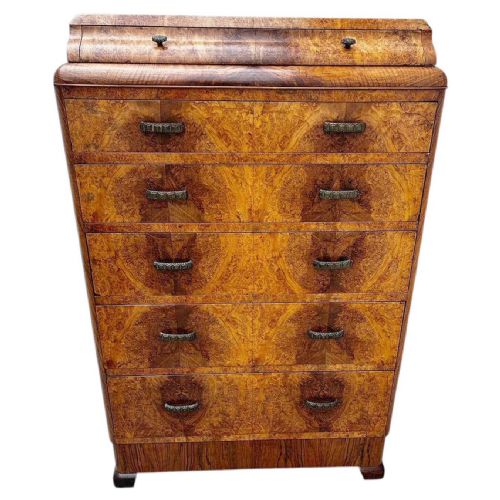
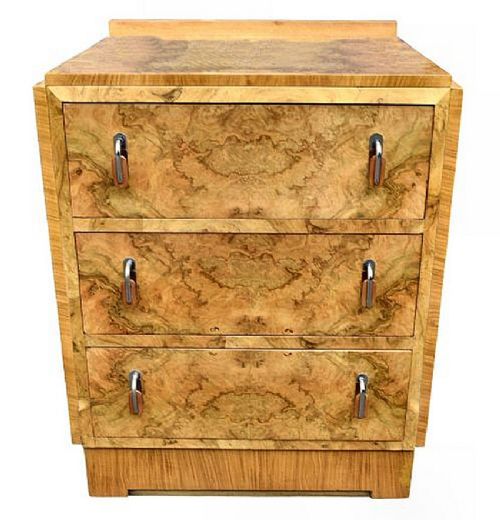
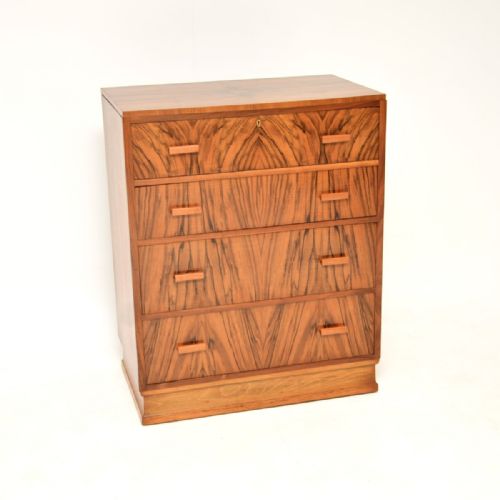
Cabinet makers utilised solid oak and walnut timbers combined with burr walnut and walnut veneers to create striking grain patterns across the drawer fronts. Selected pieces incorporate contrasting light satinwood alongside darker woods.
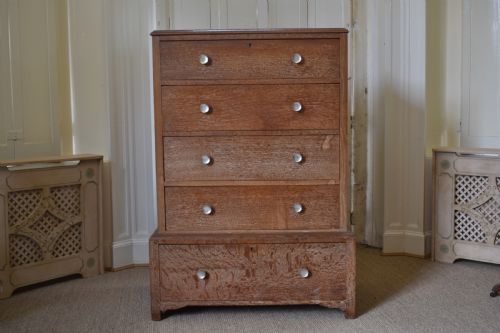
Hardware details feature metal handles, brass fittings, chrome elements, and bakelite accents typical of twentieth-century manufacturing. Surface finishes range from bleached blonde walnut to limed oak treatments.
Bakelite handles bring a touch of early plastic charm to heavy walnut drawers.
Markers of distinction
The choice of surface timber dictates visual presence, particularly where figured walnut and burr walnut veneers exhibit complex natural patterns. Timber selection ranges from plain oak boards to highly decorative figured grains.
Construction standards appear in the precision of the drawer arrangement and the integration of specialised metal or chrome hardware. Maker attribution, such as work associated with Heal's, separates standard production from notable workshop output.
Heal's
The Art Deco Tallboy Dresser Glossary
- Tallboy
- A tall chest of drawers providing vertical storage space. This form lifts storage capacity upwards while maintaining a compact footprint in a room.
- Veneer
- A thin layer of superior wood applied over a base timber. Burr walnut veneer is frequently utilised on drawer fronts to display intricate grain patterns.
- Bakelite
- An early synthetic plastic material. It appears on handles and decorative elements across twentieth-century furniture.
- Limed oak
- Timber treated with a white pigment finish. This technique lightens the natural grain while preserving the texture of the oak.
Art Deco Tallboy Dresser: Frequently Asked Questions
What is an art deco tallboy dresser?
An art deco tallboy dresser is a vertical storage unit featuring multiple drawers designed during the early twentieth century. These tall chests provide substantial clothing storage while occupying minimal floor space.
Most surviving examples date from the 1920 and 1930 periods, incorporating stylistic elements of the Art Deco movement. They serve as both functional bedroom furniture and prominent decorative focal points.
How do I identify a 1930 piece?
Pieces from 1930 often display characteristic geometric lines, stepped forms, and distinct wood veneers such as burr walnut. Makers favoured striking grain patterns and minimal ornamentation.
Hardware components like chrome handles, brass accents, and bakelite details help distinguish these twentieth-century items from earlier Edwardian or 1920 designs.
What woods are used in these dressers?
Construction primarily relies on oak and walnut, with frequent application of figured walnut and burr walnut veneers across drawer surfaces. Some variations incorporate satinwood or bleached blonde walnut finishes.
Solid timbers form the structural carcasses and frames, while specialised veneers create decorative visual patterns on the exterior panels.
How do I care for walnut veneer?
Walnut veneer requires protection from direct sunlight and excessive moisture to prevent fading and lifting of the wood surface. Regular dusting with a dry cloth maintains the finish.
Avoid placing these items near heat sources that could dry out the timber and cause cracking in the delicate veneer layers.