



Armorial Porcelain Plate
An armorial porcelain plate carries the painted crest or coat of arms of a notable family, offering a direct link to historic lineage.
Armorial Porcelain Plate
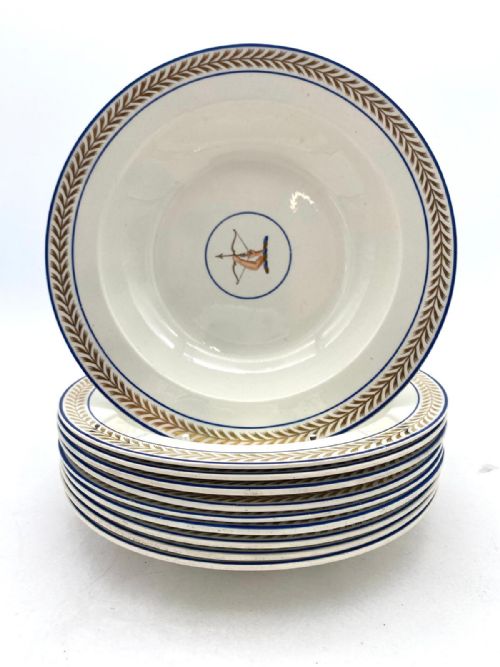
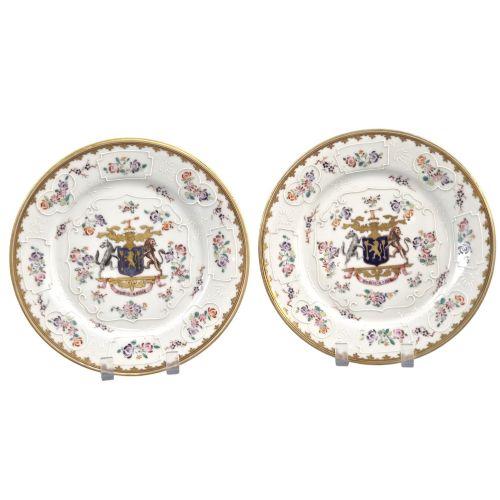
An armorial porcelain plate is a formal dish painted with heraldic bearings, commissioned by noble and wealthy families for dining or display. These pieces appear across the eighteenth and nineteenth centuries, spanning Georgian, Regency, and Victorian eras.
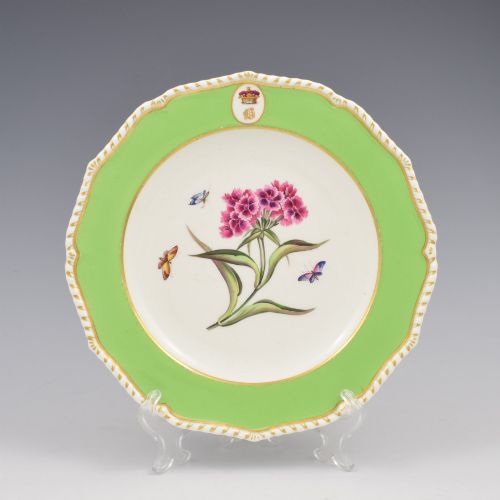
The selection ranges from Chinese export porcelain made during the Qianlong period to English works from factories such as Worcester, Derby, and Copeland. Forms include dessert plates, soup plates, and cabinet plates designed primarily for visual impact.
Buyers encounter both domestic English porcelain and earthenware alongside overseas commissions painted in China for European patrons. Each example bears specific family crests, mottos, or coats of arms rendered in polychrome enamels and gold leaf.
Materials and technique
Pieces are formed from porcelain, bone china, creamware, or earthenware, depending on the manufacturing centre and period. Chinese export and English bodies provide the smooth white ground necessary for detailed heraldic painting.
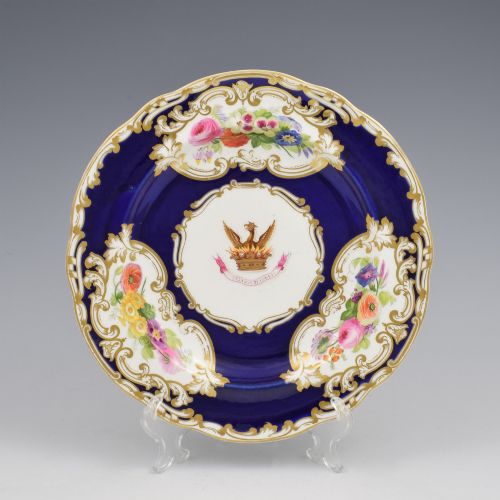
Decoration relies on hand-painted enamels combined with gilt, gilding, or gold leaf to highlight heraldic crowns, mantling, and borders. Some later nineteenth-century examples incorporate heavy glazed pottery techniques alongside traditional enamel work.
Several plates feature fierce creatures, including a phoenix in flames and a dragon in compartments, standing guard over family honour.
Judging quality
Quality rests upon the precision of the heraldic painting and the crispness of the enamel and gilt application. Finer plates display meticulously rendered coats of arms with distinct linework and vibrant, stable colours.
The underlying ceramic body also dictates standard, with refined porcelain and early bone china achieving a superior finish compared to heavier utilitarian earthenware.
Edmé Samson & Cie·Bloor Derby·Copeland·Coalport·Chamberlain Worcester·Barr, Flight & Barr·Minton·Veuve Perrin·Royal Cauldon
The Armorial Porcelain Plate Glossary
- Armorial
- Bearing a coat of arms or heraldic device. This forms the central decorative motif of the plate.
- Gilding
- The application of gold leaf or gold powder to ceramic surfaces. It highlights crests, borders, and edges.
- Creamware
- A refined light-coloured earthenware developed in the eighteenth century. It offers a smooth surface for enamel painting.
- Enamel
- Opaque coloured glass fused to the ceramic body by firing. It provides the durable palette used for crests.
- Cabinet plate
- A decorative dish intended for display rather than dining. These often feature elaborate armorials.
Armorial Porcelain Plate: Frequently Asked Questions
What is an armorial plate?
An armorial plate is a ceramic dish painted with a specific family coat of arms, crest, or motto. They were commissioned by prominent households for formal dining services or display.
These pieces function as historical records of lineage, often matching the specific service ordered by nobility or landed gentry during the eighteenth and nineteenth centuries.
How were they used?
In period households, armorial services formed part of grand dining displays used to signal status and wealth to guests. Dessert plates and soup plates appeared during formal courses.
Over time, many surviving pieces transitioned into cabinet plates, displayed on walls or within furniture to preserve the delicate enamel and gilding from wear.
How do I identify the family?
Identification relies on researching the specific heraldic charges, such as animals, symbols, and mottoes painted on the surface. Reference books on British and European heraldry connect these crests to historical families.
Some pieces include specific text or names within the design, linking the porcelain directly to a known historical figure or commission.
Are Chinese export armorials different?
Chinese export armorial porcelain was ordered by European trading companies and shipped from China during the eighteenth century. European families sent drawings of their coats of arms to be painted by Chinese artisans onto porcelain bodies.
These pieces typically feature distinct Qianlong period forms and characteristic famille rose enamel palettes, differing from domestic English factory production.