


English Heraldic Porcelain
English heraldic porcelain displays family crests and coats of arms painted onto plates, tea wares and tureens for aristocratic dining tables.
English Heraldic Porcelain
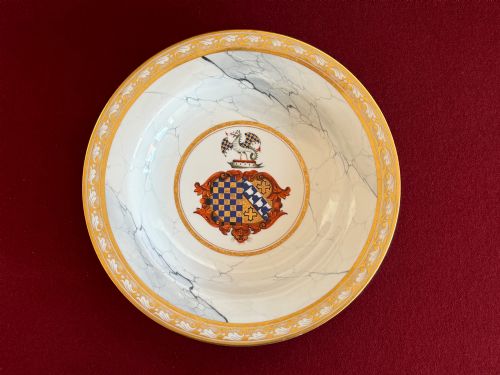
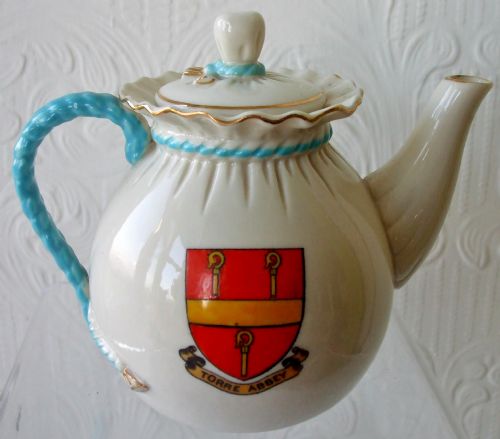
When you search for English heraldic porcelain, you are looking at plates, soup plates, cabinet plates, teacups and saucers, jugs, teapots and tureens painted with family crests, coats of arms and armorial bearings. These items were commissioned by nobility and landed families for formal dining and display.
The versions you are most likely to meet on this page come from the Georgian, Regency and Victorian periods. Makers such as Chamberlain Worcester, Copeland, Coalport and Derby produced these bespoke armorial services.
Forms range from individual dessert plates and cabinet plates to complete tea services and soup plates. Each piece records specific lineages, marriages and peerages through hand-painted heraldry.
How they were made
Potters used soft-paste porcelain, bone china and standard porcelain bodies shaped into plates, teapots, jugs and tureens. These ceramic bases were then fired before receiving hand-painted enamel decoration.
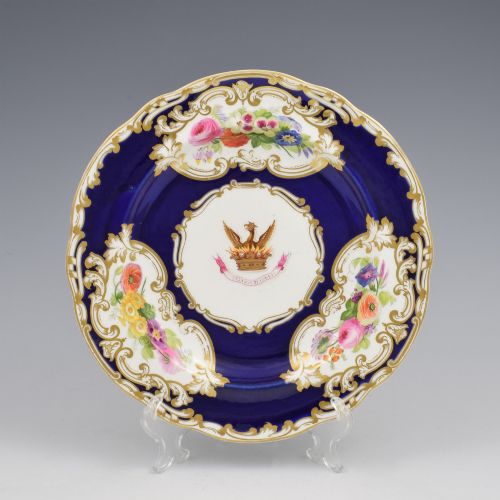
Painters applied colourful enamel pigments and gold leaf or gilt details to render intricate armorial crests, phoenixes, dragons and mottos. Many pieces required multiple kiln firings to fix the gilding and enamels permanently to the glaze.
Some crests feature a phoenix rising from flames, ensuring your tea table comes with its own mythological bird of rebirth.
What varies in quality
The precision and detail of the hand-painted heraldry separate standard production from superior work. Skilled artists rendered intricate crests, mantling and mottos with fine brushwork and accurate heraldic tinctures.
The quality of the porcelain body and the richness of the gilding and gold leaf also define the tier of the piece. Crisp moulding of cabinet plates, soup plates and tureens combined with meticulous enamel work indicates high-status commissions.
W.H. Goss·Copeland·Derby·Chamberlain Worcester·Coalport·Barr Flight And Barr·Minton
The English Heraldic Porcelain Glossary
- Armorial
- Bearing a coat of arms or heraldic crest. These designs were painted specifically for the commissioning family.
- Soft-Paste Porcelain
- An early ceramic composition of glass frit and white clay fired at lower temperatures. It produced a warm, translucent body common in eighteenth-century pieces.
- Bone China
- A porcelain paste strengthened with bone ash. It offered durability and a bright white surface for enamel painting.
- Gilt
- Covered with a thin layer of gold leaf or gold paint. This technique highlighted rims, handles and heraldic borders.
- Tureen
- A deep covered bowl used for serving soup. Armorial examples were centrepieces at grand dining tables.
English Heraldic Porcelain: Frequently Asked Questions
What is English heraldic porcelain?
English heraldic porcelain consists of ceramic plates, tea wares and dining vessels painted with specific family crests and coats of arms. Aristocratic households commissioned these items for daily dining and formal entertaining.
Pieces range from Georgian soup plates to Victorian cabinet plates. Each design records the lineage and identity of the original owner.
How were these items used?
Wealthy families used these armorial services during formal meals, tea parties and grand dinners to display their social standing and lineage. Plates, tureens and teacups served guests while showcasing familial coats of arms.
Some pieces, such as cabinet plates, were intended primarily for display in drawing rooms rather than for dining use.
How do I identify the period?
Period identification relies on ceramic bodies, paste types, styles and painted marks. Georgian and Regency pieces often feature soft-paste porcelain or early bone china with hand-painted armorials, while Victorian items display denser porcelain bodies.
Matching the recorded crest or family name to historical dates provides further context for the production era.
How should I care for them?
These antique ceramics require gentle hand washing in lukewarm water with mild soap. Avoid dishwashers, abrasive sponges and harsh detergents to protect the enamel painting and delicate gilding.
Store plates securely in cabinets or use padded plate hangers for wall display to prevent chipping.