

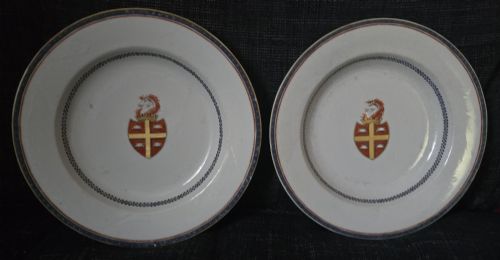
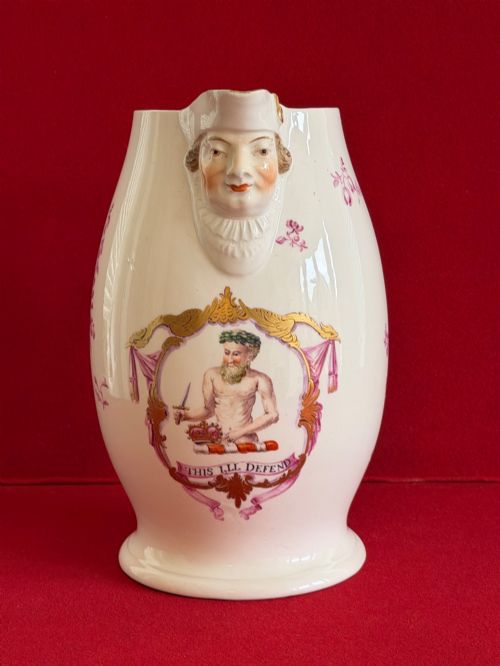

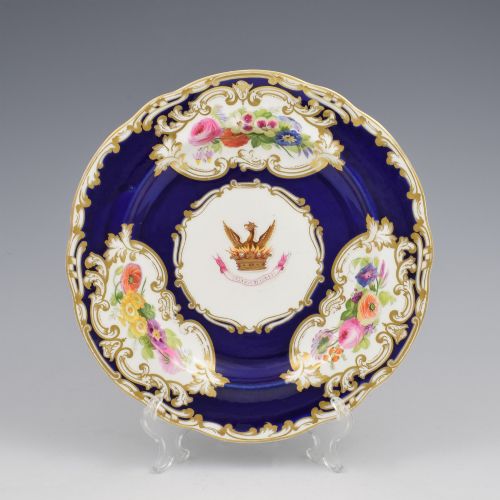


Hand Painted Heraldic Porcelain
Hand painted heraldic porcelain carries centuries of family history onto plates, jugs and bowls through painted crests and gold leaf.
Hand Painted Heraldic Porcelain
Hand painted heraldic porcelain comprises plates, jugs, bowls and lamps bearing specific family crests and coats of arms. Pieces originate from Georgian and 19th Century workshops in Britain, France and China.
The version most commonly met on this page is the decorative dessert plate or cabinet plate, often created for English and European gentry. These ceramics bring tangible lineage to display cabinets and tables.
How they were made
Makers shaped hard-paste porcelain, bone china and glazed pottery into forms such as sauce boats and serving plates. Fired ceramic bodies received smooth white glazes before artists applied detailed enamel paintings.
Painters rendered complex armorial bearings by hand, integrating gold leaf and gilt highlights into the design. Subsequent kiln firings fixed the enamel colours and metallic lustre permanently to the ceramic surface.
Hand Painted Heraldic Porcelain Retail Price Guide 2026
Typical asking prices for hand painted heraldic porcelain among the pieces listed under this phrase on Sellingantiques today, from the lower quarter to the upper quarter. They describe what is for sale here now, not the wider market.
Current listings feature items from the Georgian and 19th Century periods, created in porcelain, bone china and glazed pottery.
What varies in quality
The distinction between tiers rests upon the precision of the heraldic painting and the crispness of the porcelain body. Expert brushwork captures fine details within complex family crests and mottoes.
Application of gold leaf and gilt detailing separates standard production from exceptional cabinet pieces. Well-preserved enamel pigments retain their vibrancy and depth without fading or rubbing.
Flight Barr And Barr·Chamberlain Worcester·Copeland·Minton·Samson Of Paris
The Hand Painted Heraldic Porcelain Glossary
- Armorial
- Bearing a coat of arms or family crest. This term describes ceramics commissioned to display specific lineage.
- Hard-Paste Porcelain
- A dense ceramic material composed of kaolin and petuntse. It withstands high firing temperatures and offers a durable white surface.
- Bone China
- A type of porcelain incorporating bone ash. This composition produces a slightly translucent body suited for refined tableware.
- Enamel
- Opaque glass fused to the ceramic surface through heat. It provides the coloured pigments used for heraldic motifs.
Hand Painted Heraldic Porcelain: Frequently Asked Questions
What is hand painted heraldic porcelain?
These ceramic items feature hand-painted coats of arms, crests or family badges. They were commissioned by aristocratic families for dining and display.
The category includes plates, jugs, bowls and lamps produced across European and Chinese kilns during the eighteenth and nineteenth centuries.
How do I identify the family crest?
Armorial bearings follow strict heraldic rules regarding charges, tinctures and divisions of the shield. Reference books on British and European heraldry help match crests to specific families.
Matching the motto or supporters painted around the shield often confirms the original commissioning household.
How should I display armorial plates?
Plates fit securely into wall-mounted display hangers or sit upright on stable plate stands inside cabinets. Keep pieces away from direct sunlight to protect enamel colours.
Table lamps require sturdy bases and careful placement to avoid accidental knocks against the decorated ceramic body.
How do I care for antique porcelain?
Clean pieces gently by hand using lukewarm water and mild soap when necessary. Avoid dishwashers and harsh abrasive sponges that damage gold leaf and enamel.
Handle items by the rim or base, supporting the weight fully rather than lifting by applied handles or delicate spouts.