




Architectural Salvage Ironwork
Architectural salvage ironwork brings robust structural history into modern spaces through gates, brackets, and panels.
Architectural Salvage Ironwork
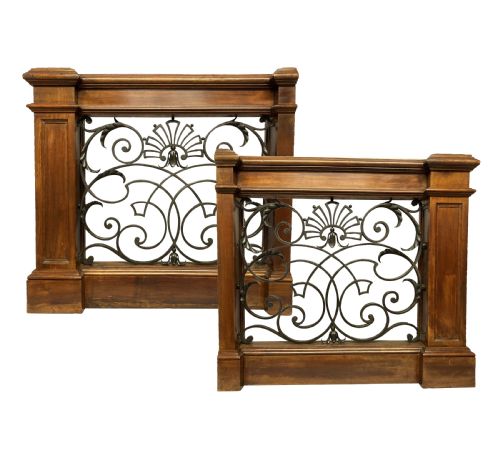
Architectural salvage ironwork comprises functional and decorative elements recovered from historic buildings, gardens, and estates. Buyers exploring architectural salvage ironwork encounter sturdy entrance gates, garden gates, driveway gates, balustrade panels, and structural wall brackets originating from various historic eras.
The selections span from the seventeenth century through the Victorian period and into the early twentieth century, incorporating French country designs alongside British industrial and Gothic styles. Large chapel doors featuring heavy wrought ironwork sit alongside smaller domestic elements like ceiling roses and latch bolts.
Victorian and nineteenth-century pieces dominate the selection, offering substantial estate gates, curved ironwork sections, and decorative sink brackets. Art Deco examples provide modernist geometric contrast through reclaimed iron and bronze screens.
Materials and construction
Items are principally forged from wrought iron and cast iron, often combined within single structures to balance malleability with compressive strength. Wrought iron allows for hand-hammered strapwork and detailed scroll elements, while cast iron permits intricate moulded patterns such as dragons and decorative foliage.
Certain pieces integrate supporting timber elements, notably pine chapel doors that anchor extensive iron strapwork and hinges. Bronze appears alongside iron in twentieth-century modernist compositions, and steel provides robust industrial framing for gates and rails.
Listings feature works spanning from the seventeenth century through the Victorian era to the nineteen-twenties, incorporating both pine and bronze alongside iron.
Quality and character
Superior examples display crisp casting details or skilled hand-forging that preserves the distinct hammer marks of the blacksmith. The articulation of decorative motifs, such as trident details on gates or moulded dragons on sink brackets, separates workshop standard production from utilitarian items.
Integrity of construction and the retention of original mounting hardware determine the practical viability of large gates and balustrades. Pieces that maintain their original structural pairing or maker attribution command greater stylistic authority.
Raymond Subes
The Architectural Salvage Ironwork Glossary
- Wrought iron
- A tough, malleable iron form easily heated and hammered into decorative scrolls and structural strapwork. It resists shock and bending better than cast iron.
- Cast iron
- Molten iron poured into moulds to create rigid, highly detailed architectural components. It offers high compressive strength but can fracture under sharp impacts.
- Balustrade
- A row of upright pillars or panels supporting a rail, commonly used on staircases or balconies. Salvaged panels often form decorative garden boundaries.
- Strapwork
- Ornamental flat bands of metal resembling leather straps, crisscrossing to form intricate patterns. Blacksmiths utilised this technique to reinforce timber doors and gates.
- Ceiling rose
- A decorative circular moulding affixed to a ceiling around a light fitting. Iron iterations provide robust focal points in industrial or Gothic interiors.
Architectural Salvage Ironwork: Frequently Asked Questions
What is architectural salvage ironwork?
Architectural salvage ironwork involves structural and decorative metal elements rescued from demolished or renovated historic buildings and gardens. These pieces range from massive estate entrance gates to intricate balcony panels and small utility brackets.
Items are typically forged from cast or wrought iron, reflecting the utilitarian and aesthetic needs of periods spanning from the seventeenth to the twentieth century. Collectors and designers repurpose these items to restore historic properties or introduce industrial character into modern settings.
How do I date an iron piece?
Dating ironwork relies on identifying the manufacturing techniques, stylistic motifs, and accompanying materials visible in the piece. Seventeenth-century items often feature hand-forged latches and bolts, whereas Victorian pieces frequently showcase elaborate cast iron ornamentation or Gothic revival styling.
Twentieth-century examples, such as Art Deco screens, incorporate modernist geometry and occasionally combine iron with bronze. Comparing construction methods like hand-hammering versus machine casting helps narrow the period of origin.
Can I install salvaged iron outdoors?
Most salvaged ironwork is inherently suited for outdoor placement due to its original exterior function. Gates, balustrades, and garden brackets were engineered to endure weathering from their installation date.
Proper maintenance involves treating the metal surface to prevent excessive oxidation while preserving the historical patina. Ensuring secure mounting into stable masonry or timber supports is essential for large items like driveway gates.